Fernão Pires de Andrade
Portuguese merchant, pharmacist, and official diplomat
Years: 1480 - 1552
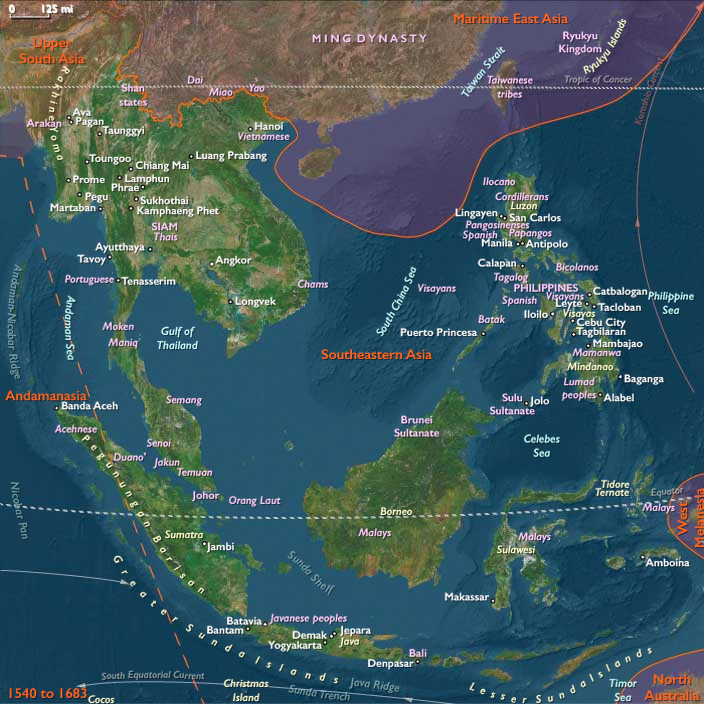
Captain Fernão Pires de Andrade (also spelled as Fernão Peres de Andrade; in contemporary sources, Fernam (Fernã) Perez Dandrade[1]) (died 1552) is a Portuguese merchant, pharmacist, and official diplomat under the explorer and Portuguese Malacca governor Afonso de Albuquerque.
His encounter with Ming China in 1517—after initial contacts by Jorge Álvares and Rafael Perestrello in 1513 and 1516, respectively—marks the resumption of direct European commercial and diplomatic contact with China.
(Even though there were Europeans in Medieval China, notably Marco Polo, that period of contact had been interrupted by the fall of the Yuan dynasty.)
Although de Andrade's mission is initially a success that allows a Portuguese embassy to proceed all the way to Beijing, relations are soon spoiled by culminating events that lead to an extremely negative impression of the Portuguese in China.
This includes acts of his brother Simão that enrage the Chinese, false reports of the Portuguese being cannibals of kidnapped Chinese children and true reports of their conquest of Malacca, a loyal Ming tributary vassal state.
Normalized trade and relations between Portugal and the Ming dynasty will not resume until the late 1540s and the 1557 establishment of Portuguese rule over Macau.
Andrade is referred to as a "Folangji" in Ming dynastic archives.
Folangji comes from Franques or Franks, which is a generic name the Muslims called Europeans since the Crusades, and which spawns the Indian-Southeast Asian term ferengi.
The Chinese adopt the convention when they first think the Portuguese are related to those Muslim guides and interpreters during Fernão's first encounter and before Europeans directly convene with Chinese.