Ferdinand I of León and Castile
Emperor of all Spain
Years: 1015 - 1065
Ferdinand I (c. 1015 – 24 December 1065), called the Great (el Magno), is the Count of Castile from his uncle's death in 1029 and the King of León after defeating his brother-in-law in 1037.
According to tradition, he is the first to have himself crowned Emperor of Spain (1056), and his heirs will carry on the tradition.
He is a younger son of Sancho III of Navarre and Mayor of Castile, and by his father's will recognizes the supremacy of his eldest brother, García Sánchez III of Navarre.
While Ferdinand inaugurates the rule of the Navarrese Jiménez dynasty over western Spain, his rise to preeminence among the Christian rulers of the peninsula shifts the locus of power and culture westward after more than a century of Leonese decline.


Related Events
Filter results
Showing 10 events out of 39 total
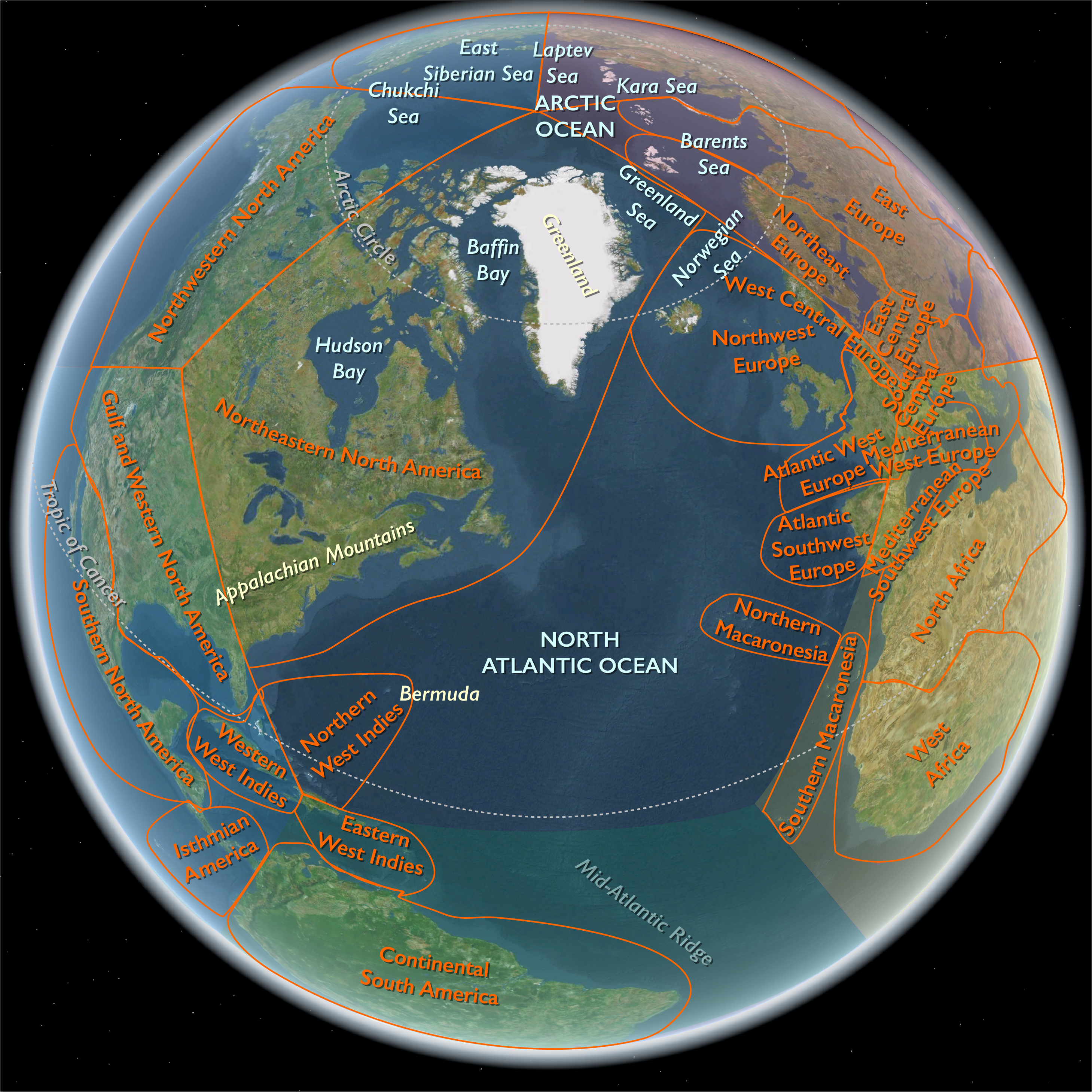
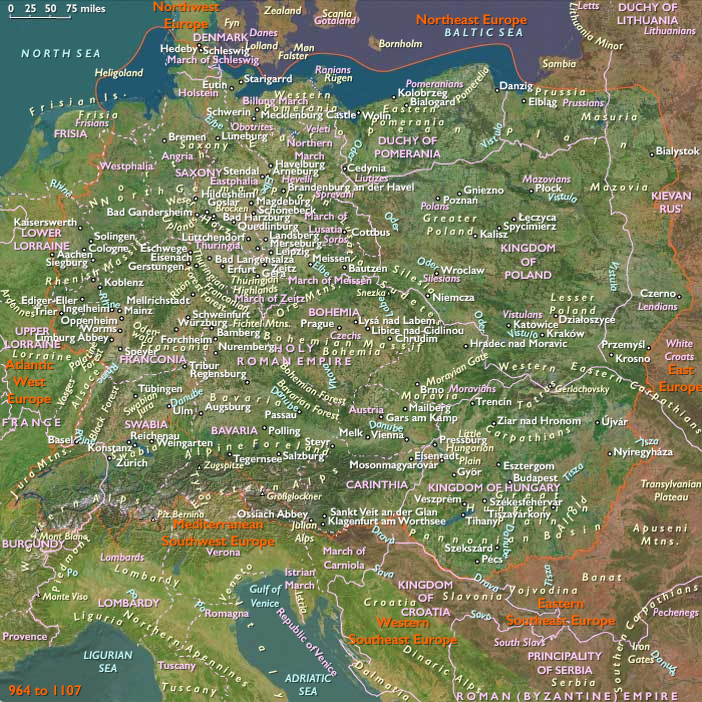
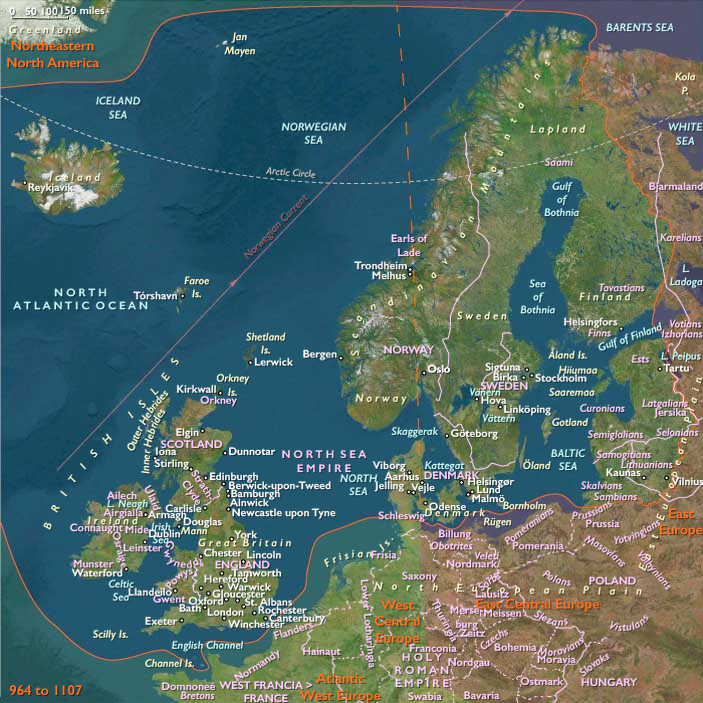
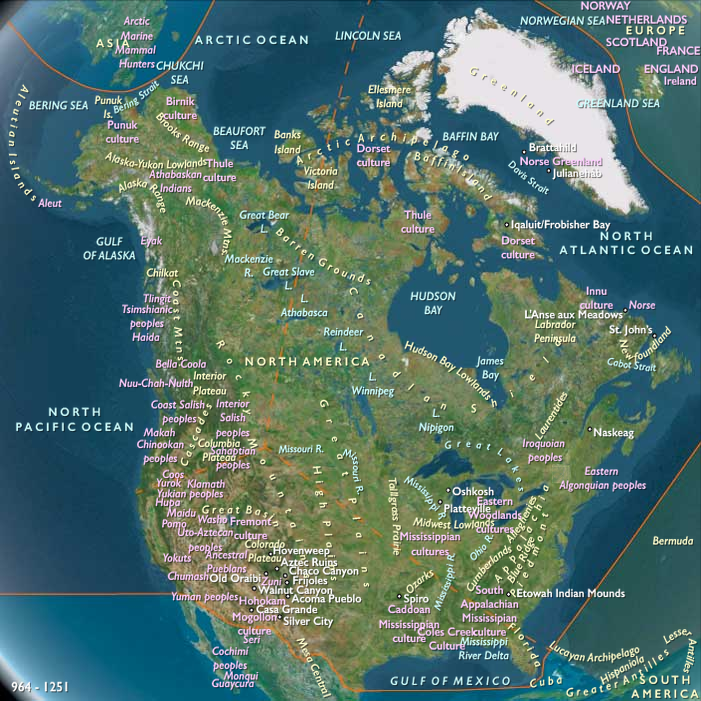
Atlantic Southwest Europe (964 – 1107 CE): Leónese Heartland, Castilian March, and the Pilgrim Sea
Geographic and Environmental Context
Atlantic Southwest Europe includes northern Spain and central to northern Portugal, including Lisbon.
-
Landscapes ranged from the Cantabrian and Galician coasts to the Duero basin and Atlantic river valleys (Minho, Douro, Mondego, Tagus).
-
Strongholds and urban nodes: León (royal capital), Burgos (growing frontier city), Santiago de Compostela (pilgrim shrine), Porto and Coimbra (repopulated marches), Braga, and Lisbon (an Islamic entrepôt at the Tagus mouth).
Climate and Environmental Shifts
-
Under the Medieval Warm Period (c. 950–1250), longer growing seasons supported vineyard expansion on sunny slopes and transhumant herding in uplands.
-
Chestnut groves, oak woodlands, and fertile alluvium in Galicia–Minho–Douro underpinned stable harvests.
-
Floods of the Duero and Tagus periodically disrupted settlement but enriched fields.
Societies and Political Developments
-
Kingdom of León:
-
From Ordoño III (d. 956) through Ferdinand I (1037–1065) and Alfonso VI (1065–1109), León remained the dominant Christian monarchy of the subregion.
-
León incorporated Castile as a powerful march (raised as a kingdom under Ferdinand I, then reunited with León).
-
-
Castile:
-
Emerged as a dynamic frontier under Fernán González (d. 970), developing its own identity.
-
Became a kingdom (1035) but was reunited with León under Ferdinand I, later separating and reuniting again in the dynastic interplay of the 11th century.
-
-
Galicia:
-
Center of Santiago de Compostela pilgrimage cult; integrated in León but periodically semi-autonomous under its own magnates.
-
-
Portugal (Portucale and Coimbra marches):
-
The County of Portugal, revived after the reconquest of Coimbra (1064), became an important marcher lordship under the counts of Portucale.
-
Porto and Braga grew into Atlantic hubs for trade and settlement.
-
-
Lisbon and the Tagus valley:
-
Remained under Umayyad Córdoba until 1031, then under taifa kings (notably Badajoz).
-
Lisbon served as a major Muslim port with diverse population, thriving commerce, and periodic clashes with Christian forces.
-
-
External pressures:
-
Viking raids had largely ceased after the 11th century.
-
The Almoravids entered Iberia after 1086 (Battle of Sagrajas), stabilizing taifa territories against Christian expansion.
-
Economy and Trade
-
Agriculture:
-
Expanded vineyards in Minho and Douro valleys; wheat, rye, barley in the Duero basin; olives in southern marches.
-
Chestnuts, pigs, and cattle supported rural economies; sheep transhumance fed wool markets.
-
-
Maritime trade:
-
Porto, Santiago’s Atlantic ports, Braga, Coimbra shipped wine, salt, hides, and wax north to Aquitaine and Brittany.
-
Lisbon exported Andalusi textiles, ceramics, and sugar; imported Christian slaves, timber, and salt fish.
-
-
Pilgrimage economy:
-
By the 11th century, Santiago de Compostela had become one of Latin Christendom’s greatest shrines, drawing pilgrims from across Europe, enriching monasteries, artisans, and markets.
-
-
Coinage:
-
Andalusi dirhams dominated monetary circulation in Lisbon and taifa towns; Leónese and Castilian mints issued denarii for local exchange.
-
Subsistence and Technology
-
Water-mills multiplied along Atlantic streams; heavy plough extended across the Duero basin; terracing supported vines.
-
Saltworks on Galician and Portuguese coasts expanded, provisioning inland markets.
-
Romanesque churches in León, Castile, Galicia, and Portucale grew increasingly elaborate with sculpture and stone vaulting.
-
Shipcraft: clinker-built vessels and deepened river barges supported pilgrim and cargo transport; Lisbon’s Muslim fleet employed Mediterranean-style lateen rigs.
Movement and Interaction Corridors
-
Camino de Santiago: consolidated as a pan-European road network, drawing pilgrims via the Pyrenees through León and Galicia to Compostela.
-
Cantabrian coastal road and riverine arteries (Douro, Minho, Tagus) integrated inland and maritime traffic.
-
Atlantic sea-lanes tied Porto, Braga, and Lisbon to Bordeaux, Bayonne, Nantes, and beyond.
-
Overland marches connected León–Burgos–Coimbra–Lisbon, structuring the Christian–Islamic frontier.
Belief and Symbolism
-
Christianity:
-
Santiago cult unified León, Galicia, and Castile as a spiritual frontier against Islam.
-
Monastic reform (Cluniac) reached León and Castile by the late 10th–11th century, bringing new liturgy and architectural styles.
-
-
Islam:
-
In Lisbon, mosques, qāḍī courts, and Arabic chancery sustained taifa rule; Christian and Jewish minorities lived as dhimmīs, contributing to commerce and crafts.
-
-
Syncretic frontier culture: Mozarabs (Christians in al-Andalus) and repobladores (frontier settlers) blended law codes, architecture, and toponyms across the Duero–Tagus marchlands.
Adaptation and Resilience
-
Frontier fortification: castles (castillos) and watchtowers multiplied along the Duero and Tagus, protecting settlers and pilgrims.
-
Pilgrimage-driven integration: Compostela routes stabilized roads, inns, and markets, even in times of war.
-
Agricultural resilience: diversified portfolios (grain, vines, chestnut, livestock, salt fisheries) hedged against monsoon variability and raids.
-
Political flexibility: marcher counts leveraged autonomy while still pledging fealty to León’s kings, ensuring dynamic local adaptation.
Long-Term Significance
By 1107 CE, Atlantic Southwest Europe had become a frontier crucible of Christendom:
-
León remained the monarchic heart, though Castile and Portugal grew as semi-independent powers.
-
Santiago de Compostela became Europe’s third great pilgrimage shrine after Rome and Jerusalem, turning Galicia into a global religious hub.
-
Lisbon, still Islamic, was one of al-Andalus’ most important ports, linking the Atlantic to Córdoba’s caliphal and later taifa economies.
-
The balance between Christian advance and Andalusi resilience defined the region, laying the groundwork for the explosive 12th-century Reconquista surge and Portugal’s eventual independence.
Sancho III of Navarre and the Seizure of Castile (1016–1027 CE)
In 1016, Sancho III of Navarre defines the border between Navarre and Castile, strengthening his alliance with Count Sancho García of Castile through marriage to his daughter, Muña Mayor Sánchez (Muniadona).
Following Sancho García’s death, in 1017, Sancho III assumes the protectorship of Castile on behalf of young García Sánchez, further consolidating his influence over the region.
The Assassination of Count García Sánchez (1027 CE) and Its Aftermath
Relations between the Christian kingdoms of León, Castile, and Navarre deteriorate after the assassination of García Sánchez in 1027.
- García had been betrothed to Sancha, daughter of Alfonso V of León.
- As part of the marital pact, León was set to gain Castilian lands between the Cea and Pisuerga rivers, expanding its influence.
- However, upon arriving in León for the wedding, García Sánchez is murdered by the sons of a noble he had previously expelled from his lands.
Sancho III, who had opposed the marriage and the Leónese territorial expansion into Castile, seizes the opportunity to reverse the expected outcome.
Sancho III Takes Control of Castile
Using his role as protector of Castile as a pretext, Sancho III immediately occupies the county, asserting his authority over the region. He installs his younger son, Ferdinand, as Count of Castile, thus fully integrating the county into his sphere of influence and blocking León’s expansion.
This move significantly enhances Navarrese dominance in northern Iberia, setting the stage for the future rise of Castile as an independent power under Ferdinand I, who would later become King of León and Castile.
Sancho III’s Expansion and War Against León (1030s CE)
Following the succession of Bermudo III to the throne of León, Sancho III of Pamplona strengthens his influence over Castile and León by arranging the marriage of his son, Ferdinand of Castile, to Sancha of León, the sister of Bermudo III and the former fiancée of the assassinated Count García Sánchez of Castile.
As part of the marriage alliance, Ferdinand receives a dowry that includes contested Leonese lands, further expanding Castilian control.
War with Bermudo III and the Occupation of León
Tensions between Sancho III and Bermudo III quickly escalate into full-scale war. Sancho, commanding combined Castilian and Navarrese forces, launches a military campaign against León, swiftly overrunning much of the kingdom and occupying Astorga.
By March 1033, Sancho III’s dominion extends from Zamora to the borders of Barcelona, marking the height of his power and making him the most dominant Christian ruler in Iberia at the time.
Sancho III’s Coronation in León and the Peak of His Rule (1034 CE)
By 1034, Sancho III of Pamplona reaches the pinnacle of his power, extending his rule from the borders of Galicia in the west to the County of Barcelona in the east.
His military campaign against Bermudo III of León culminates in the fall of the city of León, which Sancho sees as the imperiale culmen (imperial capital). Seizing the opportunity to legitimize his dominance, he has himself crowned in León, symbolizing his claim to supremacy over all the Christian kingdoms of Iberia.
This moment marks the height of Sancho III’s reign, making him the most powerful Christian ruler in Iberia, effectively uniting the Kingdom of Pamplona, Castile, and León under his authority.
...Aragon, ...
The Legacy of Sancho III "the Great" of Pamplona (r. 1004–1035)
Through marriage, politics, and military conquest, Sancho III of Pamplona expands his realm significantly. In 1029, he annexes Castile, and by 1034, he conquers León, assuming the title of Emperor over all the Christian kingdoms of Iberia.
Integration of Iberia into Christian Europe
Sancho plays a crucial role in bringing Christian Spain into closer alignment with European religious and cultural traditions:
- He encourages European pilgrims to travel to Santiago de Compostela, strengthening the Camino de Santiagoas a major pilgrimage route.
- He welcomes the Cluniac monks into his realm, fostering religious reform and increasing ties with the papacy and the wider Christian world.
- He introduces feudal concepts such as vassalage, suzerainty, and the use of "by the grace of God" (Dei gratia) in royal titles, influenced by French political customs.
- He begins the Navarrese currency system, minting deniers of Carolingian influence, as noted by the Encyclopædia Britannica.
The Division of the Empire and the Future of Iberia
Despite his unification of Christian Iberia, Sancho divides his empire upon his death in 1035, ensuring that his lands remain under Jiménez dynasty rule but also fragmenting his dominion. Each of his four sons becomes a king, and his empire is split into multiple kingdoms:
- Navarre
...
- León
…
- Castile
This division creates the political geography of Iberia that will persist until its unification under the Catholic Monarchs in the 15th century.
Sancho’s Enduring Influence
Sancho III strengthens and stabilizes the Kingdom of Navarre, ensuring its independence for the remainder of the Middle Ages. However, by dividing his realm, he isolates Navarre and limits its ability to expand southward against the Muslims, shifting the Reconquista’s momentum to León, Castile, and Aragón.
Despite the disintegration of his empire, Sancho III "the Great" leaves behind a powerful dynasty, and his reign defines the political and territorial structure of Iberia for centuries to come.
Burgos: The Capital of the Kingdom of Castile
Founded in the 9th century, Burgos is strategically located on a high plateau overlooking the Arlanzón River. Initially established as a frontier stronghold during the Reconquista, it gradually grows in importance.
Under King Ferdinand I of León and Castile, Burgos becomes the capital of the Kingdom of Castile, solidifying its role as a political, military, and economic center. Its strategic location and growing influence position it as a key city in the expansion and consolidation of Christian rule in Iberia.
Atlantic Southwest Europe (1036–1047 CE): Fragmentation after Sancho III, León-Castile Rivalries, and Portuguese Regional Consolidation
Between 1036 and 1047 CE, Atlantic Southwest Europe—including Galicia, northern and central Portugal, Asturias, Cantabria, and northern Spain south of the Franco-Spanish border (43.05548° N, 1.22924° W)—experienced significant political shifts and territorial fragmentation following the death of Sancho III Garcés ("the Great") of Pamplona in 1035 CE. The division of his territories among his sons profoundly reshaped regional dynamics, leading to emerging rivalries, notably between León and the newly independent Castile. Under Ferdinand I of Castile (1037–1065 CE) and his brother-in-law and rival Bermudo III of León (1028–1037 CE), these rivalries significantly influenced regional stability. Meanwhile, the County of Portugal maintained political cohesion and autonomy under Nuño Menéndez (1028–1050 CE) and Ilduara Mendes, continuing the steady path toward Portuguese distinctiveness and eventual independence. Collectively, these developments significantly shaped Iberian political structures, cultural vitality, and economic prosperity.
Political and Military Developments
Fragmentation of Sancho III’s Dominions
Following Sancho III’s death, his territories fragmented into separate political entities, each inherited by his sons. García Sánchez III (1035–1054 CE) retained Pamplona (Navarre), Ferdinand I (1037–1065 CE) took control of Castile, and Ramiro I (1035–1063 CE) received Aragón. This division significantly reshaped regional power balances, leading to intensified rivalries and shifting alliances.
León-Castile Rivalries and the Battle of Tamarón (1037 CE)
Conflict between the kingdoms of León and Castile intensified dramatically when Ferdinand I, previously Count of Castile, challenged Bermudo III of León. This rivalry culminated in the Battle of Tamarón in 1037 CE, where Bermudo III was killed. Ferdinand I subsequently claimed the Leonese throne, thereby uniting León and Castile under one ruler for the first time, significantly reshaping Iberian political boundaries and creating a powerful new political entity in north-central Iberia.
Stability and Continuity in Pamplona
Under García Sánchez III, Pamplona maintained internal stability and regional autonomy despite territorial fragmentation. García Sánchez carefully managed relations with Castile-León, Aragón, and neighboring Islamic taifa states, preserving Pamplona’s territorial integrity and cultural distinctiveness amid shifting political alliances.
Portuguese Regional Consolidation
The County of Portugal, governed effectively by Nuño Menéndez (1028–1050 CE) and his wife, Ilduara Mendes, retained regional cohesion and administrative autonomy. Stable governance structures, frontier security, and local economic prosperity reinforced Portuguese regional identity, laying essential groundwork for the region’s eventual national independence.
Economic Developments
Continued Regional Prosperity
Atlantic Southwest Europe maintained robust economic prosperity during this era, underpinned by resilient agricultural practices (grain, vineyards, olives), artisanal industries, mining (particularly gold and silver from Galicia and Asturias), and livestock husbandry. Economic stability continued supporting political resilience and local autonomy.
Expansion of Maritime and Overland Trade
Coastal settlements, particularly Bracara Augusta (Braga), and northern Portuguese ports expanded maritime commerce significantly, strengthening trade networks with Atlantic and Mediterranean markets. Overland trade along pilgrimage routes to Santiago de Compostela further boosted economic activity, enhancing regional prosperity.
Cultural and Religious Developments
Flourishing of Santiago de Compostela
Pilgrimage activity to Santiago de Compostela continued growing, further establishing its international prominence as a cultural and religious landmark. The influx of pilgrims from across Europe notably enhanced cultural exchanges, economic vitality, and regional cohesion.
Ecclesiastical Leadership and Community Stability
Influential bishoprics—including Braga, Lugo, Asturica Augusta, and Santiago de Compostela—maintained strong local governance, educational leadership, and moral authority. Ecclesiastical institutions significantly reinforced regional stability, cultural continuity, and community resilience during political transitions.
Monastic Scholarship and Cultural Vitality
Monastic communities actively continued scholarly preservation, manuscript production, educational endeavors, and agricultural innovation, significantly sustaining regional intellectual vitality, cultural heritage, and social cohesion.
Enduring Cultural Syncretism
Orthodox Christianity remained integrally blended with indigenous Celtic and Iberian traditions, especially in rural Galicia, Asturias, and northern Portugal, strengthening regional identities and fostering cultural resilience during political turbulence.
Civic Identity and Governance
Emergence of León-Castile Unity
Ferdinand I’s victory at Tamarón in 1037 CE and the subsequent unification of León and Castile significantly reshaped regional governance structures. This unification fostered stronger royal authority balanced by localized aristocratic autonomy, strengthening civic identity and territorial integrity within this newly consolidated kingdom.
Continued Basque Political Autonomy
Pamplona under García Sánchez III retained clear territorial coherence, political autonomy, and regional identity, decisively shaping governance structures and diplomatic relationships amid broader Iberian political shifts.
Solidified Portuguese Regional Identity
The County of Portugal under Nuño Menéndez and Ilduara Mendes firmly maintained territorial integrity, administrative autonomy, and local governance cohesion, further solidifying Portuguese identity and laying essential foundations for future political independence.
Notable Tribal Groups and Settlements
-
Astures and Cantabri: Continued providing critical military resilience, stable local governance, and cohesive regional identity, decisively shaping the united León-Castile’s frontier security and internal governance.
-
Galicians and Lusitanians: Played central roles in regional economic vitality, cultural resilience, and local autonomy, notably contributing to Santiago’s prominence and Portuguese regional consolidation.
-
Basques (Pamplona): Maintained robust political autonomy, cultural distinctiveness, and internal cohesion under García Sánchez III, decisively influencing regional diplomatic strategies and governance stability.
Long-Term Significance and Legacy
Between 1036 and 1047 CE, Atlantic Southwest Europe:
-
Witnessed crucial political realignments and territorial consolidations following Sancho III’s death, reshaping Iberian political boundaries and alliances.
-
Experienced the transformative unification of León and Castile under Ferdinand I, significantly influencing subsequent Iberian political structures, governance, and territorial dynamics.
-
Maintained Portuguese autonomy and strengthened local governance, decisively shaping the foundations for Portugal’s future national emergence.
-
Continued vibrant cultural vitality, economic prosperity, ecclesiastical leadership, and pilgrimage traditions, significantly shaping the medieval trajectory and regional resilience of Atlantic Southwest Europe.
This transformative era decisively shaped political unifications, regional identities, and economic stability, significantly influencing the historical trajectory and enduring legacy of Atlantic Southwest Europe.