Faxian
Chinese Buddhist monk
Years: 337 - 422
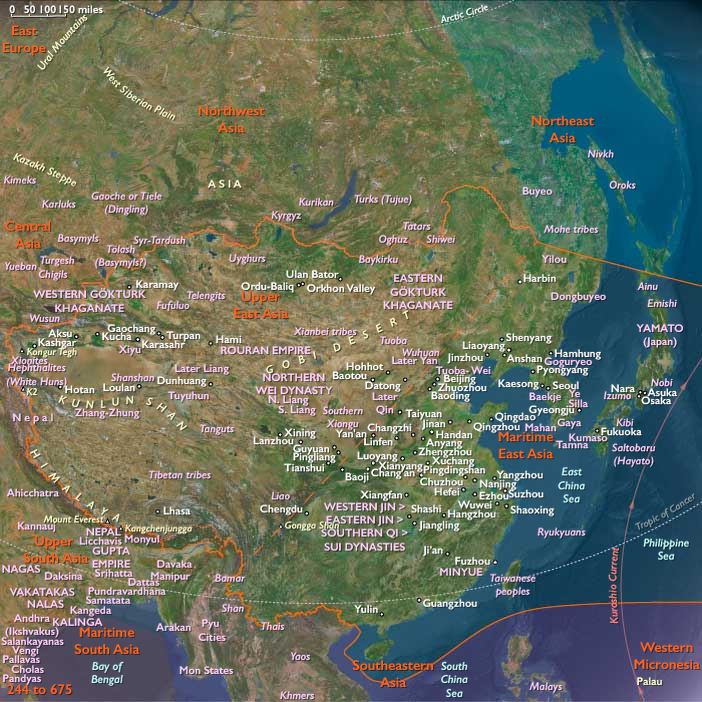
Faxian (337 – c. 422 CE) is a Chinese Buddhist monk who travels to India, Sri Lanka and Kapilavastu in today's Nepal between 399 and 412 to acquire Buddhist scriptures.
His journey is described in his important travelogue, A Record of Buddhist Kingdoms, Being an Account by the Chinese Monk Fa-Xian of his Travels in India and Ceylon in Search of the Buddhist Books of Discipline.
He is most known for his pilgrimage to Lumbini, the birthplace of Gautama Buddha.
Faxian is a Chinese pilgrim and scholar who visits India during the reign of Chandragupta II.
Faxian claims that demons and dragons were the original inhabitants of Ceylon (Sri Lanka).
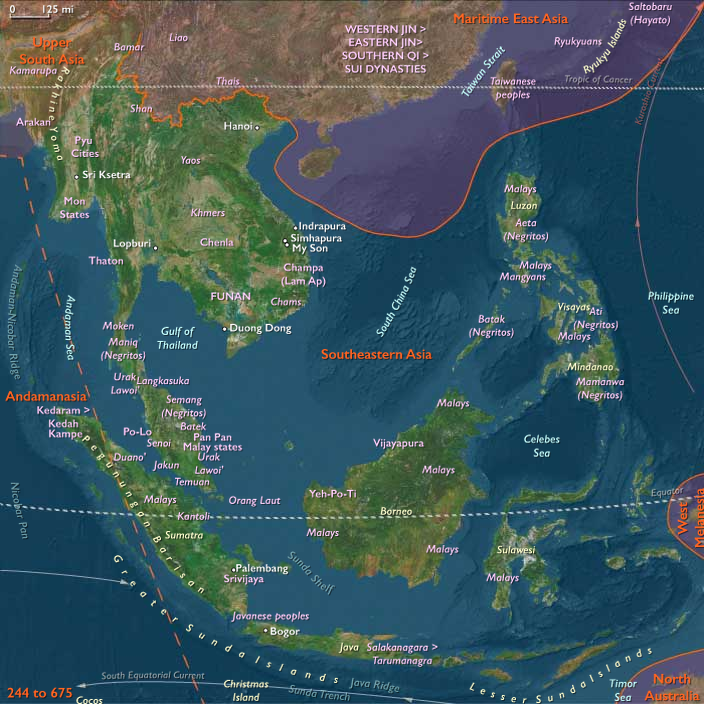
On Faxian's return to China, after a two-year stay in Ceylon, a violent storm drives his ship onto an island that is probably Java.
Faxian lands at Laoshan in what is now Shandong province, 30 km east of the city of Qingdao, and goes to Shandong's then-capital, Qingzhou, where he remains for a year translating and editing the scriptures he has collected.
His work is a travel book, filled with accounts of early Buddhism, and the geography and history of numerous countries along the Silk Roads at the turn of the 5th century CE.
Faxain visits India in the early fifth century CE.
He is said to have walked all the way from China across icy desert and rugged mountain passes.
He enters India from the northwest and reaches Pataliputra.
He takes back with him Buddhist texts and images sacred to Buddhism.