Faisal I of Iraq and Syria
King of the Arab Kingdom of Syria or Greater Syria in 1920, and King of Iraq
Years: 1883 - 1933
Faisal I bin Hussein bin Ali al-Hashemi (May 20, 1883 – September 8, 1933) is King of the Arab Kingdom of Syria or Greater Syria in 1920, and is King of Iraq from August 23, 1921 to 1933.
He is the third son of Hussein bin Ali, the Grand Sharif of Mecca, who proclaimd himself King of the Arab lands in October 1916.
Faisal fosters unity between Sunni and Shiite Muslims to encourage common loyalty and promote pan-Arabism in the goal of creating an Arab state that wil include Iraq, Syria and the rest of the Fertile Crescent.
While in power, Faisal tries to diversify his administration by including different ethnic and religious groups in offices.
However, Faisal's attempt at pan-Arab nationalism may have contributed to the isolation of certain religious groups.
Related Events
Filter results
Showing 10 events out of 22 total
The Middle East (1828–1971 CE): Qajar and Ottoman Struggles, Oil Empires, and Cold War Realignments
Geography & Environmental Context
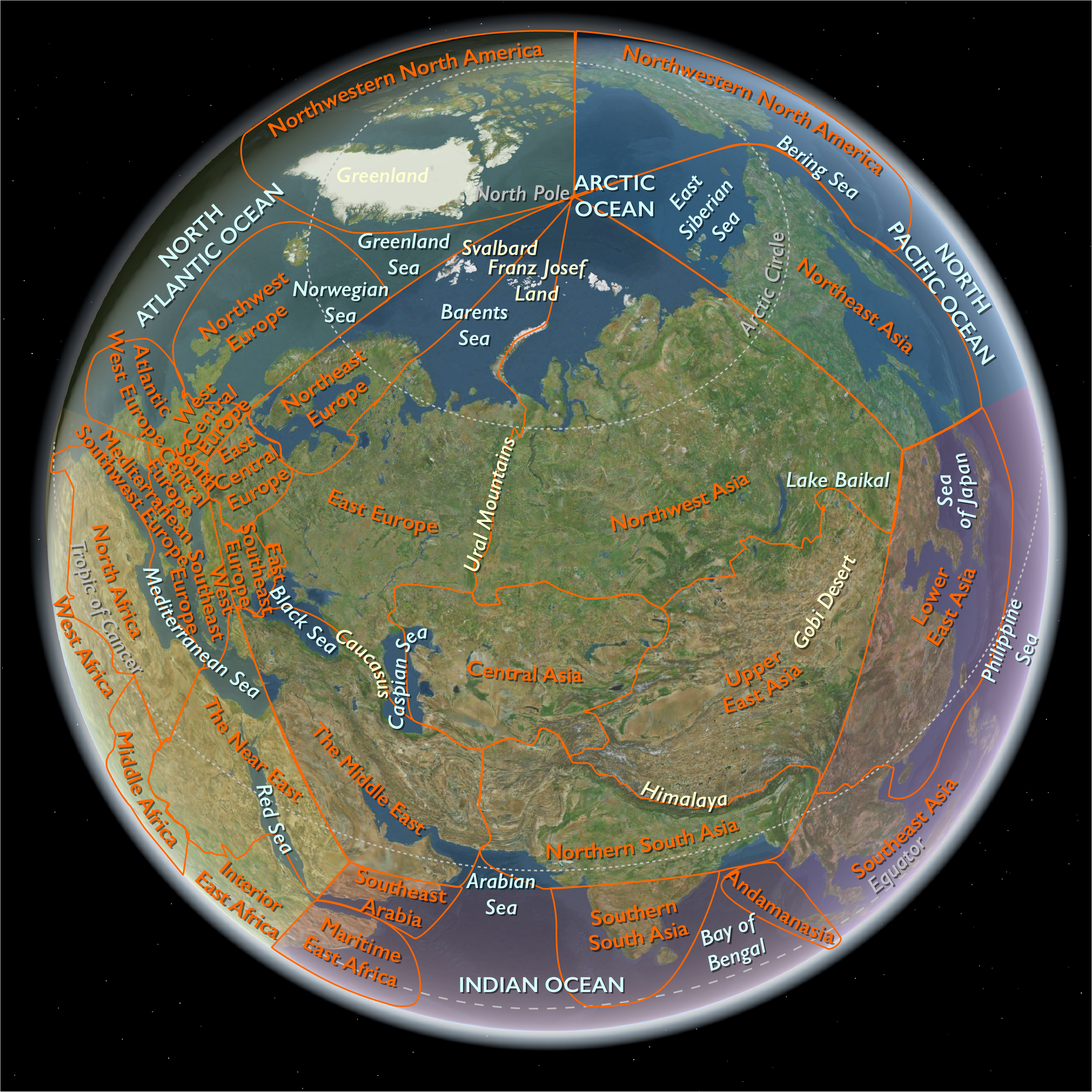
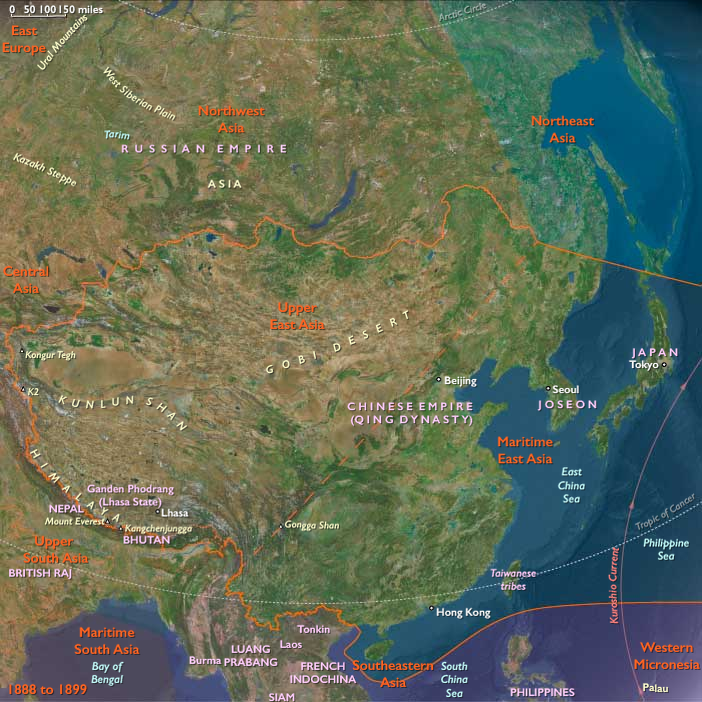
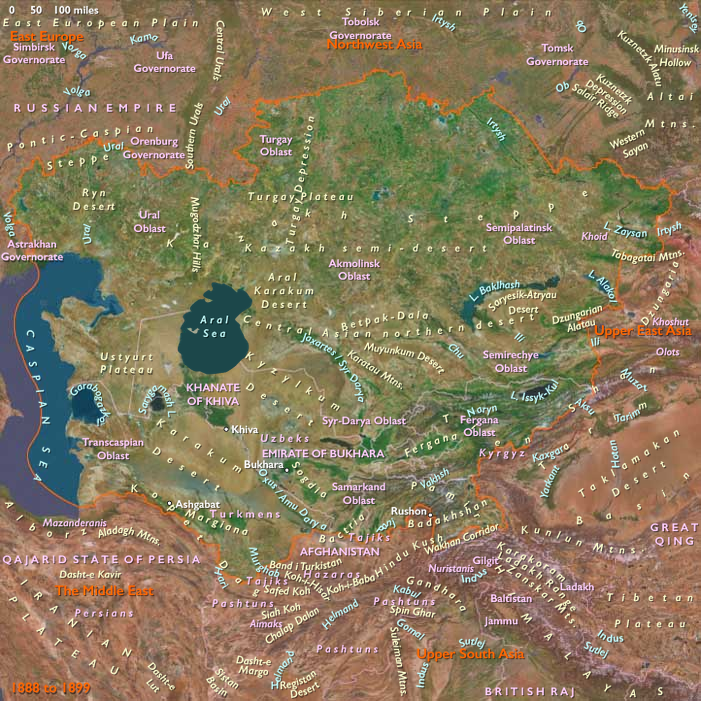
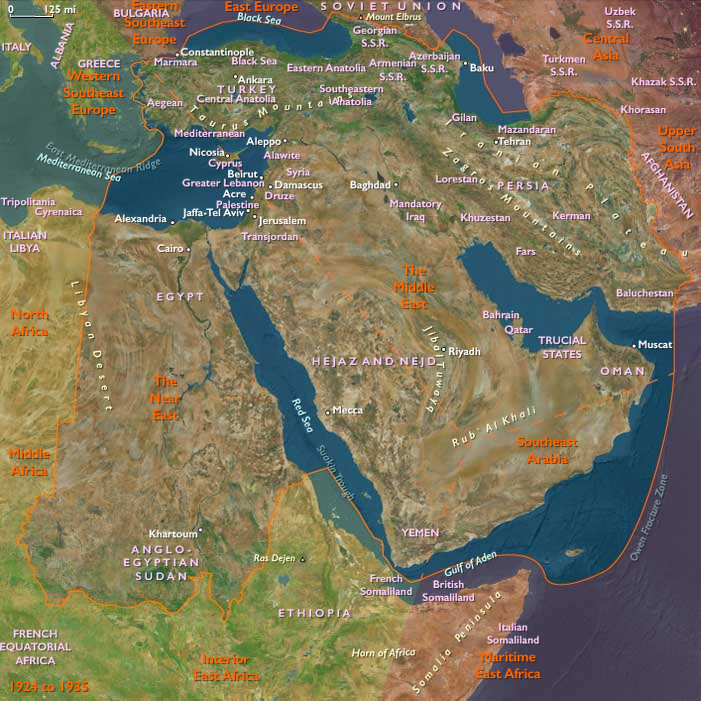
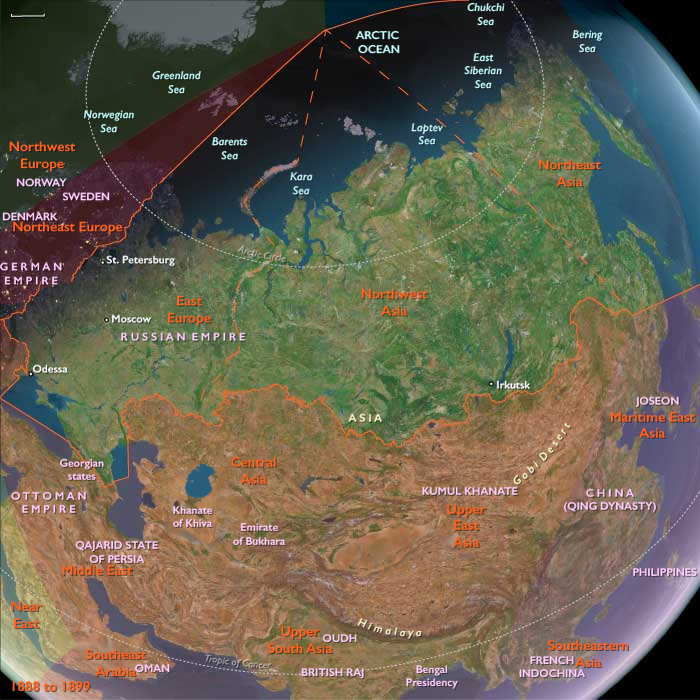
The Middle East includes Iraq, Iran, Syria, Armenia, Georgia, Azerbaijan, Qatar, Bahrain, the United Arab Emirates, most of Turkey (except its European and southwestern parts), eastern Jordan, nearly all of Lebanon, eastern Saudi Arabia, and northern Oman. Anchors include the Tigris–Euphrates basin, the Zagros and Caucasus ranges, the Iranian plateau, the Caspian littoral, the Levantine corridor, and the Persian/Arabian Gulf. This subregion connected Mediterranean, Russian, and Indian Ocean worlds while enduring pressures from empire, revolution, and global energy demand.
Climate & Environmental Shifts
The waning Little Ice Age gave way to modern warming trends, but aridity remained dominant. The Fertile Crescent endured cycles of drought and flood, disrupting agriculture. The Caspian and Persian Gulf coasts supported fisheries and palm groves, while deserts of Iraq, Syria, and Arabia constrained settlement. Earthquakes (notably in Iran and Turkey) punctuated the landscape. After the mid-20th century, dams like the Aswan High Dam’s regional counterparts (e.g., Iran’s Karaj Dam, Turkey’s Keban project) sought to control rivers and support hydroelectricity.
Subsistence & Settlement
-
Agriculture: Wheat, barley, and rice dominated in Mesopotamia and Iran’s plains; date groves thrived in Basra, Khuzestan, and Gulf oases. Tobacco, cotton, and citrus became key cash crops in Syria, Lebanon, and northern Iran.
-
Pastoralism: Nomadic and semi-nomadic tribes (Bedouin, Bakhtiari, Kurdish, Turkmen) persisted, though sedentarization campaigns curtailed mobility in the 20th century.
-
Urbanization: Cities like Baghdad, Damascus, Tehran, Tabriz, Aleppo, and Baku grew as administrative centers. Beirut blossomed as a Levantine port; Gulf towns like Manama, Doha, and Dubai remained small but were transformed by oil after the 1950s.
-
Oil settlements: From the 1900s, Abadan, Kirkuk, Dhahran, and Bahrain became boomtowns linked to Anglo-Iranian and American oil companies.
Technology & Material Culture
-
19th century: Telegraph lines, railways (Berlin–Baghdad, Hejaz, Trans-Iranian), and steam navigation linked the region to Europe.
-
20th century: Oil refineries, pipelines (Kirkuk–Haifa, Abadan–Mediterranean), and dams modernized infrastructure. Cars, radios, and cinemas spread after WWII; by the 1960s, televisions and concrete apartment blocks reshaped urban life.
-
Everyday life: Bazaar craft traditions—carpets, textiles, ceramics—coexisted with imported mass goods. Mosques, churches, and synagogues continued as architectural anchors.
Movement & Interaction Corridors
-
Imperial routes: Russian expansion in the Caucasus (taking Armenia, Georgia, Azerbaijan) and British routes through the Gulf redefined boundaries.
-
Trade: Caravans from Iran and Iraq moved wool, carpets, and livestock; steamships carried oil and pilgrims.
-
Pilgrimage: Shiʿi shrines at Najaf and Karbala attracted millions; Sunni routes to Mecca drew eastern pilgrims via Basra and Gulf ports.
-
Oil corridors: Tankers carried Gulf crude to Europe and Asia; pipelines bound Kirkuk and Abadan to Mediterranean ports.
-
Diaspora & labor: Armenians, Assyrians, and Kurds migrated amid wars; Palestinian refugees after 1948 and 1967 transformed Jordan, Lebanon, and Syria.
Cultural & Symbolic Expressions
-
Religion: Islam predominated (Sunni in Anatolia, Syria, Iraq; Shiʿi in Iran, southern Iraq, eastern Arabia); Christian minorities (Armenian, Assyrian, Maronite, Greek Orthodox) and Jewish communities remained vital until large-scale emigration after 1948.
-
Intellectual life: The Nahda (Arab Renaissance) spread through Beirut, Damascus, and Baghdad; Iranian reformers blended constitutionalism with Shiʿi thought.
-
Arts & media: Persian poetry, Arabic novels, Turkish press, and Levantine theater flourished; postwar Egyptian cinema circulated regionally. Radio speeches—Nasser, Mossadegh, Baʿath leaders—became political rituals.
-
Identity movements: Pan-Arabism, pan-Islamism, and early pan-Turkism shaped discourse. Kurdish nationalism emerged, while Zionist movements abroad affected regional politics through immigration to neighboring Palestine.
Environmental Adaptation & Resilience
-
Irrigation: Canals in Iraq and Iran expanded, though salinization plagued Mesopotamian soils.
-
Oases: Wells, qanats, and date-palm agroforestry sustained Gulf and Iranian plateau communities.
-
Nomadic strategies: Seasonal migration and diversified herds buffered risk; modern states sought to sedentarize tribes, often disrupting resilience.
-
Urban adaptation: Markets, hammams, and communal charities supported survival in famine and flood; post-WWII welfare states extended these functions through subsidies and public works.
Political & Military Shocks
-
Ottoman decline & Russian advance: Russo-Persian wars led to treaties (Turkmenchay 1828) ceding Caucasian lands to Russia. Ottoman Syria and Iraq faced autonomy movements.
-
Iran: The Qajar dynasty (1789–1925) managed concessions to Britain and Russia, sparking nationalist protest; the 1906 Constitutional Revolution curtailed monarchy briefly.
-
Iraq: British occupied Mesopotamia in WWI; mandate rule (1920–32) preceded monarchy and eventual 1958 revolution.
-
Syria & Lebanon: French mandate (1920–46); independence brought coups and eventual Baʿathist ascendancy.
-
Turkey: Atatürk’s republic (1923) reformed Anatolia’s western and central regions, overlapping with this subregion’s borders in Adana and southeastern Turkey.
-
Oil politics: 1901 D’Arcy concession (Iran), 1908 oil discovery at Masjed Soleyman, and formation of Anglo-Iranian Oil Company (later BP). Gulf sheikhdoms signed British treaties, setting the stage for independence in the 1960s–70s.
-
Arab–Israeli conflict: Though Israel itself lies outside this subregion, wars of 1948 and 1967 deeply reshaped its neighbors—Jordan lost East Jerusalem, Syria lost the Golan, Lebanon absorbed refugees.
-
Revolutions & coups: Egypt’s Free Officers inspired Iraq (1958) and Syria (1963); Iran’s Mossadegh nationalized oil (1951) before a 1953 coup restored the Shah.
Transition
Between 1828 and 1971, the Middle East was remade from Ottoman and Qajar borderlands into a set of oil-rich nation-states entangled in global power struggles. Early decades saw imperial encroachment, concessions, and mandates; the 20th century brought oil exploitation, nationalist revolts, and Cold War alignments. The rise of Baʿathism, Arab socialism, and pan-Islamic calls reshaped identity, while Gulf emirates edged toward independence under British withdrawal (1971). By the end of this period, pipelines, refineries, and revolutionary movements had replaced caravan and oasis rhythms, making the Middle East both the strategic heart of the Cold War and the stage for new conflicts over sovereignty, resources, and ideology.
The link between the urban political committees and the desert tribesmen is Hussein ibn Ali Al Hashimi, the grand sharif and amir of Mecca and hereditary custodian of the Muslim holy places. Hussein, head of the Hashimite branch of the Quraysh tribe, claims descent from the Prophet.
Hussein and his sons Abdullah and Faisal (who have been educated as members of the Ottoman elite as well as trained for their roles as Arab chieftains) had spent the years 1893 to 1908 under enforced restraint in Constantinople.
In 1908 Abdul Hamid II appoints Hussein amir of Mecca and allows him and his sons to return to the Hijaz, the western part of present-day Saudi Arabia.
Some sources contend that Hussein's nomination was suggested by the Young Turks, who believed that he would be a stabilizing influence there, particularly if he were indebted to them for his position.
In his memoirs, however, Abdullah will state that Abdul Hamid II had named his father in preference to a candidate proposed by the Young Turks.
Hussein had reportedly asked for the appointment on the grounds that he had an hereditary right to it.
From the outset, Abdullah will write, his father was at odds with the attempts of the Young Turk regime to bring the Hijaz under the centralized and increasingly secularized administration in Constantinople.
Once in office, Hussein proves less tractable than either the sultan or the Turkish nationalists had expected.
Faisal delivers to his father the so-called Damascus Protocol in which the nationalists, who appeal to Hussein as "Father of the Arabs" to deliver them from the Turks, set out the demands for Arab independence that will be used by Faisal in his subsequent negotiations with the British.
In return, the nationalists accept the Hashimites as spokesmen for the Arab cause.
The Middle East (1912–1923): The Collapse of Ottoman Authority and the Rise of Nationalism
The period from 1912 to 1923 marks a transformative era in the history of the Middle East, characterized by the collapse of the Ottoman Empire, intensified European intervention, and the emergence of nationalist movements striving to define modern nation-states from the ruins of imperial rule. Iraq, Armenia, Syria, Lebanon, and Arabia witness profound social, political, and economic upheaval that reshapes the region for the rest of the twentieth century.
Collapse of Ottoman Control and the First World War
Ottoman rule in the Middle East, weakened by decades of internal fragmentation, nationalist movements, and increasing European intervention, crumbles under the strain of the First World War (1914–1918). Ottoman Turkey sides with the Central Powers (Germany and Austria-Hungary), a decision that will lead directly to the empire's demise. The Middle East becomes one of the primary battlegrounds of the war, with devastating consequences for the region.
The British, seeking to secure routes to their empire in India and protect strategic resources, launch major offensives in Mesopotamia (Iraq) and Palestine, capturing key cities like Baghdad (1917) and Jerusalem (1917). Meanwhile, Arab nationalists, encouraged by British promises of post-war independence, revolt against Ottoman authority, notably in the Arab Revolt (1916–1918), spearheaded by Sharif Hussein ibn Ali of Mecca and assisted by British officer T.E. Lawrence ("Lawrence of Arabia"). These combined pressures accelerate Ottoman collapse, leaving behind a vacuum that Western powers eagerly exploit.
Arab Nationalism and the Emergence of Iraq
In Iraq, the Ottoman decline accelerates preexisting social and political fragmentation. The Ottoman legacy of decentralized governance leaves Iraq divided between tribes, cities, and religious groups, with a nascent but vocal intelligentsia advocating for nationalism. Influenced by the earlier reforms of the Young Turks—which alienated many Arabs through forced "Turkification"—Iraqi intellectuals and army officers form secret nationalist groups, notably Al Ahd (the Covenant), whose membership swells to several thousand by the war’s outbreak.
During the war, British forces quickly overwhelm Ottoman troops in Mesopotamia, capturing Basra (1914) and Baghdad (1917), placing the entire territory under British control by 1918. Post-war, Britain receives a League of Nations mandate over Iraq, combining Mosul, Baghdad, and Basra into one administrative entity despite considerable cultural, ethnic, and sectarian differences. This artificial unity generates lasting internal tensions. Iraqi nationalists, disappointed by broken British promises of independence, begin demanding full sovereignty, setting the stage for persistent anti-colonial resistance.
Armenian Genocide and National Tragedy
In eastern Anatolia, the Armenian genocide (1915–1923) unfolds as one of the most tragic events of the era. Fearing Armenian sympathies with Russia during wartime, the Ottoman government initiates mass deportations and systematic massacres of the Armenian population. Approximately 1.5 million Armenians perish, and hundreds of thousands more flee to Russian Armenia, Lebanon, Syria, and elsewhere. This devastating genocide permanently alters the demographic and cultural landscape of Anatolia, deeply traumatizing the surviving Armenian diaspora and profoundly shaping Armenian national identity.
Following the war, Armenian survivors briefly establish the independent Republic of Armenia (1918–1920), but it succumbs quickly to Soviet conquest, becoming the Armenian Soviet Socialist Republic in 1920.
Rise of Mustafa Kemal and the Turkish Republic
In Anatolia, Ottoman defeat leads directly to the rise of Turkish nationalism under Mustafa Kemal (Atatürk). Rejecting the harsh terms imposed by the post-war Treaty of Sèvres (1920)—which partitions Anatolia among European powers and proposes independent Armenian and Kurdish states—Mustafa Kemal organizes armed resistance, culminating in victory during the Turkish War of Independence (1919–1922). Kemal’s forces defeat Greek armies occupying western Anatolia, forcing the Allies to negotiate a new settlement.
The resulting Treaty of Lausanne (1923) recognizes the sovereignty of the new Republic of Turkey, abolishes the Ottoman Sultanate, and ends centuries of Ottoman rule. Mustafa Kemal, now Turkey’s first president, institutes sweeping secular reforms, Westernizes Turkish society, and moves the capital from Istanbul to Ankara, definitively ending the Ottoman era.
Mandate States: Syria and Lebanon
The dismantling of Ottoman Syria leads to the establishment of French mandates in Syria and Lebanon. Under the Sykes-Picot Agreement (1916), Britain and France had secretly agreed to partition Ottoman territories after the war, ignoring promises made to Arab nationalists. Syria’s nationalists resist French control, resulting in the proclamation of a short-lived Arab Kingdom of Syria under King Faisal I in 1920. France quickly suppresses this state, imposing direct colonial administration, which fuels resentment and nationalist agitation.
In Lebanon, France creates "Greater Lebanon" in 1920 by merging Mount Lebanon with coastal cities, the Beqaa Valley, and predominantly Muslim areas in the south and north. The new entity, intended to establish a friendly Christian-majority state, nevertheless sows seeds of sectarian conflict that will plague Lebanon throughout the twentieth century.
Arabia and the Consolidation of Al Saud
In Arabia, Abdulaziz ibn Saud capitalizes on Ottoman decline and regional instability. From his base in Najd, Abdulaziz unites disparate tribes and, with support from the conservative Wahhabi religious movement, gradually conquers much of the Arabian Peninsula. By 1921, Abdulaziz secures control over much of the Najd region and begins to threaten British-protected Gulf sheikhdoms and the Hashemite rulers of the Hejaz, foreshadowing the eventual establishment of Saudi Arabia.
Persia’s Continued Struggle for Sovereignty
In Persia (Iran), the Qajar dynasty remains vulnerable to foreign influence and internal instability. Despite the 1906 Constitutional Revolution, Russia and Britain continue to dominate Iranian politics and economy, dividing the nation into spheres of influence. Widespread resentment of foreign exploitation and government corruption leads to nationalist discontent, setting the stage for future internal upheaval and the eventual rise of the Pahlavi dynasty under Reza Shah.
Legacy of the Era (1912–1923)
The collapse of the Ottoman Empire and the tumultuous aftermath of World War I fundamentally reshape the Middle East, creating the modern geopolitical framework. New states and borders drawn arbitrarily by European powers, along with imposed national identities, sow the seeds of future instability. Nationalist movements emerge with force, driven by resistance to colonial domination, laying the foundation for independence struggles that will define the subsequent decades. Conflicts and resentments arising in this era—sectarian, ethnic, and nationalist—persist, profoundly influencing the historical trajectory of the region through the twentieth century and beyond.
Hussein launches a revolt of Arabs in the Hejaz against the Ottoman state on June 5, 1916, although the Hussein-McMahon correspondence is not legally binding on either side, and ...
...declaring himself "King of the Arabs" on October 2, Hussein performs the ceremony of the bai'a, the traditional Arab custom in which the investiture is accompanied by a formal declaration of allegiance, although the Allies recognize him only as king of the Hijaz, a tide rejected by most peninsular Arabs.
Britain provides supplies and money for the Arab forces led by Abdullah and Faisal.
British military advisers also are detailed from Cairo to assist the Arab army that the brothers are organizing.
Of these advisers, T.E. Lawrence (Lawrence of Arabia) is to become the best known.
The British maintain two hundred and fifty thousand troops in Egypt even after the evacuation from Gallipoli.
A major source of worry to the British is the danger of a Turkish threat from Palestine across the Sinai Desert to the Suez Canal.
That danger wanes, however, when Hussein's initially unpromising revolt is developed by the personal enterprise of British military strategist colonel T. E. Lawrence into a revolt infecting the whole Arabian hinterland of Palestine and Syria and threatening to sever the Turks' vital Hejaz railway.
The Arab army commanded jointly by Lawrence and Sherif Hussein's third son Amir Faisal, though outnumbered by a force of twelve hundred Turks, captures Aqaba on July 6, 1917.
Arab consternation at the agreement is palliated by British and French reassurances that their commitments to the Arabs will be honored and by the fact that Allied military operations are progressing favorably.
Faisal accepts the military subordination of his army to overall British command, but for him the fighting is essentially a war of liberation in which Britain is actively cooperating with the Arabs.
The British command, however, considers the Arab army an adjunct to the Allied offensive in Palestine, intended primarily to draw Turkish attention to the East Bank while Allenby mops up resistance in Galilee and prepares for a strike at Damascus.
Faisal enters Damascus on October 2, and the Ottoman government consents to an armistice on October 31, bringing the war in this theater to a close.