Eystein I of Norway
King of Norway
Years: 1088 - 1123
Eystein Magnusson (Old Norse: Eysteinn Magnússon, Norwegian: Øystein Magnusson; 1088/89 – 29 August 1123) is King of Norway from 1103 to 1123 as Eystein I, together with his brothers Sigurd the Crusader and Olaf Magnusson (until his death in 1115).
In practice, only Eystein and Sigurd are effective rulers of the country, since Olaf dies before adulthood.
While Sigurd gains fame as the "warrior king" (although owed almost exclusively to his three-year crusade to the Holy Land), Eystein is portrayed contrastingly in the sagas as the "peace king" who stays at home and improves the country.
As Eystein never engages in warfare, considerably less information is written and known about him than about his brother Sigurd, despite his twenty-year long reign, just a few years short of Sigurd.
Eystein nonetheless gains the affection of his people, and he is highly regarded by the saga writers for his deeds.
Eystein and Sigurd's reign becomes the longest joint rule in Norwegian history.
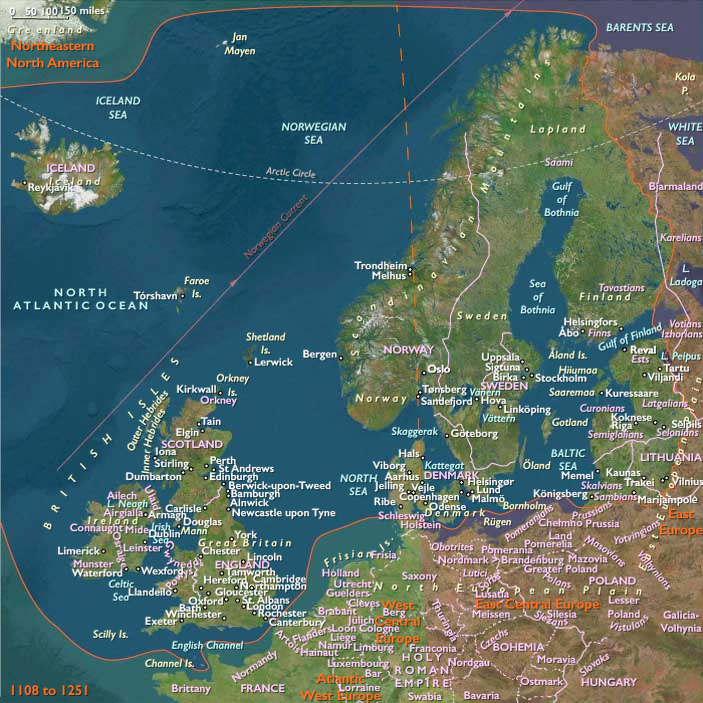
Although the later saga literature narrates stereotypical accounts about the two kings, Eystein is known to have improved the infrastructure and raised buildings and churches, particularly across the coast in Western Norway and Trøndelag, from Bergen to the fishing center of Lofoten in the north.
Eystein's activities are especially centered in Bergen, which becomes an important international trade hub for fish at the time, helped by his construction projects.
His activities in Bergen include moving the royal seat to a more central location in the city and building a new royal palace, as well as constructing churches and the Munkeliv Abbey.
Eystein dies of illness in August 1123, and his brother Sigurd thereby becomes the sole Norwegian king.