Eva Ekeblad
Swedish countess who is a salon hostess, agronomist, and scientist
Years: 1724 - 1786
Eva Ekeblad (née Eva De la Gardie; July 10, 1724 – May 15, 1786) is a Swedish countess who is a salon hostess, agronomist, and scientist.
She is widely known for discovering a method in 1746 to make alcohol and flour from potatoes, allowing greater use of scarce grains for food production, significantly reducing Sweden's incidence of famine.
Ekeblad is the first female member of the Royal Swedish Academy of Sciences (1748).[
Related Events
Filter results
Showing 4 events out of 4 total
Northeast Europe (1744–1755 CE): Diplomatic Stability, Economic Development, and Scientific Progress
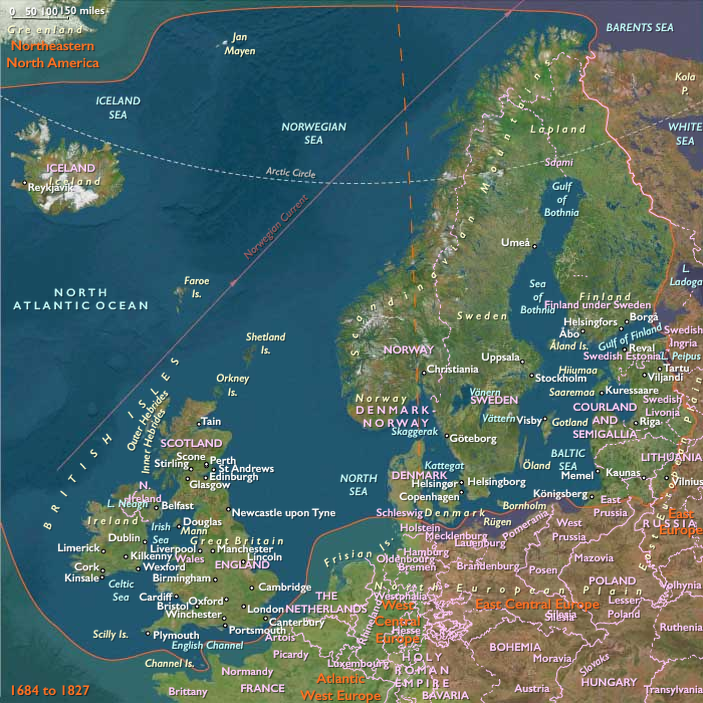
Between 1744 and 1755 CE, Northeast Europe experienced relative diplomatic stability, steady economic growth, significant agricultural innovation, and notable cultural advancements. Sweden persisted under parliamentary governance during its Age of Liberty, Denmark–Norway maintained strategic neutrality, Prussia continued to strengthen under Frederick the Great, and significant scientific contributions emerged, exemplified by the innovations of Swedish scientist Eva Ekeblad. External pressures from the rising Russian Empire continued influencing the region, particularly through ongoing strategic territorial adjustments and diplomatic interactions, though internal developments within Russia proper, including events in Saint Petersburg, remain outside the scope of this subregional narrative.
Sweden’s Age of Liberty and Parliamentary Governance
Sweden, under King Frederick I (r. 1720–1751) and subsequently Adolf Frederick (r. 1751–1771), maintained its parliamentary governance known as the Age of Liberty. Internal political rivalry between the influential Hat and Cap parties persisted, shaping both domestic policy and foreign relations. Despite diminished international stature, Sweden experienced steady economic recovery, improved agricultural practices, and notable scientific advances that significantly benefited the population.
Eva Ekeblad’s Agricultural Innovations and Recognition
A pivotal figure of this period was the Swedish aristocrat and scientist Eva Ekeblad (née De la Gardie). In 1746, Ekeblad communicated groundbreaking research to the Royal Swedish Academy of Sciences, detailing practical methods to produce flour and alcohol from potatoes. Although introduced to Sweden as early as 1658, potatoes had previously been cultivated exclusively by the aristocracy. Ekeblad’s innovations transformed the potato into a staple food source throughout Sweden, significantly improving food security, increasing grain supplies by replacing wheat, rye, and barley previously used for alcohol production, and substantially reducing the frequency and severity of famines.
Ekeblad’s additional scientific contributions further benefited society. In 1751, she developed a method for bleaching cotton textiles and yarn using soap, and in 1752, replaced hazardous ingredients in cosmetics with safer potato flour. Her innovative use of potato flowers as hair ornaments helped popularize the plant among the Swedish population. In recognition of her pioneering research, Ekeblad became the first woman elected to the Royal Swedish Academy of Sciences in 1748. Although never actively participating in meetings and later designated as an honorary rather than a full member due to gender restrictions, her achievements remained widely acknowledged and influential.
External Influence and Territorial Adjustments from Russia
Throughout this era, the external pressure and diplomatic influence of the Russian Empire continued to significantly shape Northeast Europe’s political and territorial landscape. Particularly notable was the continuing impact of previous Russian territorial gains from Sweden, such as the strategically vital southeastern areas of Finland including the fortress city of Viipuri (Vyborg). Although internal developments within Russia proper fall outside the scope of this narrative, Russian diplomatic interactions remained influential in Northeast European political alignments and strategic decisions.
Danish–Norwegian Stability and Economic Consolidation
Under Kings Christian VI (r. 1730–1746) and Frederick V (r. 1746–1766), Denmark–Norway sustained diplomatic neutrality, cautiously navigating regional politics. Internally, significant economic reforms, infrastructural improvements, and maritime commerce facilitated stable economic growth. Urban centers, notably Copenhagen, experienced increased cultural vitality, contributing to Denmark–Norway’s prosperity and stability.
Prussian Strengthening under Frederick the Great
Prussia, led by King Frederick II (Frederick the Great) (r. 1740–1786), intensified internal reforms, bolstering military strength, governmental efficiency, and economic resilience. Enlightened absolutist policies improved education, administration, and economic structures within territories such as the Kaliningrad (Königsberg) region, positioning Prussia as an influential and increasingly powerful Central European state, prudently navigating regional diplomacy.
Economic Expansion and Urban Prosperity
Major Northeast European urban centers—including Stockholm, Copenhagen, Königsberg, and Riga—experienced ongoing economic expansion. Continued peace, stable governance, and flourishing merchant networks facilitated robust maritime commerce and increased regional economic integration, significantly enhancing the prosperity and resilience of these cities.
Territorial Stability and Agricultural Advances in Finland
Despite previous territorial concessions to Russia, Finland remained internally stable under Swedish administration. Agricultural productivity improved notably during this period, bolstered by innovations like those introduced by Ekeblad, significantly enhancing food security and economic stability throughout Finland and offsetting challenges posed by territorial adjustments.
Cultural Flourishing and Scientific Advancements
Educational and cultural institutions in Sweden, Denmark–Norway, and Prussia received renewed investment, supporting cultural enrichment and intellectual advancement. Eva Ekeblad’s scientific breakthroughs epitomized the era’s spirit of intellectual curiosity and pragmatic innovation, significantly impacting regional agriculture, economics, and daily life.
Diplomatic Maneuvering and Regional Stability
Diplomatic activities remained strategically cautious as Northeast European powers adjusted to their post-Great Northern War realities. Sweden sought to stabilize its reduced geopolitical status through careful diplomacy, Denmark–Norway preserved neutrality and stability, and Prussia prudently navigated regional politics, each mindful of Russia’s continuing external influence.
Legacy of the Era
The period from 1744 to 1755 CE was crucial in stabilizing Northeast Europe's diplomatic relationships, promoting regional economic prosperity, and significantly advancing cultural and scientific progress. Agricultural innovations led by Eva Ekeblad exemplified enlightened inquiry's transformative impact on societal well-being, significantly enhancing food security and economic resilience. The careful diplomatic maneuvering and internal strengthening of Sweden, Denmark–Norway, and Prussia, coupled with the continuing external influence of Russia, profoundly shaped the region’s geopolitical trajectory and cultural development.
Potatoes had been introduced into Sweden in 1658, but until now only cultivated in the greenhouses of the aristocracy.
Ekeblad's work turns potatoes into a staple food in Sweden; it also increases the supply of wheat, rye and barley available for making bread, since potatoes could be used instead to make alcohol.
This greatly improves the country's eating habits and reduces the frequency of famines.
She also discovers a method of bleaching cotton textile and yarn with soap in 1751, and of replacing, in 1752, the dangerous ingredients in cosmetics of the time by using potato flower; she is said to have advertised the plant by using its flowers as hair ornaments.
In 1748, Eva Ekeblad becomes the first woman elected to Royal Swedish Academy of Sciences.
There are no records of her ever having participated in the meetings of the Academy.
The Academy in 1751 comes to refer to her as an honorary rather than a full member, as the statutes confine membership to men.
Northeast Europe (1756–1767 CE): Wartime Struggles, Diplomatic Shifts, and Social Progress
Between 1756 and 1767 CE, Northeast Europe was marked by wartime involvement, particularly influenced by the broader European conflicts of the Seven Years’ War (1756–1763), internal political adjustments, and continued economic and social progress. Sweden pursued renewed, though limited, military ambitions, Denmark–Norway navigated neutrality and economic expansion, Prussia emerged resilient from wartime challenges, and the Baltic territories—including Estonia, Latvia, and Lithuania—experienced gradual recovery and stabilization.
Sweden’s Limited Involvement in the Seven Years’ War
Sweden, under King Adolf Frederick (r. 1751–1771), participated briefly in the Seven Years’ War as part of a broader European coalition aimed at weakening Prussian influence. Encouraged by the dominant Hat party, Swedish forces invaded Prussian Pomerania in 1757, hoping to regain lost prestige and territory. However, due to limited military resources and unclear strategic objectives, Sweden achieved little success. In 1762, the conflict concluded without territorial changes for Sweden, highlighting the kingdom’s diminished geopolitical status and prompting further internal reflection on its international ambitions.
Danish–Norwegian Neutrality and Economic Growth
Under King Frederick V (r. 1746–1766) and subsequently Christian VII (from 1766), Denmark–Norway carefully maintained neutrality throughout the Seven Years’ War, strategically capitalizing on the conflict by enhancing trade and economic prosperity. Maritime commerce expanded significantly, particularly benefiting Copenhagen and other Danish-Norwegian ports. Continued investments in infrastructure, education, and agricultural productivity strengthened the kingdom’s internal stability and economic resilience, providing a stable foundation despite broader European instability.
Prussian Resilience and Strengthening under Frederick the Great
Prussia, led by King Frederick II (Frederick the Great) (r. 1740–1786), endured severe challenges during the Seven Years’ War, facing powerful European coalitions intent on reducing Prussian influence. Through skilled military strategy and diplomatic maneuvering, Prussia survived despite initial setbacks, emerging from the conflict battered yet ultimately strengthened. This period reinforced Prussia’s reputation as a resilient and influential state, solidifying its importance to Northeast Europe's geopolitical balance and strengthening economic and military institutions, notably in Königsberg (Kaliningrad).
Economic Resilience and Urban Stability in the Baltic
Cities within the Northeast Europe subregion—including Stockholm, Copenhagen, Königsberg, Riga, and Reval (Tallinn)—displayed notable economic resilience despite wartime disruptions. Enhanced governance, robust merchant networks, and carefully maintained neutrality (in Denmark–Norway’s case) facilitated continued prosperity. Maritime trade thrived, particularly through Danish and Swedish ports, reflecting broader regional economic stability and growth.
Stability and Continued Agricultural Progress in Finland
In Finland, remaining under Swedish administration, internal stability persisted despite Sweden’s limited military engagements. Agricultural productivity further improved, partly due to ongoing adoption of innovations such as those introduced earlier by Eva Ekeblad. These advances continued to bolster food security and economic stability within Finland, effectively mitigating the effects of external geopolitical tensions and limited wartime disruptions.
Social Progress and Cultural Advancement
Throughout Northeast Europe, cultural and educational institutions continued to flourish, benefiting from sustained investments and patronage. Prominent universities and academies in Stockholm, Copenhagen, and Königsberg actively promoted intellectual and scientific progress. Notable advancements occurred in literature, natural sciences, agriculture, and philosophy, reflecting the era's broader Enlightenment ideals.
Political Developments in the Baltic Territories
The Baltic territories of Estonia, Latvia, and Lithuania continued recovering from earlier wartime disruptions and stabilized economically and socially. Under stable governance structures, predominantly influenced by local Baltic-German nobility and sustained urban commercial activity, these territories experienced steady economic recovery and relative internal tranquility, despite continuing external diplomatic pressures.
Diplomatic Realignments and Regional Stability
Diplomatic interactions remained complex, characterized by careful maneuvering and pragmatic neutrality. Sweden’s unsuccessful military venture against Prussia underscored its reduced geopolitical influence. Denmark–Norway skillfully leveraged its neutrality to maintain stability and economic growth, while Prussia emerged diplomatically strengthened by successfully weathering wartime challenges. External influences, notably from Russia—though primarily beyond this subregion—continued indirectly impacting Northeast Europe's diplomatic strategies and territorial alignments.
Legacy of the Era
The period from 1756 to 1767 CE significantly influenced Northeast Europe’s geopolitical balance, economic resilience, and cultural trajectory. Sweden's limited wartime involvement reaffirmed its reduced regional status, prompting internal reflection and economic pragmatism. Denmark–Norway’s strategic neutrality fostered economic prosperity and stability, and Prussia’s endurance in the Seven Years’ War firmly positioned it as an influential and resilient state within Northeast Europe. Collectively, these developments contributed significantly to shaping diplomatic relationships, economic stability, and cultural advancement across the region, establishing foundational conditions for subsequent historical periods.
Northeast Europe (1768–1779 CE): Political Realignment, Enlightened Reform, and Economic Expansion
Between 1768 and 1779 CE, Northeast Europe entered a period marked by political realignments, substantial economic growth, internal administrative reforms, and sustained cultural flourishing influenced by Enlightenment ideals. During this era, Sweden transitioned from its parliamentary-based Age of Liberty toward renewed royal authority, Denmark–Norway implemented enlightened reforms under new leadership, Prussia solidified its strength under Frederick the Great, and the Baltic territories—including Estonia, Latvia, and Lithuania—experienced steady stabilization and growth.
Sweden: From Parliamentary Factionalism to Gustavian Absolutism
Sweden, concluding its parliamentary-led Age of Liberty, experienced significant internal political shifts during this period. The previously dominant Hat and Cap parties had increasingly shown limitations, both domestically and in foreign affairs. This political instability culminated in the royal coup of 1772, led by King Gustav III (r. 1771–1792), who decisively ended parliamentary dominance and restored royal authority through the promulgation of a new constitution known as the Instrument of Government (1772). Gustav’s absolutist reforms were influenced by Enlightenment ideals, promoting efficiency, economic reform, and cultural patronage, significantly reshaping Swedish political structures and revitalizing national unity.
Denmark–Norway: Enlightened Reforms under Johann Friedrich Struensee
Under the mentally unstable Christian VII (r. 1766–1808), Denmark–Norway underwent profound internal transformations. From 1770–1772, the German physician and minister Johann Friedrich Struensee effectively ruled as de facto regent. Struensee introduced sweeping reforms influenced by Enlightenment principles, including the abolition of censorship, rationalization of the government bureaucracy, judicial modernization, economic liberalization, and improved social welfare measures. Although his reforms proved controversial, and he was ultimately overthrown and executed in 1772, many of his initiatives had lasting impacts, contributing to greater administrative efficiency and socioeconomic modernization.
Prussian Consolidation and Enlightenment Governance
In Prussia, King Frederick II (Frederick the Great) (r. 1740–1786) continued enlightened administrative, economic, and military reforms, firmly establishing Prussia’s strength and stability. Frederick expanded economic and agricultural productivity, improved administrative efficiency, and reinforced military readiness. His enlightened reforms in areas such as education, justice, agriculture, and governance significantly strengthened the Prussian territories, including the strategically important exclave of Königsberg (Kaliningrad), thus reinforcing Prussia’s dominant regional position.
Economic Prosperity and Urban Development
Economic prosperity characterized the major urban centers of Northeast Europe, including Stockholm, Copenhagen, Königsberg, Riga, and Reval (Tallinn). Stable governance, improved infrastructure, and increased investment in maritime commerce facilitated robust growth. Merchant networks thrived, especially in Danish and Swedish Baltic trade, and urban economic integration with broader European markets intensified.
Finland: Internal Stability and Agricultural Productivity
Finland, still part of the Swedish kingdom, enjoyed sustained internal stability and continued improvements in agriculture and commerce. The application of scientific agriculture, drawing partly on earlier innovations such as those introduced by Eva Ekeblad, improved food security and economic well-being, despite lingering external geopolitical pressures.
Stability and Development in the Baltic Territories
The Baltic territories—Estonia, Latvia, and Lithuania—maintained internal stability and gradual economic expansion. Baltic-German nobility continued to dominate regional governance, ensuring continuity and stability. Urban centers, notably Riga and Reval, prospered through strengthened commerce, cultural patronage, and local educational advancements influenced by broader Enlightenment trends.
Cultural and Intellectual Advancements
Cultural and educational institutions across Northeast Europe thrived during this era. Sweden’s King Gustav III notably became a generous patron of the arts, founding institutions like the Royal Swedish Opera (Kungliga Operan) in 1773. Danish-Norwegian universities and academies continued to promote Enlightenment thought, while in Prussia, intellectual and educational reforms further enhanced academic prestige. Throughout the region, Enlightenment ideas significantly influenced social reforms, governance, education, and cultural life.
Diplomatic Stability and Pragmatic Realignments
Diplomatic relations across Northeast Europe during this period were characterized by cautious realignment and pragmatic neutrality. Sweden and Denmark–Norway, navigating their political transformations, maintained peaceful external policies, avoiding major military entanglements. Prussia continued its diplomatic prudence under Frederick II, avoiding destabilizing regional conflicts while consolidating its European diplomatic standing.
Legacy of the Era
The period from 1768 to 1779 CE proved transformative for Northeast Europe, witnessing substantial political realignments, enlightened governance, cultural patronage, and sustained economic expansion. Sweden’s shift toward Gustavian absolutism reshaped political dynamics, while Denmark–Norway’s brief yet impactful Struensee reforms modernized administrative structures. Prussia’s continued internal strengthening firmly positioned it as a resilient European power. Collectively, these developments significantly influenced the region’s socioeconomic trajectory, diplomatic relationships, and cultural evolution into subsequent historical periods.