Emperor Yang of Sui
2nd emperor of China's Sui Dynasty
Years: 569 - 618
Emperor Yang of Sui (569 – April 11, 618), personal name Yang Guang, alternative name Ying , nickname Amo, known as Emperor Ming during the brief reign of his grandson Yang Tong), is the second son of Emperor Wen of Sui, and the second emperor of China's Sui Dynasty.
Emperor Yang's original name was Yang Ying, but was renamed by his father, after consulting with oracles, to Yang Guang.
Yang Guang is made the Prince of Jin after Emperor Wen establishes the Sui Dynasty in 581.
In 588, he is granted command of the five armies that invade the southern Chen Dynasty and is widely praised for the success of this campaign.
These military achievements, as well as his machinations against his older brother Yang Yong, leda to him becoming crown prince in 600.
After the death of his father in 604, generally considered, though unproven, by most traditional historians to be a murder ordered by Yang Guang, he ascends the throne as Emperor Yang.
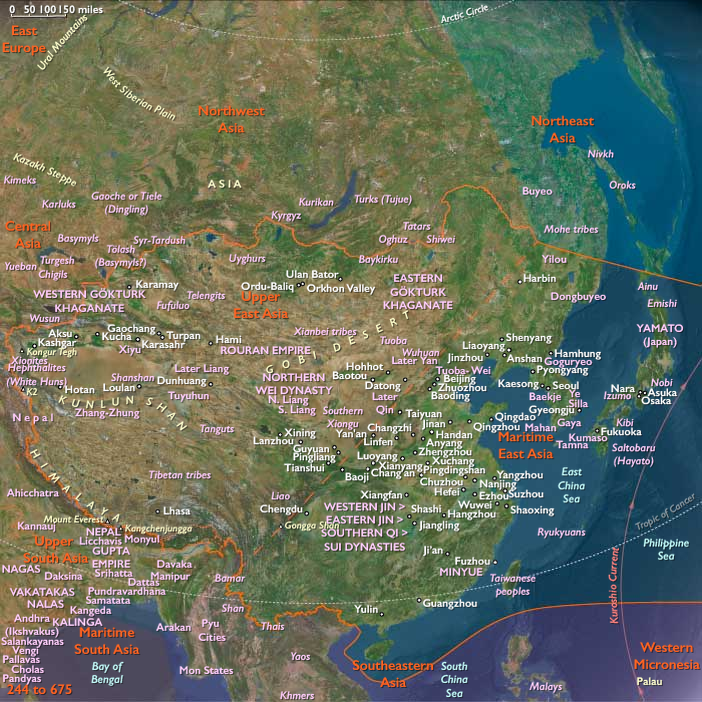
Emperor Yang, ruling from 606 to 618, commits to several large construction projects, most notably the completion of the Grand Canal.
He commands the reconstruction of the Great Wall, a project that takes the lives of nearly six million workers.
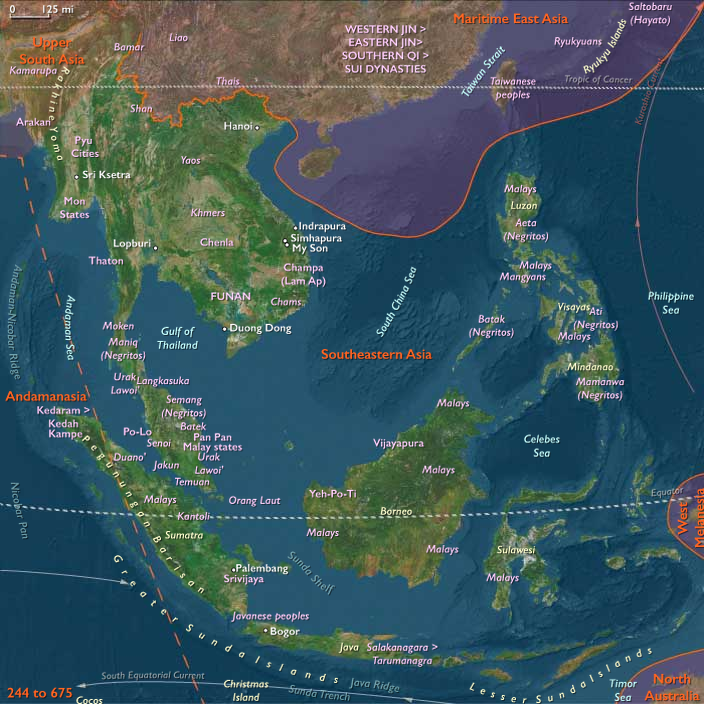
He also orders several military expeditions that bring Sui to its greatest territorial extent, one of which, the conquest of Champa in what is now central and southern Vietnam, results in the death of thousands of Sui soldiers from malaria.
These expeditions, along with a series of disastrous campaigns against Goguryeo (one of the three kingdoms of Korea), leave the empire bankrupt and a populace in revolt.
With northern China in turmoil, Emperor Yang spends his last days in Jiangdu (in modern Yangzhou, Jiangsu), where he is eventually strangled in a coup led by his general Yuwen Huaji.
Emperor Yang commits almost eight million people to constructing roads, palaces, the Grand Canal, the Great Wall and ships.
The redesigning of Luoyang, designated as the eastern capital, alone requires a quarter of that workforce and as does the building of the Grand Canal.
Equally manpower-consuming are the three expeditions against Goguryeo, each one needing about a million men.
Despite his accomplishments, Emperor Yang is generally considered by traditional historians to be one of the worst tyrants in Chinese history and the reason for the Sui Dynasty's relatively short rule.
His failed campaigns against Goguryeo, and the conscriptions levied to man them, coupled with increased taxation to finance these wars and civil unrest as a result of this taxation ultimately lead to the downfall of the dynasty.