Emperor Wen of Sui
founder and 1st emperor of China's Sui Dynasty
Years: 541 - 604
Emperor Wen of Sui (July 21, 541 – August 13, 604) — personal name Yang Jian, Xianbei name Puliuru Jian, nickname Naluoyan — is the founder and first emperor of China's Sui Dynasty (581-618).
He is a hard-working administrator and a micromanager.
As a Buddhist, he encourages the spread of Buddhism through the state.
He is regarded as one of the most important emperors in Chinese history, reunifying China in 589 after centuries of division since the fall of Western Jin Dynasty in 316.
During his reign begins the construction of the Grand Canal.
As a Northern Zhou official, Yang Jian serves with apparent distinction during the reigns of Emperor Wu of Northern Zhou and Emperor Xuan of Northern Zhou.
When the erratic Emperor Xuan dies in 580, Yang, as his father-in-law, seizes power as regent.
After defeating the general Yuchi Jiong, who resists him, he seizes the throne for himself, establishing the new Sui Dynasty (as its Emperor Wen).
He is the first Chinese to rule North China after the Xianbei invasion, which had conquered that area from the Liu Song dynasty (not counting the brief reconquest of that region by Emperor Wu of Liang).
Generally speaking, Emperor Wen's reign is a great period of prosperity not seen since the Han Dynasty.
Economically, the dynasty prospers.
It is said that there was enough food stored for 50 years.
The military is also powerful.
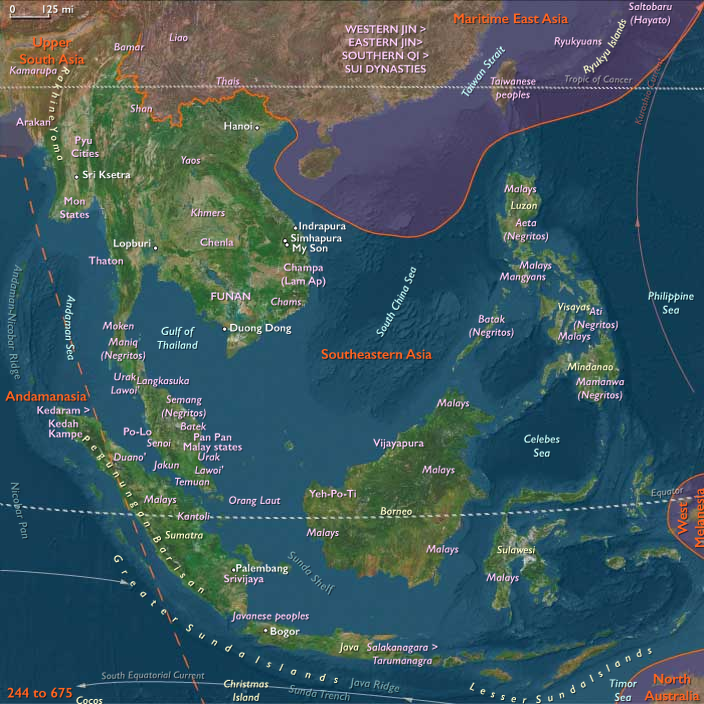
At the beginning of his reign, Sui faces the threat of Tujue to the north, and neighboring Tibetan tribes to the west, Goguryeo in the northeast, and the kingdom known as Champa threatening the south.
By the end of Emperor Wen's reign, Tujue has split into an eastern and a western kaganate, the eastern one being nominally submissive to Sui, as is Goguryeo.
Linyi is defeated and, while not conquered, does not remain a threat.
Emperor Wen is also famous for having the fewest number of concubines for an adult Chinese emperor.
(The Ming Dynasty Hongzhi Emperor is the only perpetually monogamous Chinese emperor.)
Emperor Wen is known for having only two concubines (although he might have had additional concubines not documented by traditional historians), with whom he might not have had sexual relations until after the death in 602 of his wife Empress Dugu Qieluo, whom he loved and respected deeply.
Emperor Taizong of Tang, by comparison, is said to have had over 3000 concubines in his palaces.