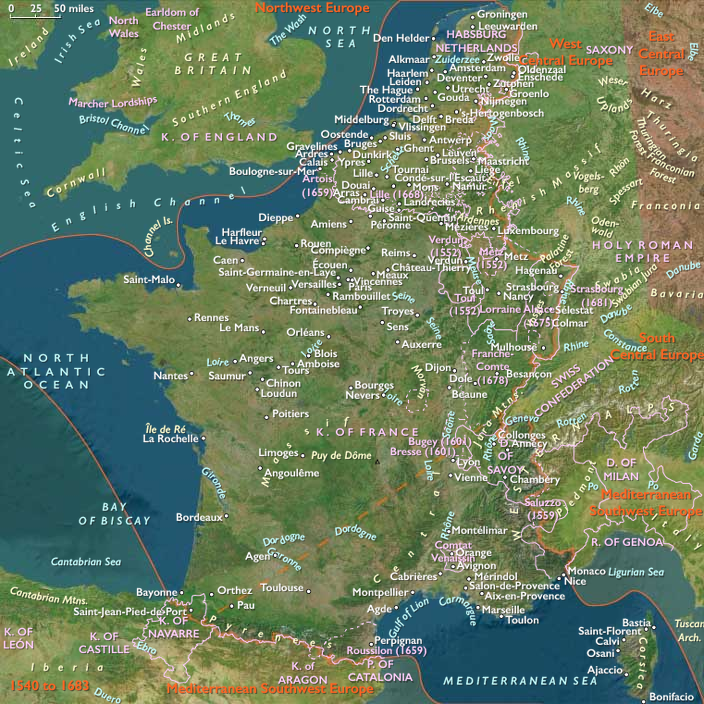
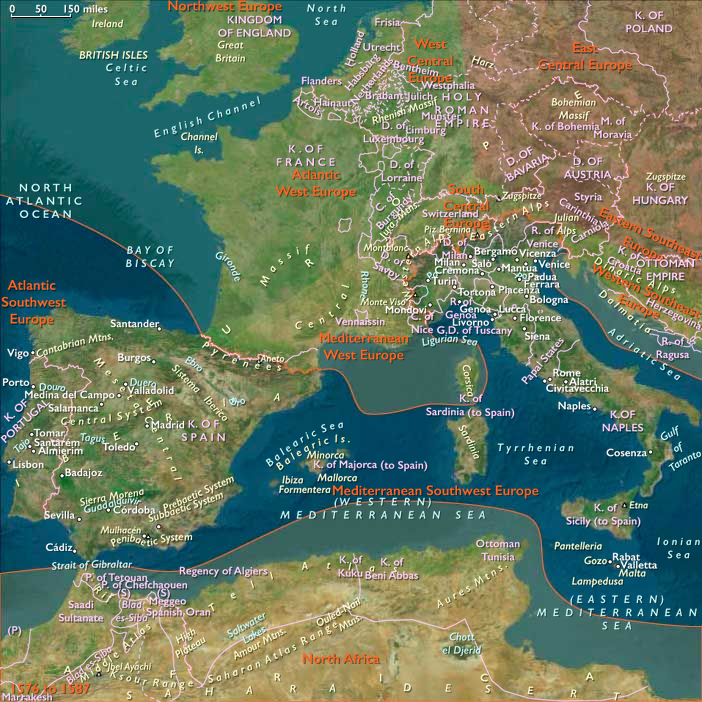
The focus of the war has shifted to Flanders after Charles' abdication in 1556 had split the Habsburg empire between Philip II of Spain and Ferdinand I.
Gaspard de Coligny is in 1557 entrusted with the defense of Saint-Quentin against Spanish forces under the command of Duke Emmanuel Philibert of Savoy in an alliance with English troops.
The English army under the Earl of Pembroke does not arrive in time for the battle on August 10, but plays a significant role in the capture of the city that follows.
Pembroke is Mary's most effective commander at the battle of St. Quentin, leading the English contingent to victory that includes among the officers such former reformists as Lord Bray, Sir Peter Carew, Sir Nicholas Throckmorton and the surviving sons of the duke of Northumberland; Ambrose and Lord Robert Dudley.
John Dudley, the son of Northumberland, had died not long after he left the Tower and his three surviving brothers had been pardoned for their recorded treasons in January, 1555 and so duly serves the Queen and King Philip on the St. Quentin expedition, where Henry Dudley is killed and his remaining brothers win the restoration of their honor and titles.
Coligny displays great courage, resolution, and strength of character in the siege, but after the fall of the city he is captured and imprisoned.
Montmorency's attempt to relieve St. Quentin leads to his defeat and capture by Spanish Habsburg forces.
As to Philip, after the victory, 'the sight of the battlefield gave him (Philip) a permanent distaste for war' and he declines to pursue his advantage, withdrawing to the Netherlands.
The greatest impact of this battle, however, is not on France, England or Spain, but on Italy: Savoy, having won the victory, has also secured a place at the conference table when the terms of peace will be deliberated.