Eftherios Venizelos
Greek statesman and a prominent leader of the Greek national liberation movement
Years: 1864 - 1936
Eftherios Kyriakou Venizelos (August 123 [O.S. August 11] 1864 – March 18, 1936) is a Greek statesman and a prominent leader of the Greek national liberation movement.
He is noted for his contribution in the expansion of Greece and promotion of liberal-democratic policies.
As leader of the Liberal Party, he is elected eight times as Prime Minister of Greece, serving from 1910 to 1920 and from 1928 to 1933.
Venizelos has such profound influence on the internal and external affairs of Greece that he is credited with being "the maker of modern Greece", and is still widely known as the "Ethnarch".
His first entry into the international scene is with his significant role in the autonomy of the Cretan State and later in the union of Crete with Greece.
Soon, he is invited to Greece to resolve the political deadlock and became the country's Prime Minister.
Not only does he initiate constitutional and economic reforms that set the basis for the modernization of Greek society, but also reorganizes both army and navy in preparation of future conflicts.
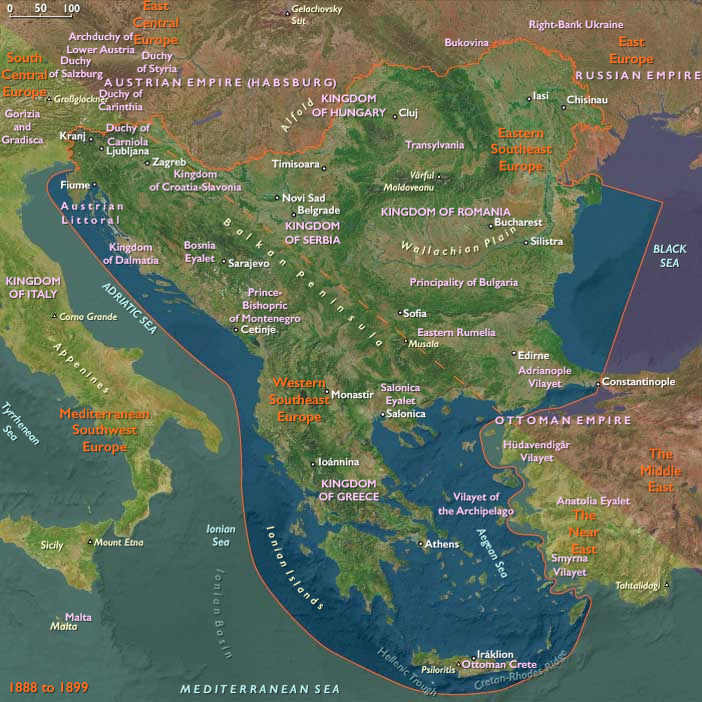
Before the Balkan Wars of 1912–1913, Venizelos' catalytic role helps gain Greece entrance to the Balkan League, an alliance of the Balkan states against the Ottoman Empire.
Through his diplomatic acumen, Greece doubles its area and population with the liberation of Macedonia, Epirus, and most of the Aegean islands.
In the First World War (1914–1918), he brings Greece on the side of the Allies, further expanding the Greek borders.
However, his pro-Allied foreign policy brings him into direct conflict with Constantine I of Greece, causing the National Schism.
The Schism polarizes the population between the royalists and Venizelists and the struggle for power between the two groups affects the political and social life of Greece for decades.
Following the Allied victory, Venizelos secures new territorial gains, especially in Anatolia, coming close to realizing the Megali Idea.
Despite his achievements, he is defeated in the 1920 General Election, which contributes to the eventual Greek defeat in the Greco-Turkish War (1919–22).
Venizelos, in self-imposed exile, represents Greece in the negotiations that lead to the signing of the Treaty of Lausanne and the agreement of a mutual population exchange between Greece and Turkey.
In his subsequent periods in office, Venizelos restores normal relations with Greece's neighbors and expands his constitutional and economic reforms.
In 1935, he resurfaces from retirement to support a military coup.
The coup's failure severely weakens the Second Hellenic Republic.