Edward VI of England
King of England, and King of Ireland
Years: 1537 - 1553
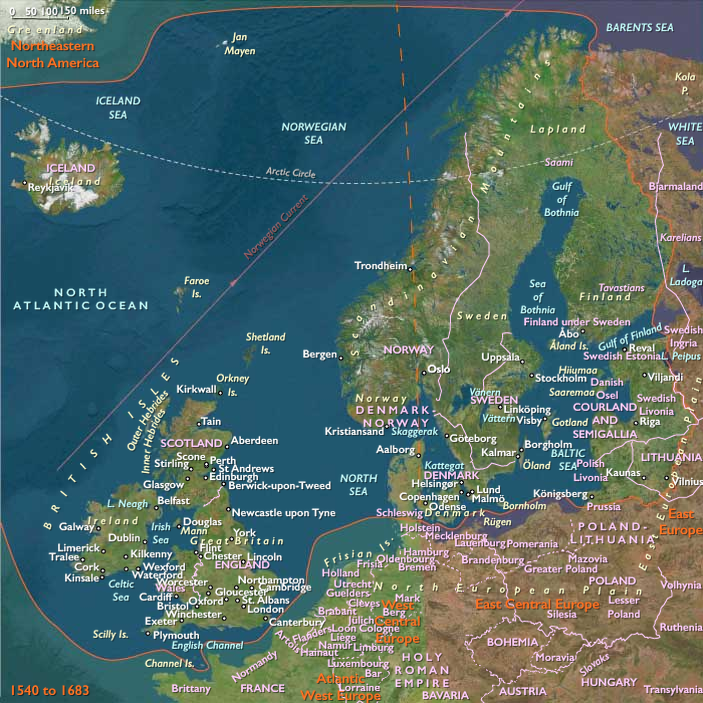
Edward VI (12 October 1537 – 6 July 1553) becomes King of England and Ireland on 28 January 1547 and is crowned on 20 February at the age of nine.
The son of Henry VIII and Jane Seymour, Edward is the third monarch of the Tudor dynasty and England's first ruler who is raised as a Protestant.
During Edward's reign, the realm is governed by a Regency Council, because he never reaches maturity.
The Council is led by his uncle Edward Seymour, 1st Duke of Somerset, (1547–1549), and then by John Dudley, 1st Earl of Warwick, (1550–1553), who later becomes Duke of Northumberland.
Edward's reign is marked by economic problems and social unrest that, in 1549, erupt into riot and rebellion.
A war with Scotland, at first successful, ends with military withdrawal from there and Boulogne-sur-Mer.
The transformation of the Anglican Church into a recognizably Protestant body also occurs under Edward, who takes great interest in religious matters.
Although Henry VIII had severed the link between the Church of England and Rome, he never permitted the renunciation of Catholic doctrine or ceremony.
It is during Edward's reign that Protestantism is established for the first time in England with reforms that include the abolition of clerical celibacy and the Mass and the imposition of compulsory services in English.
The architect of these reforms is Thomas Cranmer, Archbishop of Canterbury, whose Book of Common Prayer has proved lasting.
Edward falls ill in January 1553, and when it is discovered to be terminal, he and his Council draw up a "Devise for the Succession", attempting to prevent the country being returned to Catholicism.
Edward names his cousin Lady Jane Grey as his heir and excludes his half sisters, Mary and Elizabeth.
However, this is disputed following Edward's death and Jane is only queen for nine days before Edward's half-sister, Mary, is proclaimed Queen.
She proceeds to reverse many of Edward's Protestant reforms, but Elizabeth's religious settlement of 1559 will secure his Protestant legacy.