Edward Jenner
English physician and scientist
Years: 1749 - 1823
Edward Anthony Jenner (17 May 1749 – 26 January 1823) is an English physician and scientist from Berkeley, Gloucestershire, who is the pioneer of smallpox vaccine.
He is often called "the father of immunology", and his work is said to have "saved more lives than the work of any other man"
Related Events
Filter results
Showing 7 events out of 7 total
Inoculation against smallpox is already a standard practice but involves serious risks.
In 1721, Lady Mary Wortley Montagu had imported variolation to Britain after having observed it in Istanbul, where her husband was the British ambassador.
Voltaire, writing of this, estimated that at this time sixty percent of the population caught smallpox and twenty percent of the population died of it.
Voltaire also stated that the Circassians used the inoculation from times immemorial, and the custom may have been borrowed by the Turks from the Circassians.
In 1765, a Dr. Fewster had published a paper in the London Medical Society entitled "Cow pox and its ability to prevent smallpox", but he had not pursued the subject further.
In the years following 1770, at least five investigators in England and Germany (Sevel, Jensen, Jesty 1774, Rendell, Plett 1791) had successfully tested a cowpox vaccine in humans against smallpox.
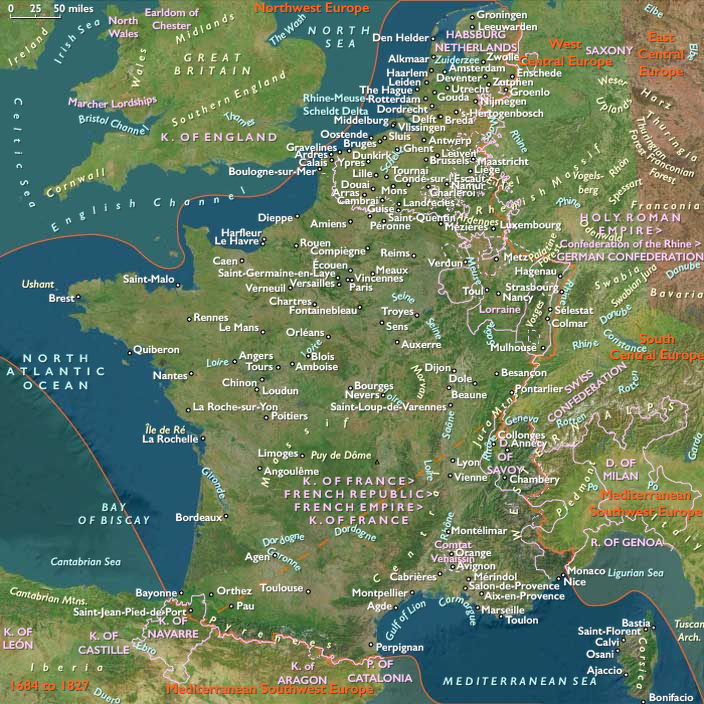
For example, Dorset farmer Benjamin Jesty had successfully vaccinated and presumably induced immunity with cowpox in his wife and two children during a smallpox epidemic in 1774, but it is not until Edward Jenner's work some twenty years later that the procedure becomes widely understood.
Edward Jenner, who had earned his MD from the University of St. Andrews in 1792, is also credited with advancing understanding of angina pectoris.
In his correspondence with Heberden, he wrote, "How much the heart must suffer from the coronary arteries not being able to perform their functions."
The initial source of cowpox infection is a disease of horses, called "the grease", which is transferred to cows by farm workers, transforms and then manifests as cowpox.
Noting the common observation that milkmaids are generally immune to smallpox, Jenner postulates that the pus in the blisters that milkmaids receive from cowpox (a disease similar to smallpox, but much less virulent) protects them from smallpox.
He may already have heard of Jesty's success.

Edward Jenner tests his hypothesis on May 14, 1796, by inoculating James Phipps, a boy eight years old (the son of Jenner's gardener), with pus scraped from the cowpox blisters on the hands of Sarah Nelmes, a milkmaid who had caught cowpox (from a cow called Blossom, whose hide now hangs on the wall of the St. George's medical school library, now in Tooting).
Phipps is the seventeenth case described in Jenner's first paper on vaccination.
Jenner inoculates Phipps in both arms that day, subsequently producing in Phipps a fever and some uneasiness but no full-blown infection.
Later, he injects Phipps with variolous material, the routine method of immunization at this time.
No disease follows.
The boy is later challenged with variolous material and again shows no sign of infection.
Ronald Hopkins has written, "Jenner's unique contribution was not that he inoculated a few persons with cowpox, but that he then proved [by subsequent challenges] that they were immune to smallpox.
Moreover, he demonstrated that the protective cowpox pus could be effectively inoculated from person to person, not just directly from cattle. (Hopkins, Donald R. (2002). The greatest killer: smallpox in history, with a new introduction. Chicago: University of Chicago Press. p. 80).
In addition, Jenner successfully tests his hypothesis on twenty-three additional subjects.
Edward Jenner’s elder son, twenty-one, dies of tuberculosis around 1800.
The Balmis Expedition (1803–1806) – The First International Healthcare Mission
The Balmis Expedition, officially known as the Real Expedición Filantrópica de la Vacuna (Royal Philanthropic Vaccine Expedition), was the first international public health mission in history. Launched by King Charles IV of Spain, it aimed to vaccinate millions against smallpox across Spanish America, the Philippines, and even China.
Origins and Royal Support
- King Charles IV supported the expedition after his daughter, Infanta Maria Teresa, had died from smallpox, recognizing the urgent need for mass immunization.
- Francisco Javier de Balmis, the royal physician, led the mission, with the full backing of the Spanish Crown.
- The British scientist Edward Jenner, the pioneer of the smallpox vaccine, later praised the expedition, writing:
"I don't imagine the annals of history furnish an example of philanthropy so noble, so extensive as this."
The Journey Begins – November 30, 1803
- The expedition set sail from A Coruña aboard the ship María Pita, carrying:
- 22 orphan boys (aged 8–10) to serve as successive carriers of the live cowpox virus (since refrigeration did not yet exist).
- Balmis’ medical team, including:
- A deputy surgeon
- Two assistants
- Two first-aid practitioners
- Three nurses
- Isabel Zendal Gómez, the rectoress of the orphanage Casa de Expósitos, who cared for the orphans throughout the journey.
A Three-Year Mission Across the World
The expedition was unprecedented in scale, bringing the vaccine to:
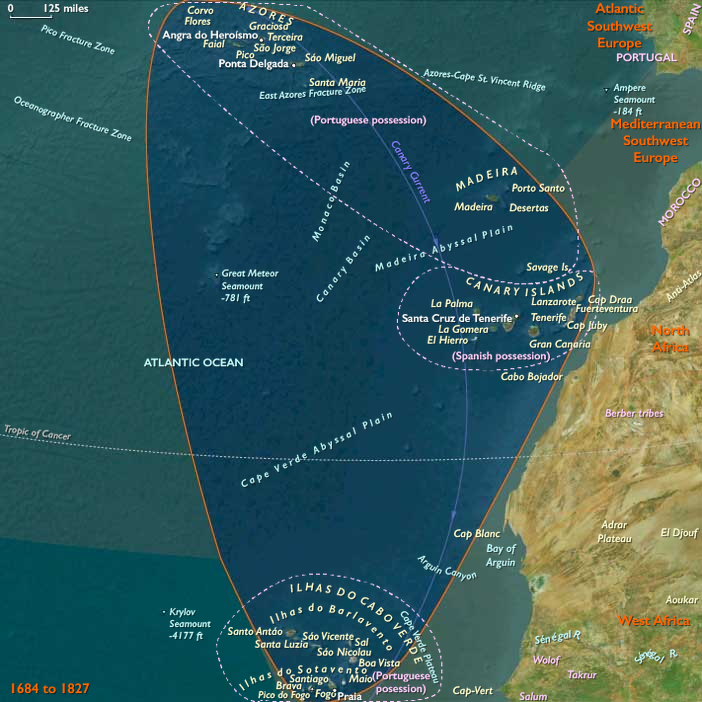
- The Canary Islands
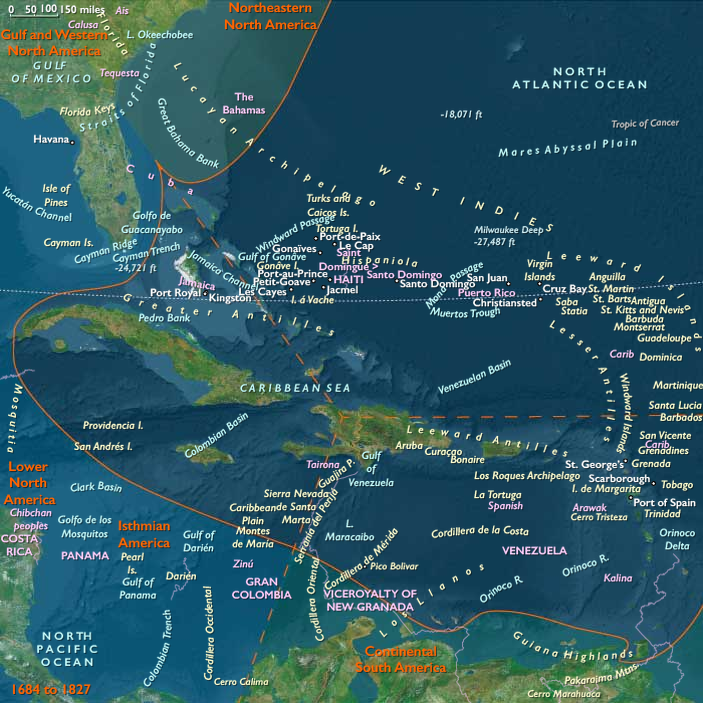
- Spanish America (including present-day Colombia, Ecuador, Peru, Mexico, and Venezuela)
- The Philippines
- China
Balmis personally traveled through:
- Puerto Rico
- Puerto Cabello
- Caracas
- Havana
- Mérida
- Veracruz
- Mexico City
The vaccine was even transported as far north as Texas and as far south as New Granada (modern Colombia and Ecuador).
Scientific and Medical Contributions
- The expedition also carried scientific instruments and translations of the Historical and Practical Treatise on the Vaccine by Moreau de Sarthe, distributing them to local vaccine commissions to ensure continued immunization efforts.
- The Spanish government established vaccination boards in the territories visited, creating a lasting infrastructure for public health.
Legacy – A Revolutionary Medical Achievement
- The Balmis Expedition was one of the greatest humanitarian efforts of the 19th century, demonstrating the power of vaccination to combat disease.
- It laid the foundation for global immunization campaigns, long before modern public health organizations emerged.
- Isabel Zendal Gómez is recognized as the first nurse to participate in an international medical mission, highlighting the role of women in early healthcare initiatives.
Conclusion – A Noble and Unparalleled Philanthropic Mission
The Balmis Expedition was a visionary global health campaign, ensuring that millions of people in Spain’s overseas territories gained access to life-saving smallpox vaccinations. Its impact was far-reaching, influencing future immunization efforts and demonstrating how scientific advancement could be harnessed for the public good.
Jenner is granted another twenty thousand pounds for his continuing work in microbiology in 1806.
His continuing work on vaccination had prevented his continuing his ordinary medical practice.
He has been supported by his colleagues and the King in petitioning Parliament and had earlier been granted ten thousand pounds for his work on vaccination.
Edward Jenner had continued his research on the smallpox vaccine and reported it to the Royal Society, which did not publish the initial paper.
After revisions and further investigations, he published his findings on the twenty-three cases.
Some of his conclusions are correct, some erroneous; modern microbiological and microscopic methods will make his studies easier to reproduce.
The medical establishment, cautious then as now, deliberates at length over his findings before accepting them.
Eventually, vaccination is accepted, and in 1840 the British government will ban variolation—the use of smallpox—and provide vaccination—using cowpox—free of charge.
The success of his discovery had soon spread around Europe and for example was used en masse in the Spanish Balmis Expedition, a three year long mission to the Americas, Philippines, Macao, China, and Saint Helena Island led by Dr. Francisco Javier de Balmis with the aim of giving thousands the smallpox vaccine.
The expedition is successful, and Jenner writes, "I don’t imagine the annals of history furnish an example of philanthropy so noble, so extensive as this."
Jenner had become a member of the Medical and Chirurgical Society on its founding in 1805 and presented a number of papers there.
The society is now the Royal Society of Medicine.
In 1806, Jenner is elected a foreign member of the Royal Swedish Academy of Sciences.
Edward Jenner, returning to London in 1811, observes a significant number of cases of smallpox after vaccination, finding that in these cases the severity of the illness is notably diminished by previous vaccination.
He had become involved in 1803 with the Jennerian Institution, a London-based society concerned with promoting vaccination to eradicate smallpox.
In 1808, with government aid, this society became the National Vaccine Establishment.
Edward Jenner had been appointed Physician Extraordinary to King George IV, a great national honor, in 1821 and had also been made Mayor of Berkeley and Justice of the Peace.
He has continued to investigate natural history and in 1823, the last year of his life, he presents his Observations on the Migration of Birds to the Royal Society.
Jenner had been found in a state of apoplexy on January 25, 1823, with his right side paralyzed.
He never fully recovers and eventually dies of an apparent stroke, his second, on January 26, 1823, aged seventy-three.
He is survived by one son and one daughter, his elder son having died of tuberculosis at the age of twenty-one.