Edward III of England
King of England
Years: 1312 - 1377
Edward III (November 13, 1312 –June 21, 1377) is King of England from January 25, 1327 until his death; he is noted for his military success and for restoring royal authority after the disastrous reign of his father, Edward II.
Edward III transforms the Kingdom of England into one of the most formidable military powers in Europe.
His long reign of fifty years also sees vital developments in legislation and government—in particular the evolution of the English parliament—as well as the ravages of the Black Death.
Edward is crowned at age fourteen after his father is deposed by his mother and her lover Roger Mortimer.
At age seventeen he leads a successful coup against Mortimer, the de facto ruler of the country, and begins his personal reign.
After a successful campaign in Scotland he declares himself rightful heir to the French throne in 1337 but his claim is denied due to the Salic law.
This starts what will become known as the Hundred Years' War.
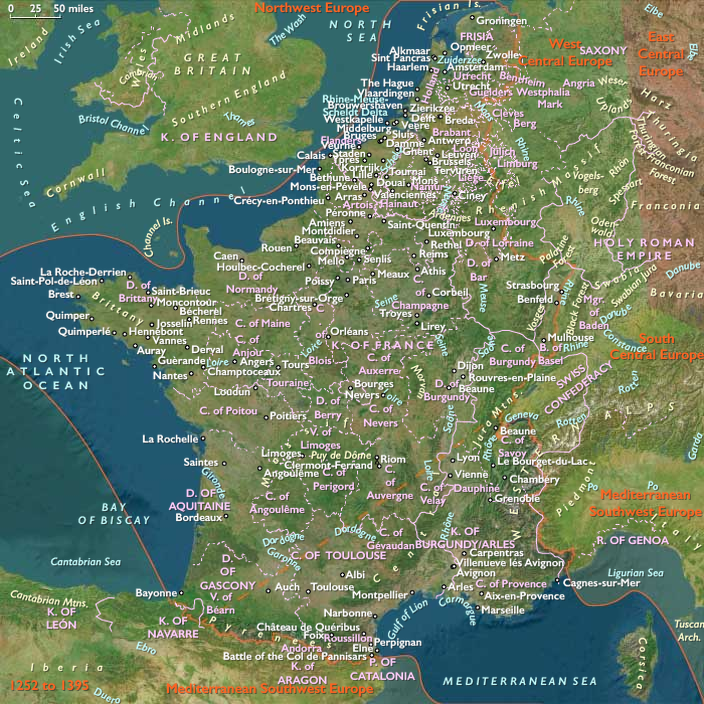
Following some initial setbacks the war goes exceptionally well for England; victories at Crécy and Poitiers lead to the highly favorable Treaty of Brétigny.
Edward's later years, however, are marked by international failure and domestic strife, largely as a result of his inactivity and poor health.
Edward III is a temperamental man but capable of unusual clemency.
He is in many ways a conventional king whose main interest is warfare.
Admired in his own time and for centuries after, Edward is denounced as an irresponsible adventurer by later Whig historians such as William Stubbs.
This view has been challenged recently and modern historians credit him with some significant achievements.