Dionysius Exiguus
Latin prose writer
Years: 470 - 544
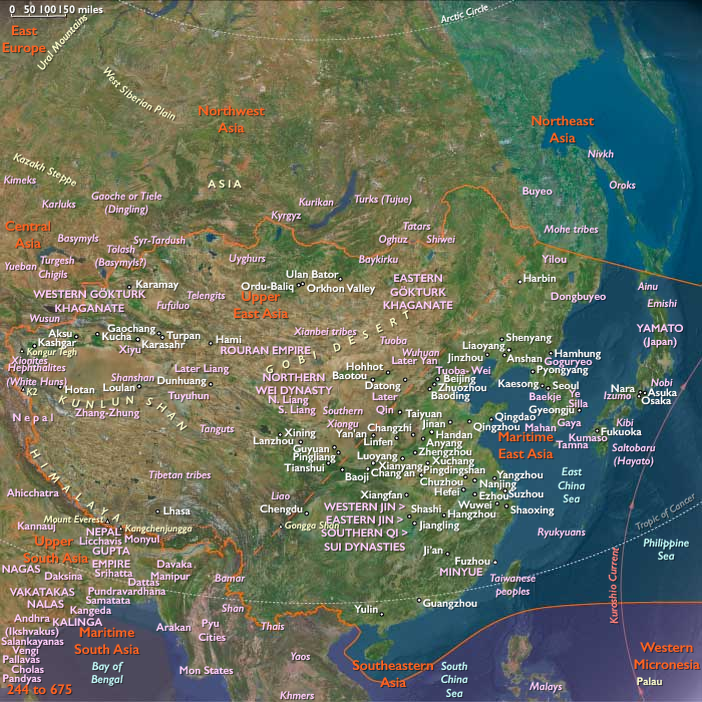
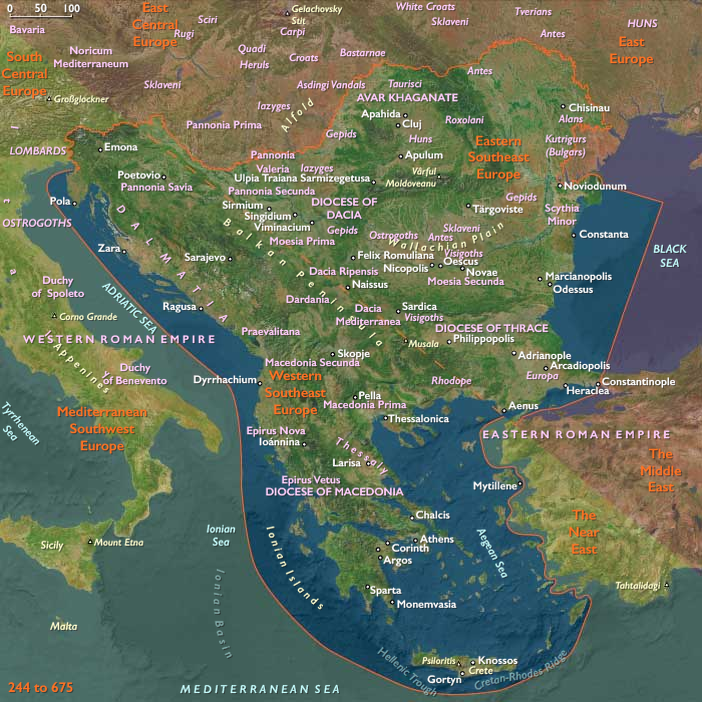
Dionysius Exiguus (Dennis the Small, Dennis the Dwarf, Dennis the Little or Dennis the Short, meaning humble) (c. 470 – c. 544) is a 6th-century monk born in Scythia Minor, modern Dobruja shared by Romania and Bulgaria.
He is a member of the Scythian monks community concentrated in Tomis, the major city of Scythia Minor.
Dionysius is best known as the "inventor" of the Anno Domini (AD) era, which is used to number the years of both the Gregorian calendar and the (Christianized) Julian calendar.
From about 500 he lives in Rome, where, as a learned member of the Roman Curia, he translates from Greek into Latin 401 ecclesiastical canons, including the apostolical canons and the decrees of the councils of Nicaea, Constantinople, Chalcedon and Sardis, and also a collection of the decretals of the popes from Siricius to Anastasius II.
These collections have great authority in the West and still guide church administrations.
Dionysius also writes a treatise on elementary mathematics.
The author of a continuation of Dionysius's Computus, writing in 616, described Dionysius as a "most learned abbot of the city of Rome", and the Venerable Bede accorded him the honorific abbas, which could be applied to any monk, especially a senior and respected monk, and does not necessarily imply that Dionysius ever headed a monastery; indeed, Dionysius's friend Cassiodorus stated in Institutiones that he was still only a monk late in life.