Atlantic West Europe (1156–1167): The Angevin Ascendancy, Royal Rivalries, and Cultural Flourishing
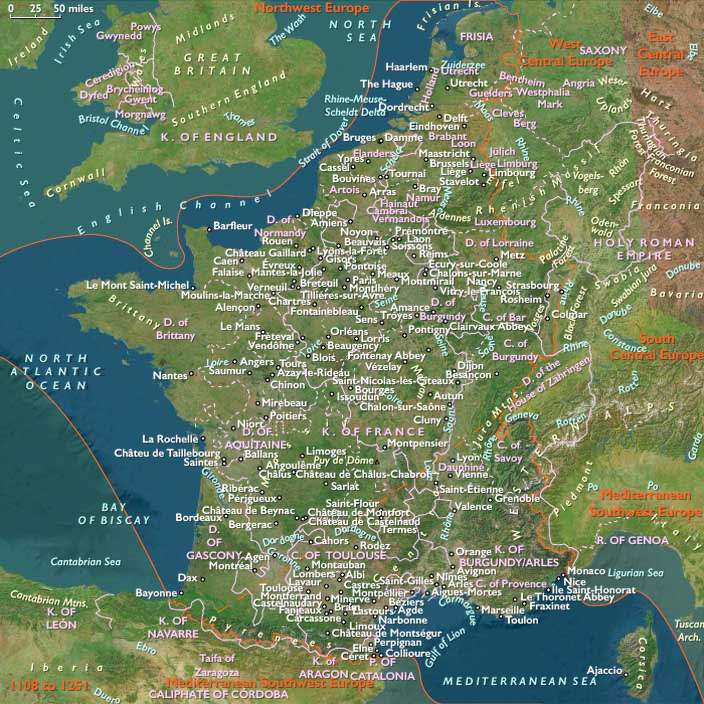
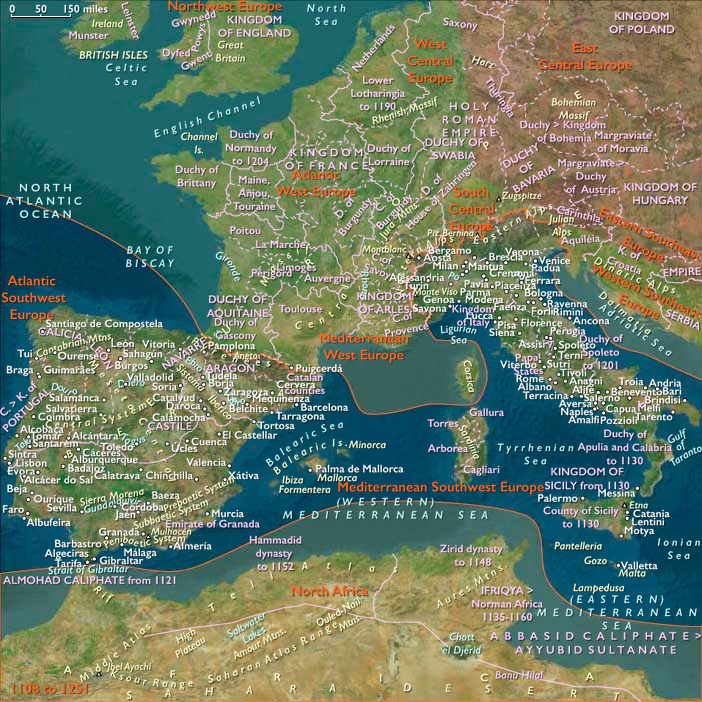
Between 1156 and 1167, Atlantic West Europe—including the Low Countries, Brittany, Normandy, Aquitaine, Burgundy, central France, Alsace, and Franche-Comté—witnessed the rise of Angevin dominance, intensifying royal rivalries, continued economic prosperity, and significant cultural and intellectual advances.
Political and Military Developments
-
The Rise of the Angevin Empire
- Henry II Plantagenet (r. 1154–1189), through his marriage to Eleanor of Aquitaine, consolidated territories from Normandy to Aquitaine, creating a vast realm rivaling France itself.
- Henry's power provoked increased tensions with Louis VII of France (r. 1137–1180), initiating decades of intermittent warfare.
-
France: Royal Authority Challenged
- Louis VII faced difficulties containing Angevin expansion, resulting in frequent conflicts aimed at limiting Henry II's growing influence in French territories.
-
Brittany: Maintaining Autonomy
- Conan IV of Brittany (r. 1156–1166) navigated political pressures from Henry II and France, ultimately compelled to acknowledge Angevin overlordship to preserve regional stability.
-
Burgundy and the Low Countries: Relative Stability
- Burgundy remained relatively stable under Duke Eudes II (r. 1143–1162) and his successor, Hugh III (r. 1162–1192), preserving autonomy amid broader regional conflicts.
- The Low Countries, especially Flanders, experienced economic prosperity, though political tension increased between local counts and external powers.
Economic and Social Developments
Cultural and Intellectual Developments
Religious Developments
Legacy and Significance
The period from 1156 to 1167 established the Angevin Empire as a dominant force in Atlantic West Europe, laying the foundation for prolonged conflicts between England and France. The growth of Paris as a major intellectual and cultural center, alongside advancements in architecture and scholasticism, solidified this era's lasting impact on European history.