Cnut the Great
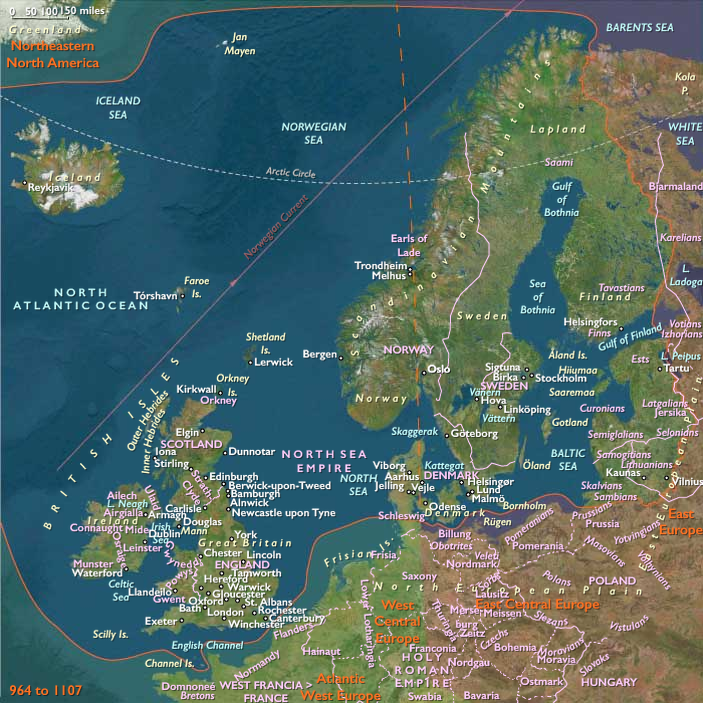
King of Denmark, England, Norway and parts of Sweden
Years: 985 - 1035
Cnut the Great (c. 985 or 995 – 12 November 1035), also known as Canute, is a king of Denmark, England, Norway and parts of Sweden.
Though after the death of his heirs within a decade of his own and the Norman conquest of England in 1066, his legacy is largely lost to history.
Cnut is of Danish and Slavic descent.
His father is Sweyn Forkbeard, King of Denmark (which givesCnut the patronym Sweynsson, Old Norse Sveinsson).
Cnut's mother is the daughter of the first duke of the Polans, Mieszko I; her name may have been Świętosława, but the Oxford DNB article on Cnut states that her name is unknown.
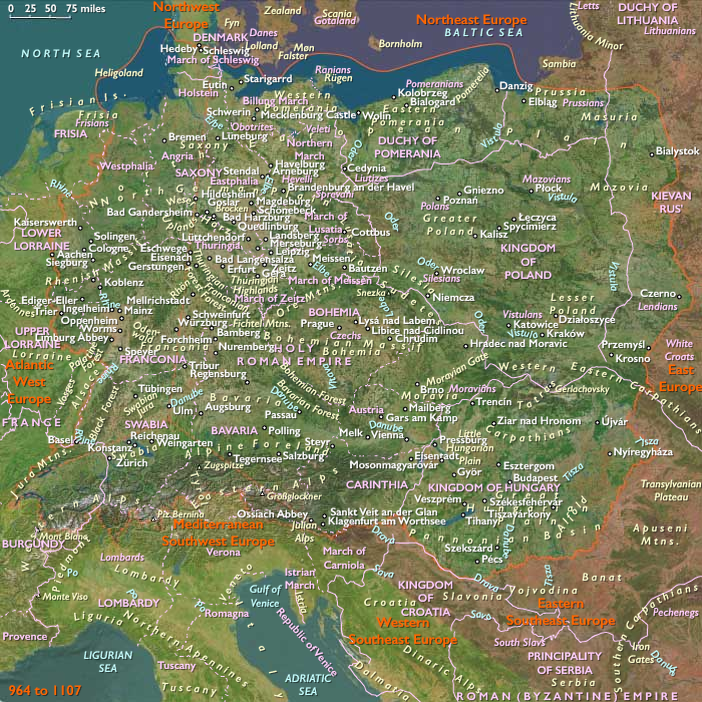
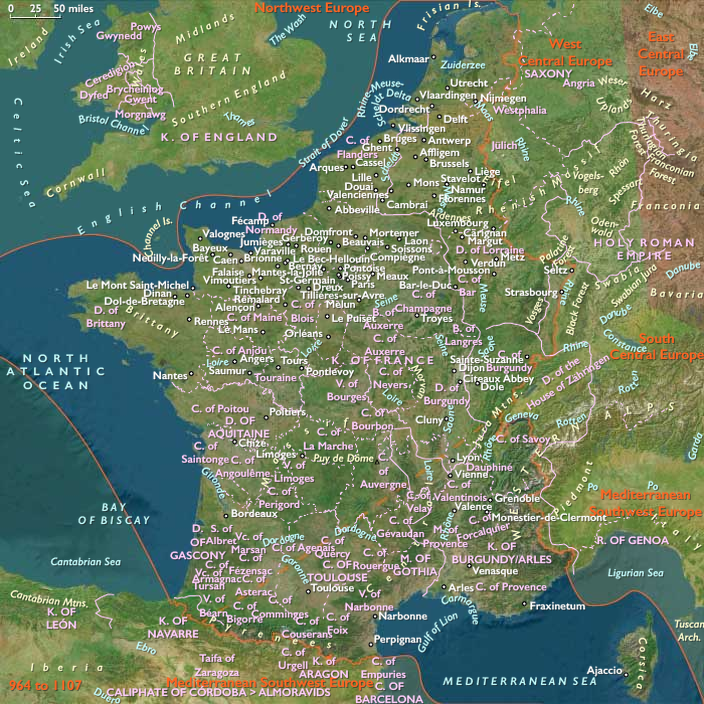
As a prince of Denmark, Cnut wins the throne of England in 1016 in the wake of centuries of Viking activity in northwestern Europe.
His accession to the Danish throne in 1018 brings together the crowns of England and Denmark.
Cnut holds this power-base together by uniting Danes and Englishmen under cultural bonds of wealth and custom, rather than sheer brutality.
After a decade of conflict with opponents in Scandinavia, Cnut claims the crown of Norway in Trondheim in 1028.
The Swedish city Sigtuna is held by Cnut.
He has coins struck which call him king there, but there is no narrative record of his occupation.
The kingship of England lends the Danes an important link to the maritime zone between the islands of Great Britain and Ireland, where Cnut, like his father before him, had a strong interest and wielded much influence among the Norse-Gaels.
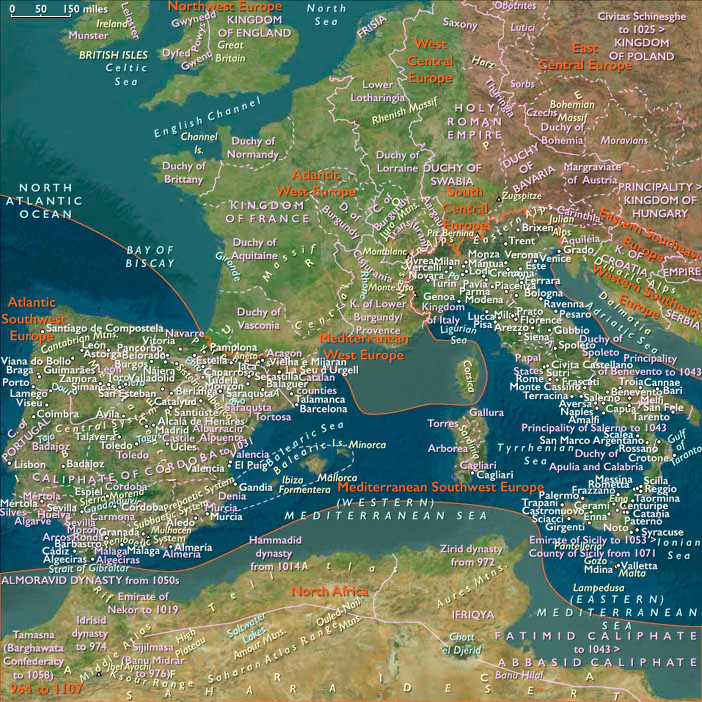
Cnut's possession of England's dioceses and the continental Diocese of Denmark – with a claim laid upon it by the Holy Roman Empire's Archdiocese of Hamburg-Bremen – is a source of great leverage within the Church, gaining notable concessions from Pope Benedict VIII, and his successor John XIX, such as one on the price of the pallium of his bishops.
Cnut also gains concessions on the tolls his people have to pay on the way to Rome from other magnates of medieval Christendom, at the coronation of the Holy Roman Emperor.
After his 1026 victory against Norway and Sweden, and on his way to Rome for this coronation, Cnut, in a letter written for the benefit of his subjects, states himself "king of all England and Denmark and the Norwegians and of some of the Swedes".