Near East (208–219 CE): Christian Philosophy, Restoration of Emmaus, and Jewish Presence in Jerusalem
The early third century witnesses significant developments in Christian theological thought, as prominent Christian writers and theologians such as Clement of Alexandria (150–211/215) and Origen (c. 185–254) actively blend Christian doctrines with Greek philosophy. This intellectual fusion firmly establishes the Greek-speaking world as the central hub of gentile Christianity, significantly influencing the development of early Church theology and practice.
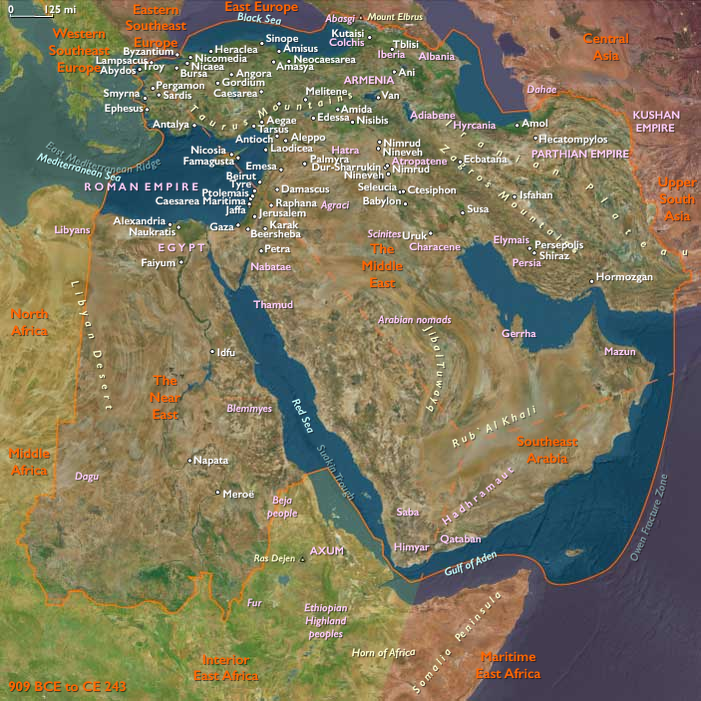
Emmaus, a town of strategic importance in Palestine, undergoes significant renewal in this period. Historically notable since its mention in the First Book of Maccabees (chapters 3–4) during the wars of Judas Maccabeus against the Greeks (second century BCE), Emmaus has served as a critical administrative center (toparchy) in the Ayalon Valley during the Hasmonean period. It had been destroyed by the Romans in 4 BCE, according to the historian Josephus Flavius, and subsequently inhabited by Romans and Samaritans following the Bar Kokhba Revolt.
Julius Africanus, a Christian scholar and writer from Jerusalem, settles in Emmaus (early third century CE). After a military career, possibly serving under Septimius Severus around 195 CE, Africanus successfully petitions Emperor Severus Alexander to restore the city, which had fallen into ruins. Consequently, Emmaus is rebuilt and renamed Nicopolis, marking its revival and continued regional significance.
While the Roman ban on Jewish presence in Jerusalem officially remains in force, evidence emerges during the Severan period suggesting increased Jewish access to the city. Jews reportedly visit Jerusalem more frequently, especially during religious festivals, and possibly establish limited residency in the city despite the formal prohibition—an indication of gradually relaxed enforcement of Roman edicts.
Legacy of the Era
Between 208 and 219 CE, the Near East experiences vibrant religious and cultural transformations. The melding of Christian theology with Greek philosophy reshapes early Christianity, Emmaus (Nicopolis) sees renewal under Julius Africanus, and the Jewish community in Jerusalem begins to reassert its presence, despite ongoing Roman restrictions. These developments reflect a nuanced interplay between imperial policy, religious innovation, and cultural resilience in shaping the region's historical trajectory.