Christopher Gist
Colonial British explorer, surveyor and frontiersman
Years: 1706 - 1759
Christopher Gist (1706–1759) is an accomplished colonial British explorer, surveyor and frontiersman.
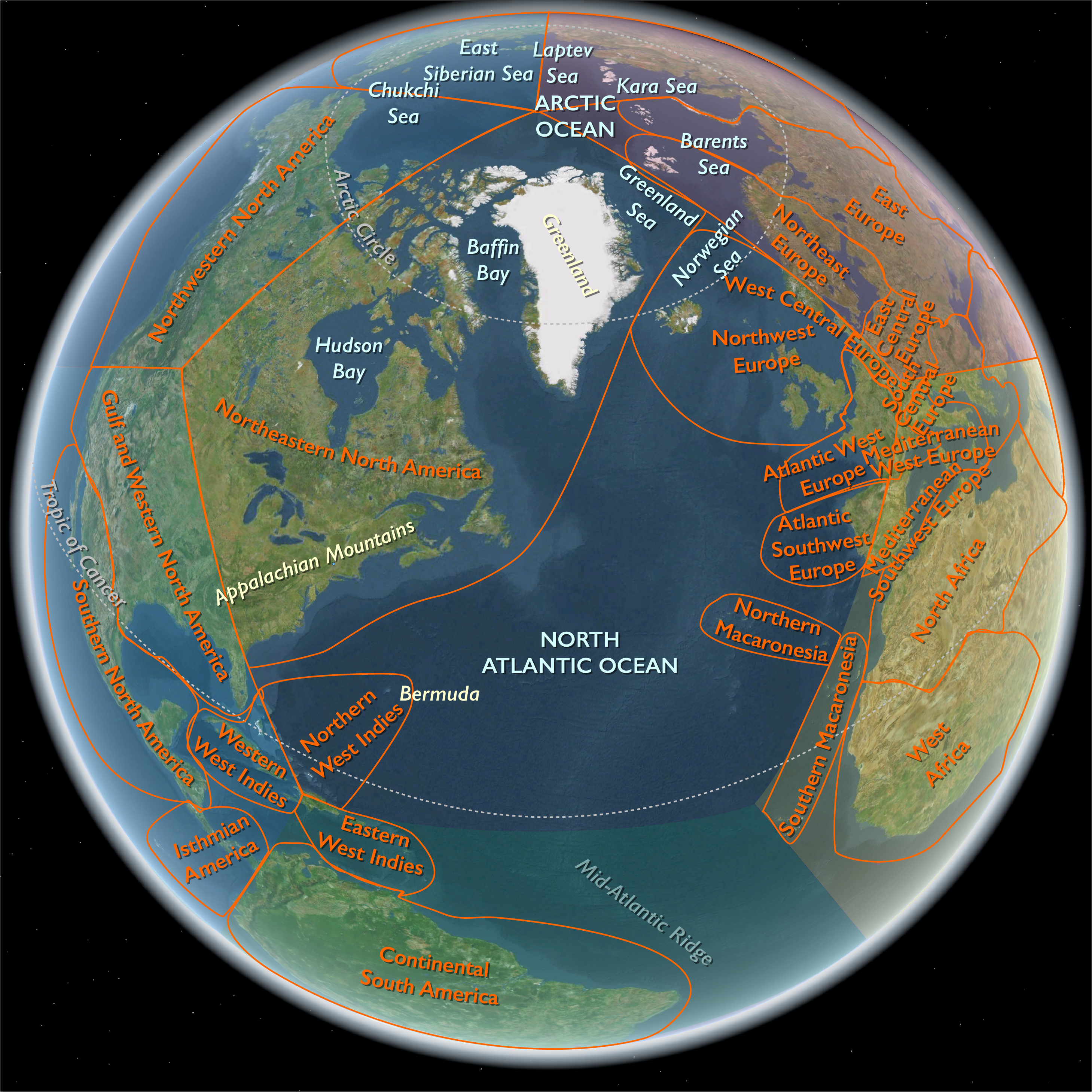
He is one of the European explorers of the Ohio Country (the present-day states of Ohio, eastern Indiana, western Pennsylvania, and northwestern West Virginia, USA).
He is credited with providing the first detailed description of the Ohio Country to Great Britain and her colonists.
At the outset of the French and Indian War in 1754, Gist accompanies Colonel George Washington on missions into this wilderness and saves Washington's life on two separate occasions.
Related Events
Filter results
Showing 10 events out of 21 total
Virginian explorers recognize the potential of the Ohio region for colonization and have moved to capitalize on it, as well as to block French expansion into the territory.
Thomas Lee and brothers Lawrence and Augustine Washington had organized the Ohio Company in 1748 to represent the prospecting and trading interests of Virginian investors.
In addition to the mandate and investment of Virginia Royal Governor Robert Dinwiddie, other original members include John Hanbury, Colonel Thomas Cresap, George Mercer, John Mercer, and "all of His Majesty's Colony of Virginia."
In that same year, George Mercer had petitioned King George for land in the Ohio country, and in 1749, the British Crown granted the company 500,000 acres in the Ohio Valley between the Kanawha River and the Monongahela.
The grant is in two parts: the first 200,000 acres are promised, and the following 300,000 acres are to be granted if the Ohio Company successfully settles one hundred families within seven years.
Furthermore, the Ohio Company is required to construct a fort and provide a garrison to protect the settlement at their own expense, but the land grant is rent and tax free for ten years to facilitate settlement.
In 1748–1750, the Ohio Company hires Thomas Cresap who had opened a trading fort and founded Oldtown, Maryland (now part of Cumberland) on the foot of the eastern climb up the Cumberland Narrows along what is soon to be called the Nemacolin Trail.
Named for Nemacolin, a hereditary chief of the Delaware Nation who helps Cresap to create the trail, it is one of only three mid-mountain-range crossings of the Appalachian Ridge and Valley system outside the Hudson-Great Lakes route, or southern Georgia-Mississippi-Western Tennessee plains route.
Cresap is given a contract at the behest of the frontiersman Christoper Gist to blaze a small road over the mountains to the Monongahela River, and then to start widening this road into a wagon road.
He hires Nemacolin and his two sons, among others, to complete the task between Will's Creek (a trading post on a tributary of the Potomac River later the site of Fort Cumberland) and ...
Maryland's land grant ends at the crest of the Appalachian mountains, but both Pennsylvania and Virginia claim their land grants continued westward, so the land claimed by Cresap and his traders west of the Appalachians will ultimately became part of upper West Virginia and western Pennsylvania.
Authorities in New France have became more aggressive in their efforts to expel British traders and colonists from this area, and in 1753 begin construction of a series of fortifications in the area.
Paul Marin de la Malgue, commander of the French and Canadien construction force, has constructed two forts, the main one being Fort Le Boeuf.
The French action has drawn the attention of not just the British, but also the native tribes of the area.
Despite good Franco-native relations, British traders have become highly successful in persuading the natives to trade with them in preference to the Canadiens, and the planned large-scale advance is not well received by all.
In particular, Tanacharison, a Mingo chief also known as the "Half King", has become decidedly anti-French as a consequence.
In a meeting with Paul Marin de la Malgue, the latter reportedly loses his temper, throwing down some wampum that Tanacharison had offered as a good will gesture.
Marin's military successes had earned him the cross of Saint Louis, but he had died in late October before learning of this honor, and and command of the operations had been turned over to Jacques Legardeur de Saint-Pierre, who, returning from the western forts in 1753, has been assigned to the Ohio Country.
Joining the British colonial service in 1727, Dinwiddie had been appointed collector of the customs for Bermuda.
Following an appointment as surveyor general of customs in southern American ports, Dinwiddie became Lieutenant Governor of Virginia, and will be featured as such in William Makepeace Thackeray’s nineteenth-century historical novel The Virginians: A Tale of the Last Century.
Dinwiddie, as deputy for absentee governor John Campbell, 4th Earl of Loudoun, is the de facto head of the colony wants to limit French expansion in Ohio Country, an area claimed by the Virginia Colony and in which the Ohio Company, of which he is a stockholder, has made preliminary surveys and some small settlements.
Dinwiddie learns in 1753 that the French have built Fort Presque Isle near Lake Erie and Fort Le Boeuf, which he sees as threatening Virginia's interests in the Ohio Valley.
In fact, he considers Winchester, Virginia, to be "exposed to the enemy"; Cumberland, Maryland, is only to be fortified the next year.
Dinwiddie sends an eight-man expedition under twenty-one-year-old George Washington, a major in the state militia, with a written demand that the French leave the disputed territory.
Washington makes the journey in midwinter of 1753–54.
Washington arrives at Fort Le Boeuf on December 11, 1753.
Saint-Pierre receives Washington politely, but rejects his ultimatum, informing him that he is here pursuant to orders, that Washington's letter should have been addressed to his commanding officer in Canada, and that he has no intention of leaving.
He gives Washington three days hospitality at the fort, then gives him a letter to deliver to Dinwiddie.
The letter conveys to Dinwiddie that he will send Dinwiddie's request on to Marquis de Duquesne in Quebec and will meantime maintain his post while he awaits the latter's orders.
Washington notes during his stay that the fort has one hundred men, a large number of officers, fifty birch canoes and seventy pine canoes, many unfinished.
He described the fort as on a south or west fork of French creek, near the water, and almost surrounded by it.
Four houses compose the sides.
The bastions are made of piles driven into the ground, standing more than twelve feet (three point seven meters) high, and sharpened at the top.
Port holes for cannon and loop-holes for small-arms are cut into the bastions.
Each bastion mounts eight six-pound cannon and one four-pound cannon guards the gate.
Inside the bastions stand a guard-house, chapel, doctor's lodging and the commander's private stores.
Outside the fort are several log barracks, some covered with bark, others with boards.
In addition, there are stables, a smithy and other buildings.
Washington had returned to Williamsburg and informed Dinwiddie that the French had refused to leave.
Dinwiddie commissions Washington a lieutenant colonel, and orders him to begin raising a militia regiment to hold the Forks of the Ohio, a site Washington had identified as a fine location for a fortress.
Even before learning of the French refusal to decamp, Dinwiddie had issued a captain's commission to Ohio Company employee William Trent, send a small force of Virginia militia in January 1754 to build a fort at the forks of the Ohio River, where the Allegheny and Monongahela rivers merge to form the Ohio at present-day Pittsburgh.
Dinwiddie had issued these instructions on his own authority, without even asking for funding from the Virginina House of Burgesses until after the fact.
Trent's company had arrived on site on February 1754, and began construction of a storehouse and stockade with the assistance of Tanacharison and the Mingos.
Work began on the fort on February 17, but by April a much larger French force of eight hundred Canadien militia and French troupes de la marine under the command of Claude-Pierre Pécaudy de Contrecœur, who has taken over command from Saint-Pierre.
When Contrecœur learns of Trent's activity, he leads a force of about five hundred men (troupes de la marine, militia, and natives) to drive them off (rumors reaching Trent's men put its size at one thousand).
Contrecœur's force arrives at the forks on April 16; the next day, Trent's force of thirty-six men, led by Ensign Edward Ward in Trent's absence, agree to leave the site.
The French now begin construction of the fort they called Fort Duquesne in honor of the Marquis de Duquesne, the current governor of New France.
The fort is built on the same model as Fort Frontenac on Lake Ontario.
During the advance into the Ohio Country, Fry suddenly falls off his horse and dies from his injuries on May 25, 1754, at Fort Cumberland, upon which the command of the regiment falls to Washington.
Washington, newly promoted to colonel of the newly created Virginia Regiment, had set out on April 2, 1754 with a small force of fewer than one hundred and sixty recruits to build a road to, and then defend, Fort Prince George.
Washington had been at Wills Creek in south central Pennsylvania when he received news of the fort's surrender.
He assumes command of the expedition upon the death of Colonel Fry.
He learns of the French advance at this point from Captain Trent.
Trent also brings a message from Tanacharison, who promises warriors to assist the British.
Washington, to keep Tanacharison's support, decides not to turn back, choosing instead to advance.
He reaches a place known as the Great Meadows (now in Fayette County, Pennsylvania), about thirty-seven miles (sixty kilometers) south of the forks, began construction of a small fort and awaited further news or instructions.
Contrecœur operates under orders that forbid attacks by his force unless they are provoked.
He sends Joseph Coulon de Villiers de Jumonville with thirty-five soldiers on May 23 to see if Washington had entered French territory, and with a summons to order Washington's troops out; this summons is similar in nature to the one Washington had delivered to the French four months earlier.
Washington is informed on May 27 by Christopher Gist that a Canadian party numbering about fifty is in the area.
In response, Washington sends seventy-five men with Gist to find them.
That evening, Washington receives a message from Tanacharison, informing him that he had found the Canadien camp, and that the two of them should meet.
Despite the fact that he had just sent another group in pursuit of the Canadians, Washington goes with a detachment of forty men to meet with Tanacharison.
The Mingo leader has with him twelve warriors, two of whom are boys.
After discussing the matter, the two leaders agree to make an attack on the Canadians.
The attackers take up positions behind rocks around the Canadian camp, counting not more than forty Canadiens.
Exactly what happened next has been a subject of controversy and debate.
Washington ambushed the French, killing ten to twelve, wounding two and capturing twenty-one.
The few primary accounts of the affair agree on a number of facts, and disagree on others.
They agree that the battle lasted about fifteen minutes, that Jumonville was killed, and that most of his party were either killed or taken prisoner.
The exact manner of Jumonville's is death is uncertain, but by several accounts Tanacharison executed Jumonville in cold blood, crushing his head with a tomahawk and washing his hands in Jumonville's brains.
One account, reported by a native to Contrecœur, claims that Jumonville had been killed by Half King while the summons was being read.
The dead are left on the field or buried in shallow graves, where they will later be found by the French.
According to Canadian records, most of the dead were colonials.
The Battle of Jumonville Glen is widely considered the formal start of the French and Indian War and ultimately of the Seven Years' War.
Following the battle, ...
Tanacharison attempts to convince the Delaware, Shawnee and the Seneca to join the Virginians at Great Meadows.
With about one hundred and fifty Virginians at Great Meadows, they had begun to construct a fort, which had been completed on June 3.
The fort, which Washington names Fort Necessity, is a circular stockade made of seven-foot-high (two point one meters) upright logs covered with bark and skins built around a little hut that contains ammunition and provisions.
The rest of the Virginia Regiment arrived at Great Meadows on June 9.
One hundred British regulars under the command of James Mackay arrive a few days later, but instead of making camp with the Virginians they camp separately outside the fort.
Washington has heard that there are five hundred poorly-supplied French troops at Fort Duquesne, and thus he had led the three hundred Virginians out of Great Meadows on June 16 to widen the road for those who would follow to an advanced position at Red Stone Creek.
Washington meets on June 18 with Tanacharison, who tells him that he has been unable to convince the other chiefs to assist Washington and says that he will also be unable to help the Virginians.
Although Washington has lost native support, making his troops more vulnerable to attack, he continues to widen the road towards Red Stone Creek.
After a council of war on June 28, Washington orders the withdrawal to Great Meadows.
This same day, six hundred French and one hundred natives leave Fort Duquesne led by Louis Coulon de Villiers, the older brother of the slain Jumonville.
The Virginians have to abandon most of their supplies in order to keep ahead of the French/Canadian force.
The provision hut is depleted, and there as little shelter from the heavy rain that starts to fall on the second.
With the rain, the trenches that Washington had ordered to be dug have turned into streams.
Washington realizes that he will have to defend against a frontal assault and also realizes that it will be difficult because the woods are less than one hundred yards away, within musket range, making it possible for a besieging attacker to pick off the defenders.
To improve the defense, Washington orders his men to cut trees down and to make them into makeshift breastworks.