Christian VI
King of Denmark
Years: 1699 - 1746
Christian VI (30 November 1699 – 6 August 1746) was King of Denmark and Norway from 1730 to 1746. The eldest surviving son of Frederick IV and Louise of Mecklenburg-Güstrow, he is considered one of Denmark-Norway's more anonymous kings, but he was a skilled politician, best known for his authoritarian regime. He was the first king of the Oldenburg dynasty to refrain from entering in any war. During his reign both compulsory confirmation (1736) and a public, nationwide school system (1739) were introduced. His chosen motto was "Deo et populo" (for God and the people).




Related Events
Filter results
Showing 3 events out of 3 total
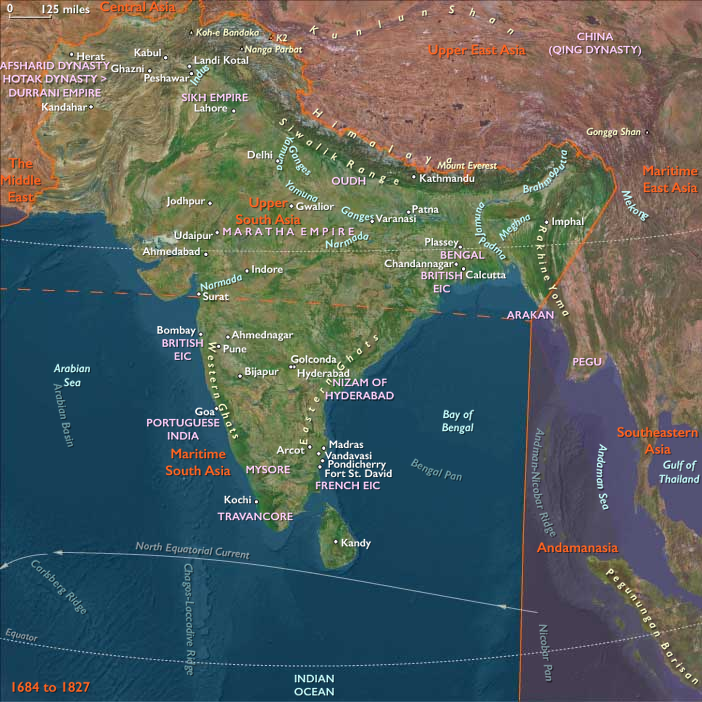
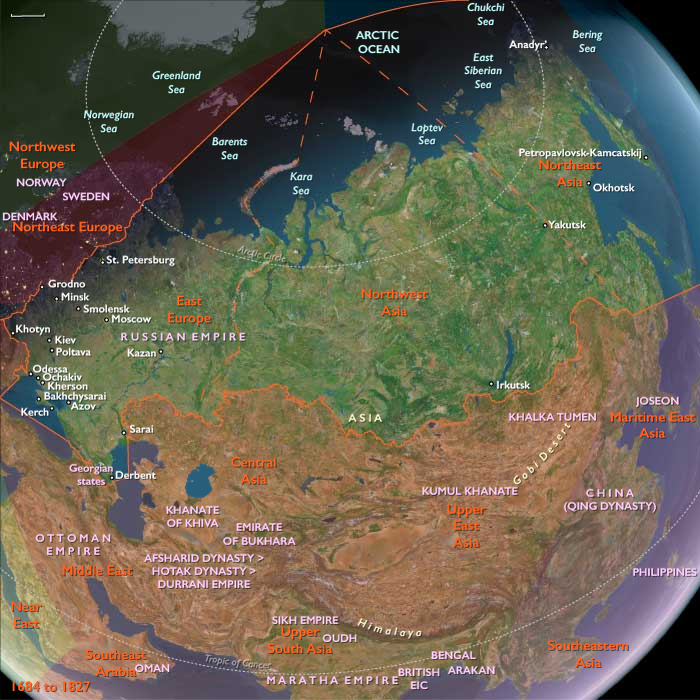
Northeast Europe (1732–1743 CE): Renewed Conflict, Territorial Shifts, and Cultural Consolidation
Between 1732 and 1743 CE, Northeast Europe entered a period marked by renewed military conflicts, strategic territorial shifts, and sustained cultural and economic consolidation. This era was defined prominently by the outbreak of the War of the Polish Succession, renewed Swedish–Russian tensions culminating in the Russo-Swedish War (1741–1743), ongoing Danish–Norwegian diplomatic prudence, and continued Prussian internal reforms.
War of the Polish Succession and Regional Dynamics
The War of the Polish Succession (1733–1738), triggered by disputes following the death of King Augustus II the Strong, involved key Northeast European powers. Though primarily fought in Central Europe, the conflict significantly impacted regional stability, especially influencing diplomatic alignments among Russia, Prussia, and the weakened Polish–Lithuanian Commonwealth. Russian intervention secured the Polish throne for Augustus III, reaffirming Russian influence over Polish affairs and further diminishing the Commonwealth's autonomy.
Russo–Swedish War and Territorial Losses for Sweden
Tensions between Sweden and Russia resurfaced dramatically in the early 1740s. Encouraged by French diplomatic support, Sweden sought to reverse territorial losses suffered during the Great Northern War. The resulting Russo-Swedish War (1741–1743) ended in a clear Russian victory. The subsequent Treaty of Åbo (Turku) in 1743 forced Sweden to cede additional territory in southeastern Finland—including strategically vital fortress towns such as Lappeenranta (Villmanstrand)—to Russia. This territorial adjustment further consolidated Russian Baltic influence and substantially weakened Sweden’s geopolitical position.
Danish–Norwegian Diplomatic Stability and Economic Consolidation
Under Christian VI (r. 1730–1746), Denmark–Norway continued prudent diplomatic neutrality, largely avoiding direct entanglement in regional conflicts. Internal economic and administrative reforms enhanced stability and prosperity, with significant investments in infrastructure, education, and urban development in Copenhagen and other major cities. Danish naval power was carefully maintained, safeguarding strategic maritime trade routes.
Prussian Military and Administrative Strengthening
King Frederick William I of Prussia continued substantial internal military, administrative, and economic reforms until his death in 1740. His successor, Frederick II (Frederick the Great), accelerated these reforms, significantly enhancing Prussia’s military efficiency, centralized governance, and economic development. Under Frederick II, Prussia began asserting itself more prominently in European diplomacy, cautiously navigating regional power shifts and cultivating alliances.
Economic Resilience and Urban Prosperity
Despite regional conflicts, major urban centers—including Stockholm, Copenhagen, Königsberg, and newly flourishing Saint Petersburg—continued experiencing sustained economic resilience. Maritime trade, strengthened merchant networks, and stable urban governance facilitated ongoing regional prosperity, significantly offsetting disruptions caused by intermittent military conflicts.
Finland’s Territorial Realignment and Economic Adjustments
Finland faced significant territorial realignment and disruption resulting from the Russo-Swedish War. The loss of critical southeastern territories to Russia reshaped Finland's geopolitical role within the Swedish kingdom, compelling extensive internal economic and administrative adjustments. Nevertheless, Finland retained internal stability and economic productivity, mitigating broader impacts of territorial losses.
Cultural Flourishing and Educational Expansion
Cultural and intellectual growth continued robustly across Northeast Europe, particularly in Sweden, Denmark, and Prussia. Universities and academies benefited from heightened royal patronage and private investment, significantly advancing scholarly activities in science, literature, and philosophy. These institutions enhanced Northeast Europe's broader intellectual prominence and cultural identity despite regional turbulence.
Complex Diplomatic Realignments
Regional diplomacy during this period grew increasingly intricate. Sweden’s failed attempt to regain territory highlighted the diplomatic strength of Russia and shifted regional balance. Prussia’s emergence under Frederick II, Denmark–Norway’s careful neutrality, and continued Russian assertiveness underscored increasingly sophisticated diplomatic maneuvering aimed at maintaining regional stability and strategic advantage.
Legacy of the Era
The era from 1732 to 1743 CE significantly reshaped Northeast Europe’s geopolitical and cultural landscape through renewed warfare, territorial realignments, and sustained cultural and economic growth. The territorial adjustments stemming from the Russo-Swedish War reinforced Russia’s dominant regional position, accelerated Sweden’s geopolitical decline, solidified Prussia’s internal strength, and preserved Denmark–Norway’s diplomatic stability. These developments critically influenced regional boundaries, diplomatic relations, and cultural trajectories into subsequent decades.
Northwest Europe (1732–1743): Scientific Innovation, Maritime Expansion, and Prelude to Conflict
Britain's Maritime and Commercial Ascendancy
In the period from 1732 to 1743, Great Britain continued to consolidate its position as the leading maritime and trading nation of Europe. British commerce thrived due to the enduring dominance of the United Company of Merchants of England Trading to the East Indies, whose monopolistic privileges—secured initially until 1766 by parliamentary act in 1730—solidified its critical role in global trade. By this era, Britain’s trade with India and East Asia constituted an increasingly substantial portion of its national wealth, fueling domestic prosperity and imperial ambition.
Growing rivalry with France defined this period, as frequent colonial skirmishes broke out in North America, the Caribbean, and India. These confrontations underscored escalating tensions as both nations competed aggressively for control of lucrative colonial possessions and trading rights. The British government, deeply concerned by the financial repercussions of a potential full-scale war, sought fiscal stability through an arrangement in 1742, agreeing to extend the East India Company's exclusive trading license until 1783 in exchange for an additional loan of £1 million. This move reflected the government's heavy dependence on the company to bolster its financial position during increasingly volatile international conditions.
John Harrison and the Longitude Breakthrough
During these years, clockmaker John Harrison made critical advances toward solving the longitude problem. Harrison, determined to produce a reliable marine timepiece to determine ships’ precise east-west positions, traveled to London in 1730 seeking financial assistance to compete for the newly established Longitude Prize. After consulting with Edmond Halley, the Astronomer Royal, Harrison was referred to the renowned clockmaker George Graham, who, impressed with Harrison’s inventive genius, provided him with essential financial support to develop his concept, the "Sea Clock."
Harrison’s first marine chronometer (H1), constructed painstakingly over five years, utilized innovative wooden wheels, roller pinions, and his frictionless grasshopper escapement. Instead of a traditional pendulum—which would be unusable at sea—Harrison designed two linked dumbbell balances. In 1736, Harrison successfully tested the H1 on a voyage from London to Lisbon aboard HMS Centurion, returning on HMS Orford after the death of Captain George Proctor at Lisbon. Although the clock initially lost time outbound, it performed remarkably well on the return journey. The Orford’s captain and sailing master praised its accuracy, noting that Harrison’s clock correctly placed their landfall sixty miles west of the sailing master's own calculations.
This Lisbon trial, while not the transatlantic voyage the Board of Longitude ultimately demanded, impressed them sufficiently to award Harrison £500 for further development. Encouraged, Harrison created a second prototype (H2), completed in 1741, that was more compact and robust. However, with Britain at war with Spain during the War of the Austrian Succession, the H2 was deemed too strategically important to risk capture at sea. Harrison himself abruptly ceased development of the second clock upon discovering a significant design flaw related to the bar balances, which he realized were susceptible to inaccuracies caused by the yawing action of ships at sea, particularly when tacking or turning.
This revelation led Harrison to fundamentally alter his approach, shifting from bar balances to circular balances in a third model (H3), for which he received an additional grant of £500 from the Board of Longitude. The H3’s innovative features significantly advanced maritime chronometry, contributing directly to safer navigation in Britain's expanding empire.
Naval Expansion and Increased Rivalries
Britain’s navy underwent strategic growth during this era, essential both for maintaining its trade dominance and preparing for looming conflicts. By 1739, tensions with Spain erupted into the War of Jenkins' Ear, a maritime conflict named after a gruesome incident involving the severed ear of British captain Robert Jenkins. Though initially limited, this conflict underscored Britain’s increasingly aggressive stance in securing and protecting trade routes, notably in the Caribbean, setting a prelude for wider European hostilities to come.
The mounting hostilities with France and the persistent colonial skirmishes increasingly strained diplomatic relations, pushing Britain toward broader conflicts in subsequent decades.
The Bathing Machine: Innovations in Social Leisure
During this period, a novel invention emerged to accommodate changing social customs at Britain’s coastal resorts: the bathing machine. First referenced in 1735 in Devon and depicted clearly in an engraving from 1736 by John Setterington (now in Scarborough Public Library), these wheeled wooden structures provided privacy, enabling bathers to change from street attire into swimwear before being rolled into the sea. Although Benjamin Beale of Margate, Kent, is often credited with refining the design around 1750, earlier prototypes appeared at popular seaside towns. Initially serving the upper classes, the bathing machine reflected evolving attitudes toward leisure, modesty, and public bathing that would increasingly characterize Georgian seaside culture.
Danish-Norwegian Administrative and Economic Reforms
In Denmark-Norway, Christian VI ascended the throne in 1730, ushering in significant domestic reforms emphasizing religious and moral rigor. While continuing his predecessor Frederick IV’s centralized administrative policies, Christian VI promoted economic modernization, aiming to boost agricultural productivity and domestic trade. Efforts to strengthen naval infrastructure and merchant shipping persisted, though the kingdom remained economically overshadowed by British and Dutch commerce.
The remote North Atlantic territories—Iceland, the Faroes, Shetland, and Orkney—remained peripheral and isolated. Subsistence economies continued, with limited integration into broader European markets, despite Danish attempts to reinforce administrative control and economic improvements.
Enlightenment Culture and Intellectual Flourishing
Northwest Europe continued as a center of Enlightenment thought, literature, and scientific inquiry. In Britain, figures like Alexander Pope—whose major work, An Essay on Man, appeared between 1733 and 1734—provided philosophical insight into the nature of humanity and society, reflecting the rationalist optimism and moral questioning characteristic of the Enlightenment. Libraries, reading rooms, and scholarly circles proliferated, supported by innovative furniture designs such as the reading chair, illustrating the period’s growing devotion to intellectual refinement and scholarly leisure.
Scientific and Technological Innovations
Scientific advances continued vigorously, especially in Britain, where the Royal Society and prominent figures like John Harrison embodied the spirit of empirical experimentation. Technological innovations, notably Harrison’s marine chronometer efforts and the novel bathing machines, demonstrated practical applications of scientific knowledge. These developments significantly advanced navigation, astronomy, and mechanical engineering, reinforcing Britain's leading position in scientific progress and global commerce.
From 1732 to 1743, Northwest Europe underwent critical transformations marked by intensified maritime rivalry, particularly between Britain and France, significant scientific breakthroughs in maritime chronometry by John Harrison, and innovations in social leisure epitomized by the bathing machine. Britain strengthened its global maritime dominance, navigating diplomatic and economic challenges by extending the East India Company's privileges, while Denmark-Norway pursued incremental economic and administrative reforms. Enlightenment culture flourished, with scientific and technological advances contributing directly to Britain's capacity to sustain and expand its burgeoning global empire.
Northeast Europe (1744–1755 CE): Diplomatic Stability, Economic Development, and Scientific Progress
Between 1744 and 1755 CE, Northeast Europe experienced relative diplomatic stability, steady economic growth, significant agricultural innovation, and notable cultural advancements. Sweden persisted under parliamentary governance during its Age of Liberty, Denmark–Norway maintained strategic neutrality, Prussia continued to strengthen under Frederick the Great, and significant scientific contributions emerged, exemplified by the innovations of Swedish scientist Eva Ekeblad. External pressures from the rising Russian Empire continued influencing the region, particularly through ongoing strategic territorial adjustments and diplomatic interactions, though internal developments within Russia proper, including events in Saint Petersburg, remain outside the scope of this subregional narrative.
Sweden’s Age of Liberty and Parliamentary Governance
Sweden, under King Frederick I (r. 1720–1751) and subsequently Adolf Frederick (r. 1751–1771), maintained its parliamentary governance known as the Age of Liberty. Internal political rivalry between the influential Hat and Cap parties persisted, shaping both domestic policy and foreign relations. Despite diminished international stature, Sweden experienced steady economic recovery, improved agricultural practices, and notable scientific advances that significantly benefited the population.
Eva Ekeblad’s Agricultural Innovations and Recognition
A pivotal figure of this period was the Swedish aristocrat and scientist Eva Ekeblad (née De la Gardie). In 1746, Ekeblad communicated groundbreaking research to the Royal Swedish Academy of Sciences, detailing practical methods to produce flour and alcohol from potatoes. Although introduced to Sweden as early as 1658, potatoes had previously been cultivated exclusively by the aristocracy. Ekeblad’s innovations transformed the potato into a staple food source throughout Sweden, significantly improving food security, increasing grain supplies by replacing wheat, rye, and barley previously used for alcohol production, and substantially reducing the frequency and severity of famines.
Ekeblad’s additional scientific contributions further benefited society. In 1751, she developed a method for bleaching cotton textiles and yarn using soap, and in 1752, replaced hazardous ingredients in cosmetics with safer potato flour. Her innovative use of potato flowers as hair ornaments helped popularize the plant among the Swedish population. In recognition of her pioneering research, Ekeblad became the first woman elected to the Royal Swedish Academy of Sciences in 1748. Although never actively participating in meetings and later designated as an honorary rather than a full member due to gender restrictions, her achievements remained widely acknowledged and influential.
External Influence and Territorial Adjustments from Russia
Throughout this era, the external pressure and diplomatic influence of the Russian Empire continued to significantly shape Northeast Europe’s political and territorial landscape. Particularly notable was the continuing impact of previous Russian territorial gains from Sweden, such as the strategically vital southeastern areas of Finland including the fortress city of Viipuri (Vyborg). Although internal developments within Russia proper fall outside the scope of this narrative, Russian diplomatic interactions remained influential in Northeast European political alignments and strategic decisions.
Danish–Norwegian Stability and Economic Consolidation
Under Kings Christian VI (r. 1730–1746) and Frederick V (r. 1746–1766), Denmark–Norway sustained diplomatic neutrality, cautiously navigating regional politics. Internally, significant economic reforms, infrastructural improvements, and maritime commerce facilitated stable economic growth. Urban centers, notably Copenhagen, experienced increased cultural vitality, contributing to Denmark–Norway’s prosperity and stability.
Prussian Strengthening under Frederick the Great
Prussia, led by King Frederick II (Frederick the Great) (r. 1740–1786), intensified internal reforms, bolstering military strength, governmental efficiency, and economic resilience. Enlightened absolutist policies improved education, administration, and economic structures within territories such as the Kaliningrad (Königsberg) region, positioning Prussia as an influential and increasingly powerful Central European state, prudently navigating regional diplomacy.
Economic Expansion and Urban Prosperity
Major Northeast European urban centers—including Stockholm, Copenhagen, Königsberg, and Riga—experienced ongoing economic expansion. Continued peace, stable governance, and flourishing merchant networks facilitated robust maritime commerce and increased regional economic integration, significantly enhancing the prosperity and resilience of these cities.
Territorial Stability and Agricultural Advances in Finland
Despite previous territorial concessions to Russia, Finland remained internally stable under Swedish administration. Agricultural productivity improved notably during this period, bolstered by innovations like those introduced by Ekeblad, significantly enhancing food security and economic stability throughout Finland and offsetting challenges posed by territorial adjustments.
Cultural Flourishing and Scientific Advancements
Educational and cultural institutions in Sweden, Denmark–Norway, and Prussia received renewed investment, supporting cultural enrichment and intellectual advancement. Eva Ekeblad’s scientific breakthroughs epitomized the era’s spirit of intellectual curiosity and pragmatic innovation, significantly impacting regional agriculture, economics, and daily life.
Diplomatic Maneuvering and Regional Stability
Diplomatic activities remained strategically cautious as Northeast European powers adjusted to their post-Great Northern War realities. Sweden sought to stabilize its reduced geopolitical status through careful diplomacy, Denmark–Norway preserved neutrality and stability, and Prussia prudently navigated regional politics, each mindful of Russia’s continuing external influence.
Legacy of the Era
The period from 1744 to 1755 CE was crucial in stabilizing Northeast Europe's diplomatic relationships, promoting regional economic prosperity, and significantly advancing cultural and scientific progress. Agricultural innovations led by Eva Ekeblad exemplified enlightened inquiry's transformative impact on societal well-being, significantly enhancing food security and economic resilience. The careful diplomatic maneuvering and internal strengthening of Sweden, Denmark–Norway, and Prussia, coupled with the continuing external influence of Russia, profoundly shaped the region’s geopolitical trajectory and cultural development.