Charles Wood, the first to recognize the metal subsequently known as platinum a new element, brings the new metal to the attention of The Royal Society, stressing its possible importance and the need for more investigation.
The seventh of fifteen children of William Wood of Wolverhampton and his wife Margaret, daughter of Richard Molyneux, an ironmonger in that area, he had followed his father-in-law's trade until 1715, when he became an ironmaster too and later entered into a contract to provide copper coinage for Ireland.
He was also a projector, floating his business as an ironmaster as a joint stock company at the time of the South Sea Bubble (1720).
He later sought to develop a new process of ironmaking and to obtain a charter for a "Company of Ironmasters of Great Britain".
However, the process (carried on at Frizington, Cumberland) produced little iron and he probably died in debt.
Charles Wood was a partner in some of the businesses, and certainly in the final one.
His father's will left him a legacy of fifteen thousand pounds, but his father died insolvent.
The result was that Charles and some of his brothers were also made bankrupt in the following years.
Wood had gone out to the Carolinas in 1733 following his bankruptcy but only stayed there a couple of years.
He had returned to Cumberland to marry Anne Piele of Buttermere and then went to Jamaica to superintend lead mines in Liguanea.
They had a child in Jamaica in 1739, but the next was born at Whitehaven, in Cumberland.
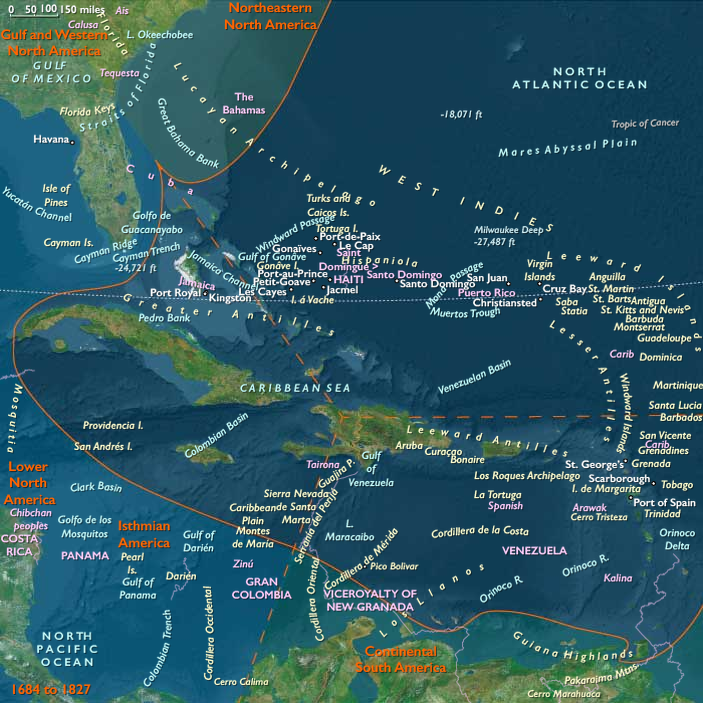
Wood had acquired various samples of a mysterious metal, as heavy as gold but silvery in appearance, found in the course of alluvial gold working in what is now Colombia, and smuggled from Cartagena to Jamaica.
He sends these to his relative William Brownrigg, a doctor and scientist who practices at Whitehaven, for further investigation.
Brownrigg writes up Wood's experiments and conducts some of his own.