Charles the Fat
Carolingian Emperor
Years: 839 - 888
Charles the Fat (13 June 839 – 13 January 888), also known as Charles III, is the Carolingian Emperor from 881 to 888.
The youngest son of Louis the German and Hemma, Charles is a great-grandson of Charlemagne and is the last Emperor to rule over a united Empire.
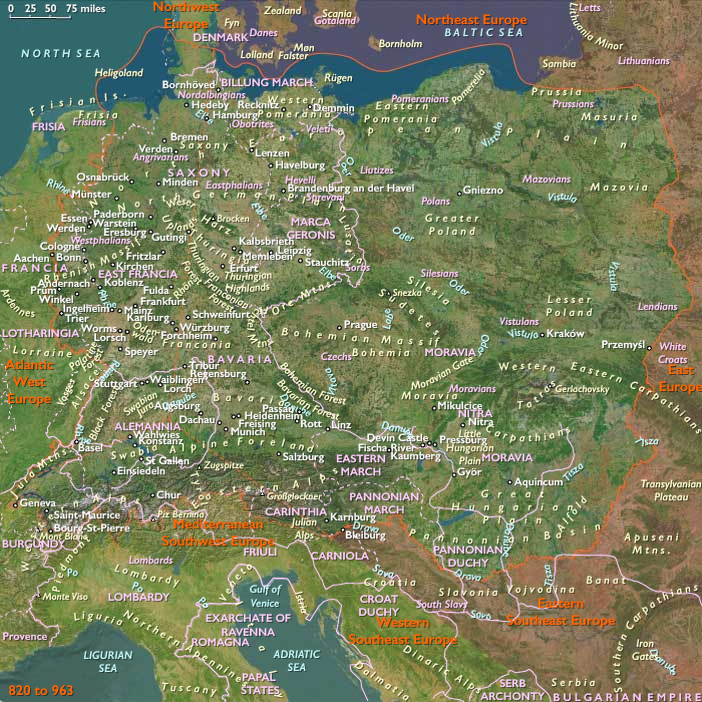
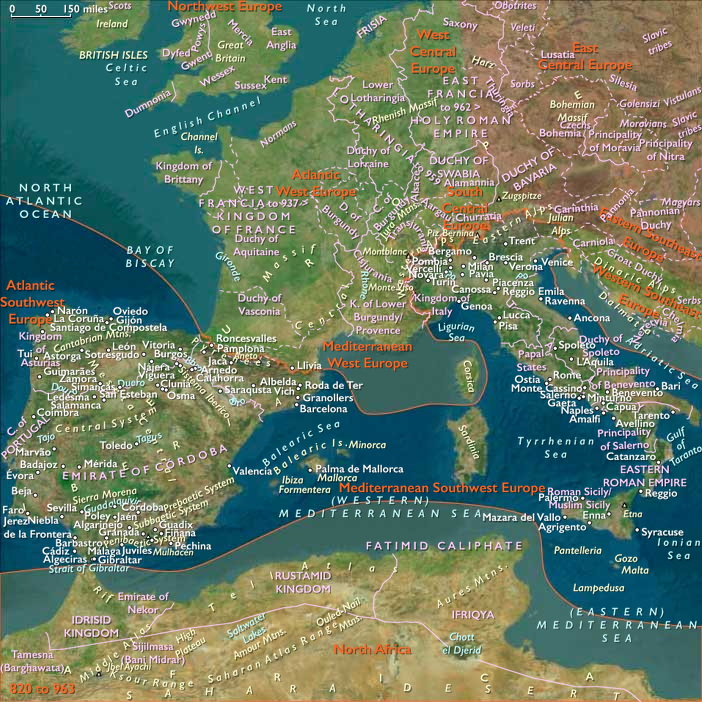
Over his lifetime, Charles becomes ruler of the various kingdoms of Charlemagne's former Empire.
Granted lordship over Alamannia in 876 following the division of East Francia, he succeeds to the Italian throne upon the abdication of his older brother Carloman, who had been incapacitated by a stroke.
Crowned Emperor in 881 by Pope John VIII, his succession to the territories of his brother Louis the Younger (Saxony and Bavaria) the following year reunite East Francia.
Upon the death of his cousin Carloman II in 884, he inherits all of West Francia, reviving the entire Carolingian Empire.
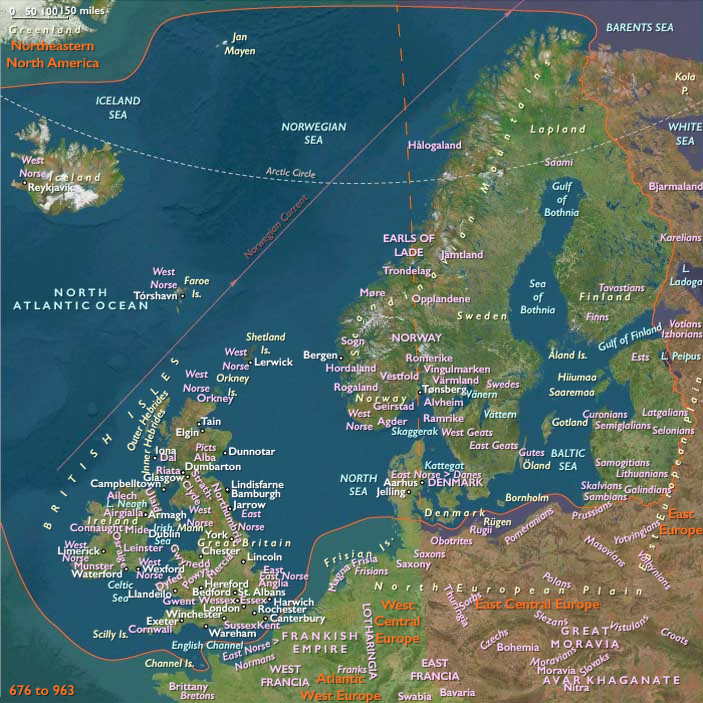
Charles' reign is marked by internal and external strife, caused primarily by the constant plundering of Norman raiders on the northern French coast.
These attacks had intensified as the aggressors, no longer content to pillage the coastline, had moved their attentions to cities and towns along the rivers.
The Carolingian world is unable to effectively deal with these external threats.
The reunited Empire will not last.
During a coup led by his nephew Arnulf of Carinthia in November 887, Charles is deposed in East Francia, Lotharingia, and Italy.
Forced into quiet retirement, he dies of natural causes in January 888, just a few weeks after his deposition.
The Empire quickly falls apart after his death, never to be restored, with the Empire splintering into five separate successor kingdoms.
Usually considered lethargic and inept – he is known to have had repeated illnesses and is believed to have suffered from epilepsy – he twice purchased peace with Viking raiders, including at the famous siege of Paris in 886.
Nevertheless, contemporary opinion of him was not nearly so negative as modern historiographical opinion.