Charles I
King of Scotland, King of England, and King of Ireland
Years: 1600 - 1649
Charles I (19 November 1600 – 30 January 1649) is the second son of James VI of Scots and I of England.
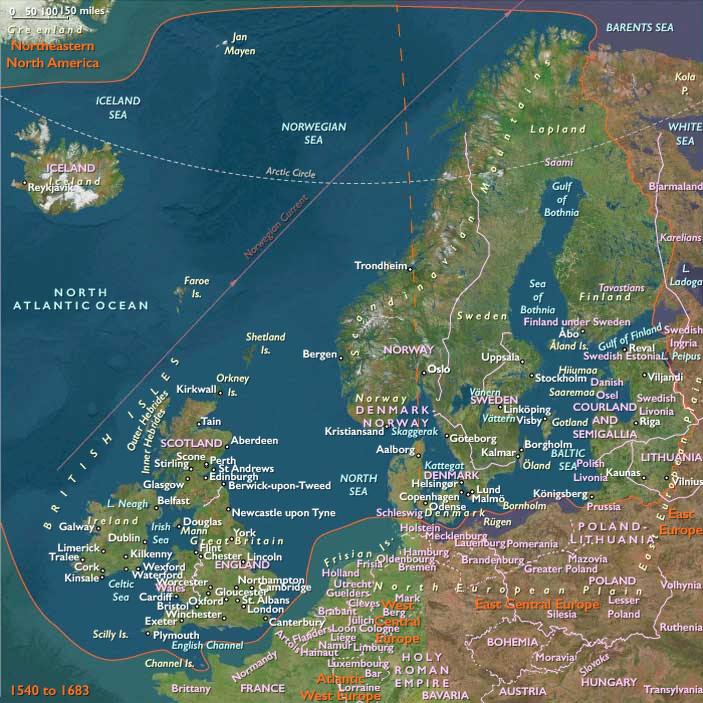
He is King of Scotland, King of England, and King of Ireland from 27 March 1625 until his execution in 1649.
Charles engages in a struggle for power with the Parliament of England, attempting to obtain royal revenue whilst Parliament seeks to curb his Royal prerogative which Charles believes is divinely ordained.
Many of his English subjects oppose his actions, in particular his interference in the English and Scottish Churches and the levying of taxes without parliamentary consent which grows to be seen as those of a tyrannical absolute monarch.
Religious conflicts permeate Charles's reign.
His failure to successfully aid Protestant forces during the Thirty Years' War, coupled with such actions as marrying a Catholic princess, generates deep mistrust concerning the king's dogma.
Charles further allies himself with controversial religious figures, such as the ecclesiastic Richard Montagu, and William Laud, whom Charles appoints Archbishop of Canterbury.
Many of Charles' subjects feel this brings the Church of England too close to the Catholic Church.
Charles' later attempts to force religious reforms upon Scotland lead to the Bishops' Wars, strengthenthe position of the English Parliament and helpprecipitate the king's downfall.
Charles' last years are marked by the English Civil War, in which he fights the forces of the English and Scottish Parliaments, which challenge the king's attempts to overrule and negate Parliamentary authority, whilst simultaneously using his position as head of the English Church to pursue religious policies which generate the antipathy of reformed groups such as the Puritans.
Charles is defeated in the First Civil War (1642–45), after which Parliament expects him to accept its demands for a constitutional monarchy.
He instead remains defiant by attempting to forge an alliance with Scotland and escaping to the Isle of Wight.
This provokes the Second Civil War (1648–49) and a second defeat for Charles, who is subsequently captured, tried, convicted, and executed for high treason.
The monarchy is then abolished and a republic called the Commonwealth of England, also referred to as the Cromwellian Interregnum, is declared.
Charles' son, Charles II, becomes king after the restoration of the monarchy in 1660.
In that same year, Charles I is canonized as "St. Charles Stuart" by the Church of England.