Charles de Saint-Étienne de la Tour
French colonial administrator
Years: 1593 - 1666
Charles de Saint-Étienne de la Tour, the French King's appointed Governor of Acadia from 1631–1642 and again from 1653–1657, was born in France in 1593 and dies at Cap de Sable in 1666.
Related Events
Filter results
Showing 10 events out of 14 total
Isaac de Razilly, having been selected by the government of his cousin Cardinal Richelieu to restore to France her Acadian possessions, had become governor of Acadia in 1632.
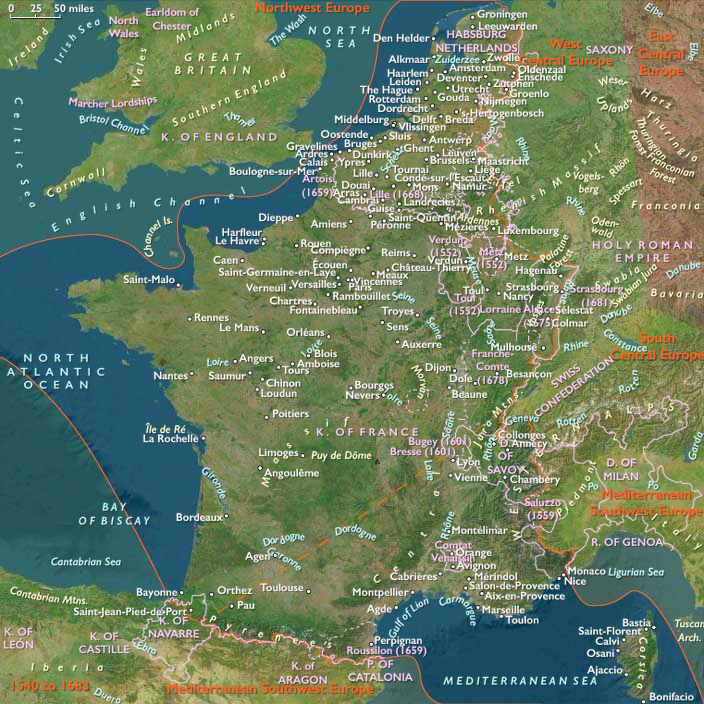
Bringing with him forty families, Razilly had settled at La Hève (near present day Lunenburg, Nova Scotia) on the southern coast of the island, dispossessing a Scotsman.
Charles de Menou d'Aulnay is one of his able assistants, borrowing funds, hiring ships, and recruiting men for the regular ocean crossings to and from France for the Compagnie des Cent-Associés and a private company, Razilly-Condonnier.
These companies have divergent interests at times which is to result in costly competition.
D'Aulnay, born at Château de Charnizay, Indre-et-Loire, his father being a high ranking official for Louis XIII, is a member of the French nobility who has at various times been a sea captain and a lieutenant in the French navy to his cousin Razilly.

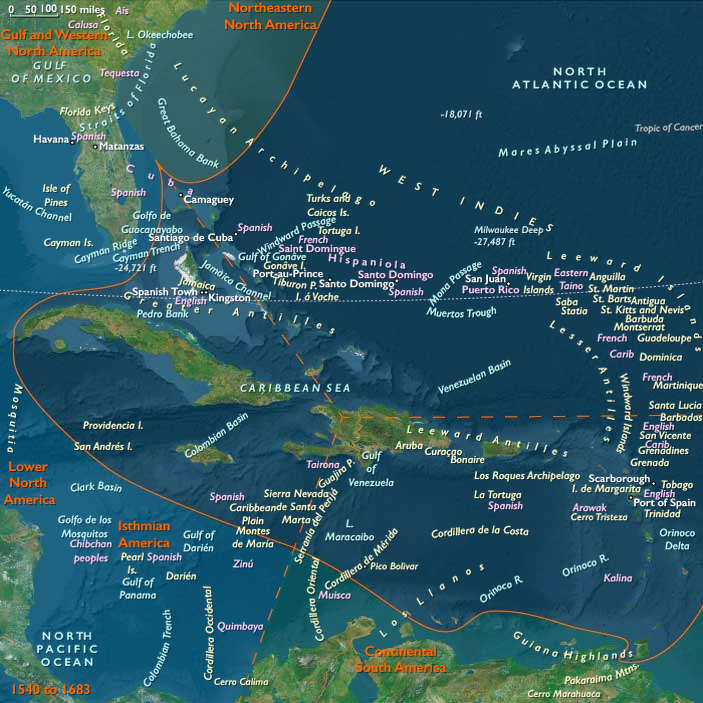
Charles de Saint-Étienne de la Tour, a fur trader who had become governor of Acadia in 1631, had moved to the mouth of the St. John River in present-day Saint John, New Brunswick, where he has built a new fort.
He had been formally granted a seigniory in 1635.
M.A. MacDonald writes in Fortunes & La Tour: The Acadian Civil War (1983; Toronto: Methuen) about La Tour's possession at the mouth of this river: “[d]own this river highway came fleets of canoes, bringing the richest fur harvest in all Acadia to Charles La Tour's storehouses: three thousand moose skins a year, uncounted beaver and otter. On this tongue of land his habitation stood, yellow-roofed, log-palisaded, its cannon commanding the river and bay” (p. 183).
La Tour and Razilly had agreed to divide control of Acadia, the latter controlling the southwestern corner of Nova Scotia and the territory along the St. John River.
La Tour had attacked a trading post established at Machias, Maine, by merchants from Massachusetts in 1633, killing two guards, taking the other three prisoners and goods with him back to Cape Sable.
A Boston merchant named Allerton, who had interests in the Machias post, had sailed to La Tour in 1634 to demand the prisoners and goods.
La Tour had replied that the Machias post was in French territory and he had acted in the name of the French king.
Razilly uses this incident to identify the Kennebec River, near Portland, Maine, as the line at which the English must not cross.
Razilly reestablishes French control of Fort Pentagouet at Majabigwaduce (modern Castine) on the Penobscot Bay, which had been given to France in an earlier treaty with the English, in 1635.
He gives the Plymouth men in charge of the fort their liberty, but bids them tell their people at the English plantations that he would come the next year and displace them as far south as the 40th degree of north latitude.
He then takes full possession of the place, and strengthens the defenses.
Plymouth people man a vessel and go to Penobscot to drive out the French, whom they find only eighteen in number, but strongly entrenched.
D'Aulnay permits them to expend all their ammunition, and then go home.
Claude de Launay-Razilly, appointed by King Louis XIII as Acadia's new governor after the death of his brother, Isaac de Razilly, died suddenly at forty-eight in December 1635, had not come to Acadia but appointed Charles de Menou d'Aulnay, who had served as one of Razilly’s able assistants, as his lieutenant to govern on his behalf and run the company, Razilly-Condonnier, in Acadia while he ran the operation in France.
D'Aulnay had gone immediately to Port Royal, erected a new fort, moved the La Hève colonists, and sent to France for twenty additional families, making Port Royal the principal settlement in Acadia, which at this time embraces not only Nova Scotia, but a portion of New Brunswick, extending as far west as the Penobscot.
D’Aulnay in 1637 marries Jeanne Motin, the daughter of Louis Motin, who had been a financial backer of his late predecessor and cousin Isaac de Razilly.
La Tour, with the help of the wealth he has acquired from the fur trade, is able to purchase influence in Paris.
As a result, he is granted the office of co-lieutenant-governor of Acadia, along with d'Aulnay, in 1638.
Unfortunately for Acadia and the colonists, a long and wasteful struggle is about to begin between these two men; in the end, it will cost hundreds of thousands of livres.
King Charles, who had married France’s Henrietta Maria, agrees to return Acadia and New France to the control of his wife’s compatriots.
La Tour has attempted to unseat d'Aulnay in Port-Royal on two occasions, in 1639 and 1640.
During these confrontations, La Tour had been accused of treason and crimes against Acadia.
Both men have preferred accusations and complaints against each other, and d'Aulnay, by reason of superior advantages at court, had obtained an order from the king, February 13, 1641, for arresting La Tour and sending him to France.
However, the military forces of the two rivals are almost equal.
D'Aulnay cannot dispossess La Tour, and is obliged to send back the ship that brought the order with La Tour's refusal instead of his body.
D'Aulnay had returned to France in the early winter of 1641 to obtain additional power, and La Tour had sought the aid of his New England neighbors.
As a result of negotiations with the New England governor, a body of Boston merchants had made a visit to Fort La Tour for purposes of trade, and while at sea, on their return, met d'Aulnay himself, who informed them that La Tour was a rebel, and showed them a confirmation of the order issued the year before for his arrest.
D'Aulnay lays siege to Fort La Tour wth five hundred men in armed ships, but aid comes from New England, and he is driven away.
La Tour, finding allies in Massachusetts in the spring of 1643, leads a party of English mercenaries against the Acadian colony at Port Royal on August 6.
His two hundred and seventy Puritan and Huguenot troops kill three, burn a mill, slaughter cattle and seize eighteen thousand livres of furs, one third of the plunder going to La Tour and the rest to the Bostonians.
The Capuchins demand Paris send support for d'Aulnay.