Charlemagne
King of the Franks, King of the Lombards, Emperor and Augustus
Years: 742 - 814
Charlemagne (April 2, 742/747/748 – January 28, 814), also known as Charles the Great or Charles I, is the King of the Franks from 768, the King of Italy from 774, and from 800 the first emperor in western Europe since the collapse of the Western Roman Empire three centuries earlier.
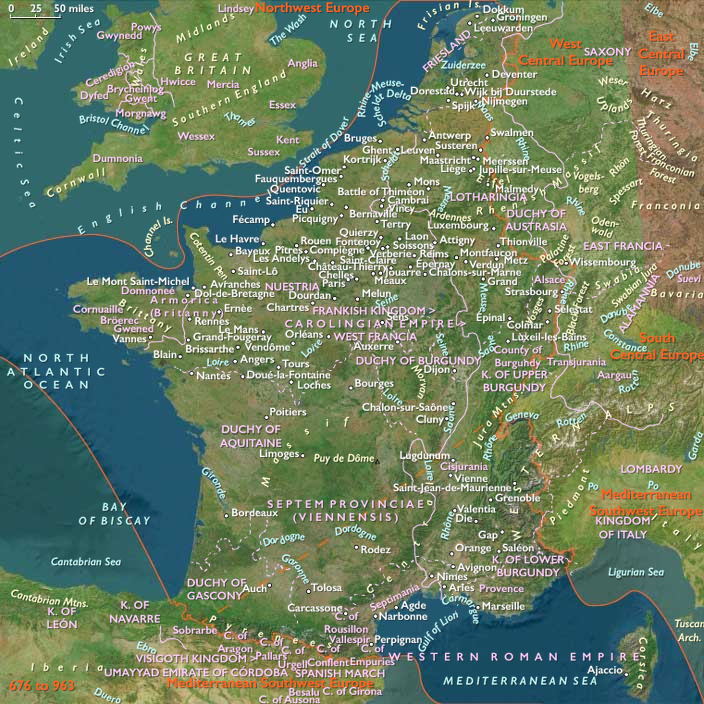
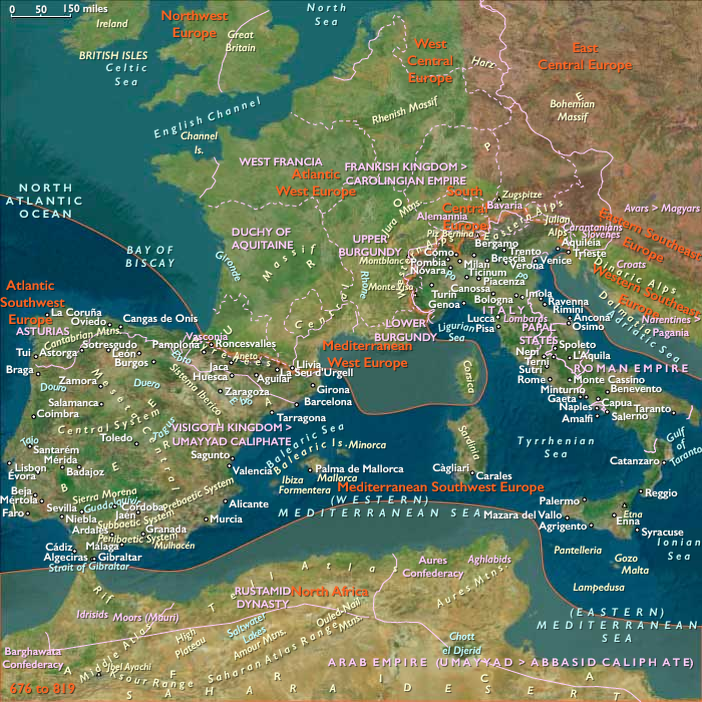
The expanded Frankish state he founds is called the Carolingian Empire.
The oldest son of Pepin the Short and Bertrada of Laon, Charlemagne becomes king in 768 following the death of his father.
He is initially co-ruler with his brother Carloman I. Carloman's sudden death in 771 under unexplained circumstances leaves Charlemagne as the undisputed ruler of the Frankish Kingdom.
Charlemagne continues his father's policy towards the papacy and becomes its protector, removing the Lombards from power in northern Italy, and leading an incursion into Muslim Spain.
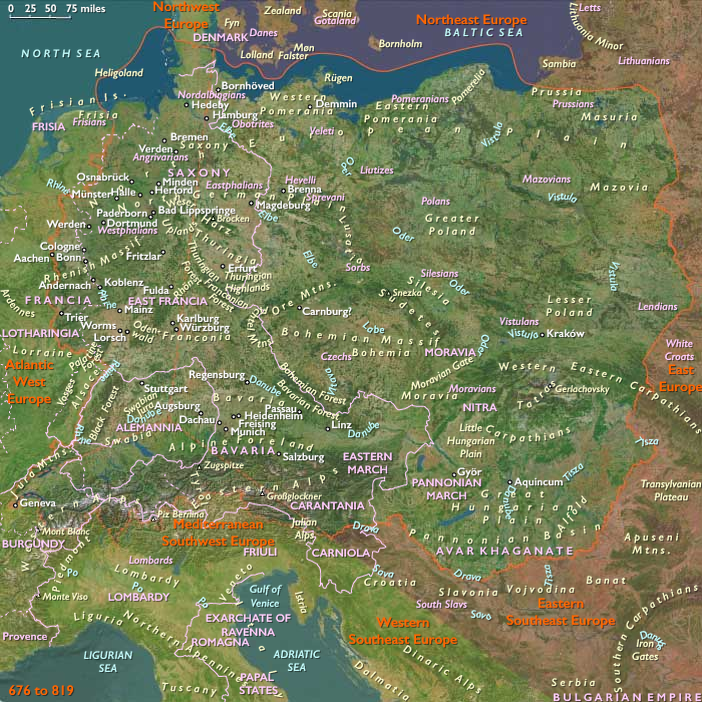
He also campaigns against the peoples to his east, Christianizing them upon penalty of death, at times leading to events such as the Massacre of Verden.
Charlemagne reaches the height of his power in 800 when he is crowned as "Emperor" by Pope Leo III on Christmas Day at Old St. Peter's Basilica.
Called the "Father of Europe" (pater Europae), Charlemagne's empire unites most of Western Europe for the first time since the Roman Empire.
His rule spurs the Carolingian Renaissance, a period of cultural and intellectual activity within the Catholic Church.
Both the French and German monarchies considered their kingdoms to be descendants of Charlemagne's empire.
Charlemagne dies in 814 after having ruled as Emperor for just over thirteen years.
He is laid to rest in his imperial capital of Aachen in today's Germany.
His son Louis the Pious succeeds him as Emperor.