Chandragupta II
ruler of the Gupta empire
Years: 375 - 415
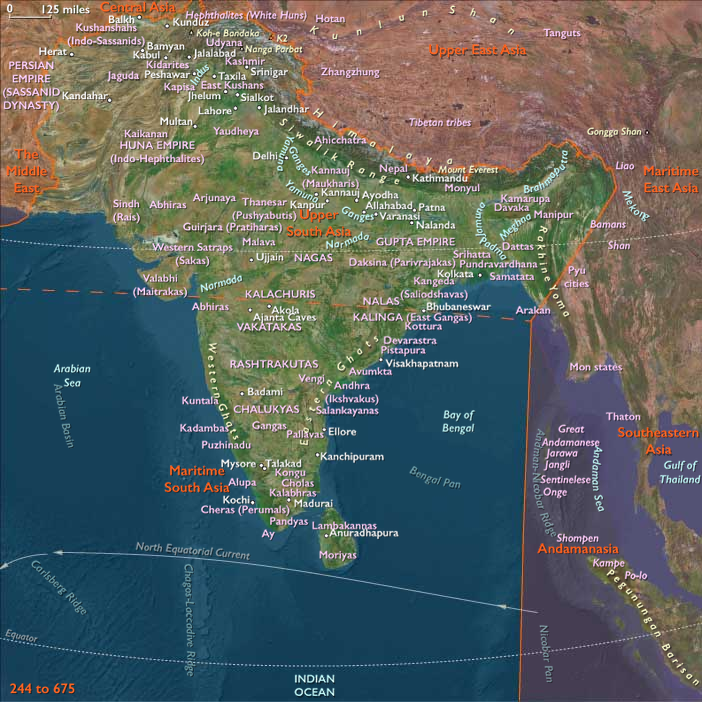
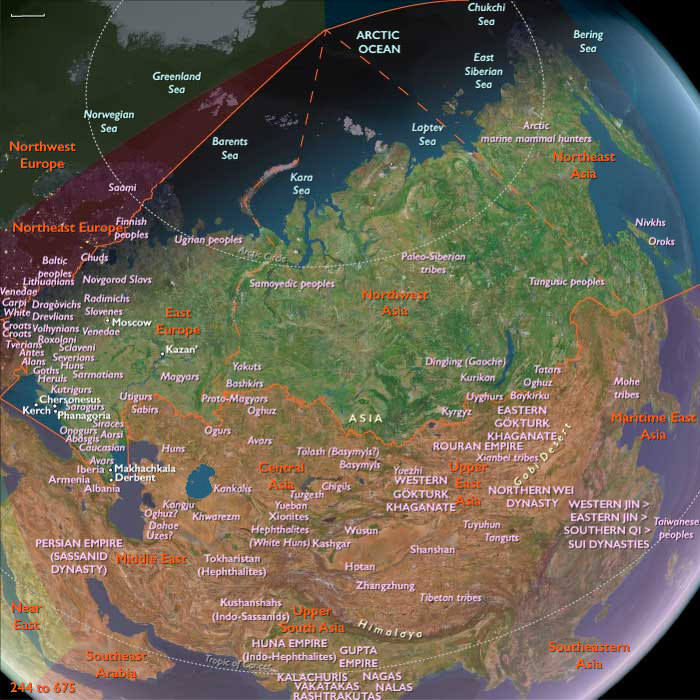
Chandragupta II The Great, very often referred to as Vikramaditya or Chandragupta Vikramaditya in Sanskrit, is one of the most powerful emperors of the Gupta empire in northern India.
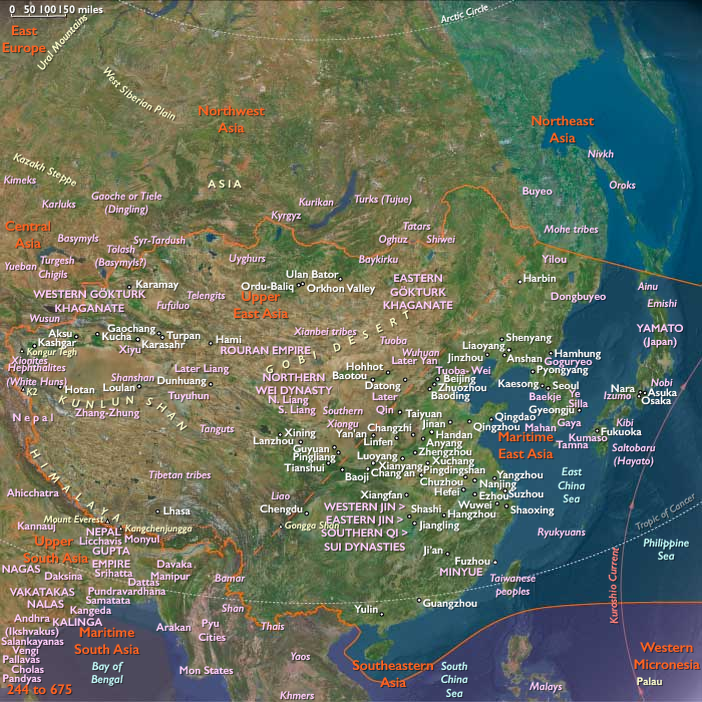
His rule spans c. 380–413/415, during which the Gupta Empire achieves its zenith, art, architecture, and sculpture flourish, and the cultural development of ancient India reaches its climax.
The period of prominence of the Gupta dynasty is very often referred to as the Golden Age of India.
Chandragupta II is the son of the previous ruler, Samudragupta the Great.
He attains success by pursuing both a favorable marital alliance and an aggressive expansionist policy in this which his father and grandfather (Chandragupta I) set the precedent.
Samudragupta had set the stage for the emergence of classical art, which occurs under the rule of Chandragupta II.
Chandragupta II gives great support to the arts.
Artists are so highly valued under his rule that they are paid for their work — a rare phenomenon in ancient civilizations.
From 388 to 409, he subjugates Gujarat, the region north of Mumbai, Saurashtra, in western India, and Malwa, with its capital at Ujjain.
Culturally, the reign of Chandragupta II marks a Golden Age.
This is evidenced by later reports of the presence of a circle of poets known as the Nine Gems in his court.
The greatest among them is Kalidasa, who authors numerous immortal pieces of literature including Abhijñānaśākuntalam.