Carlos Manuel de Céspedes
Cuban independence fighter
Years: 1819 - 1874
Carlos Manuel de Céspedes del Castillo (April 18, 1819 Bayamo, Oriente – February 1874 San Lorenzo, Oriente) is a Cuban planter who frees his slaves and makes the declaration of Cuban independence in 1868 that starts the Ten Years' War.
Related Events
Filter results
Showing 10 events out of 47 total
Antonio Maceo, a mulatto leader, supports Gomez's plans and actions.
Under Gomez's direction, Maceo has developed into one of the most daring fighters of the Cuban army.
Showing extraordinary leadership and tactical capabilities, Maceo wins respect and admiration from his men, as well as fear and scorn from the Spanish troops.
He keeps tight discipline in his encampment, constantly planning and organizing future battles.
Maceo enjoyd outsmarting and outmaneuvering the Spanish generals, and on successive occasions he inflicts heavy losses on them.
Maceo's incursions into the eastern sugar zones not only help to disrupt the sugar harvest but more importantly lead to the freedom of the slaves, who soon joins the ranks of the Cuban army.
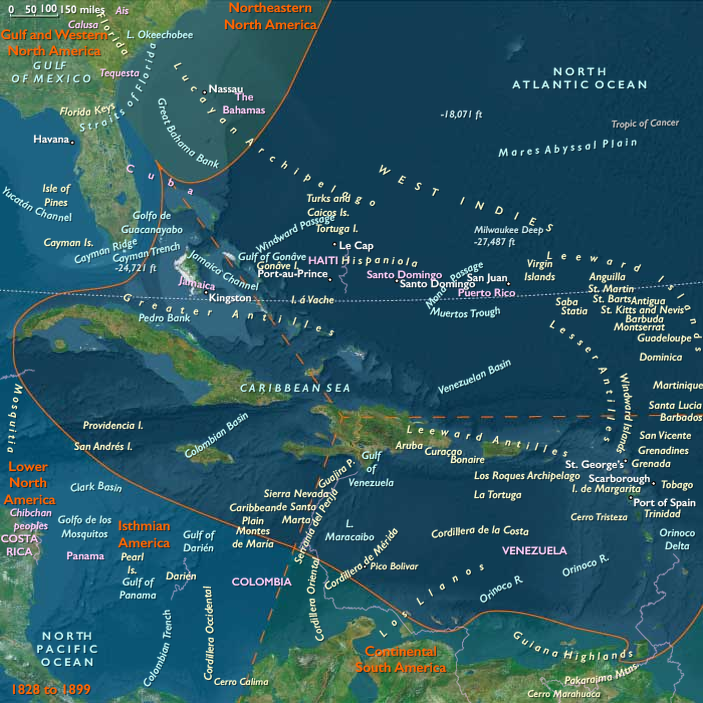
Cuba's war with Spain breaks out in 1868.
It is organized and directed by radical Creole landowners in Oriente Province together with a group of lawyers and professionals.
The peasants do the bulk of the fighting, however, with blacks joining the rebel ranks.
The leadership of the movement is in the hands of the son of a wealthy landowner from Oriente Province, Carlos Manuel de Céspedes y Quesada.
Céspedes and his group are determined to strike a blow at Spanish control of Cuba.
When they learn that the Spanish authorities have discovered their conspiratorial activities, the conspirators are forced to act.
On October 10, 1868, Céspedes issues the historic call to rebellion, the "Grito de Yara," from his plantation, La Demajagua, proclaiming Cuba's independence.
He soon frees his slaves, incorporates them into his disorganized and ill-armed force, and makes public a manifesto explaining the causes of the revolt.
Issued by the newly organized Revolutionary Junta of Cuba (Junta Revolucionaria de Cuba), the manifesto states that the revolt is prompted by Spain's arbitrary government, excessive taxation, corruption, exclusion of Cubans from government employment, and deprivation of political and religious liberty, particularly the rights of assembly and petition.
It calls for complete independence from Spain, for the establishment of a republic with universal suffrage, and for the indemnified emancipation of slaves.
Céspedes's manifesto is followed by the organization of a provisional government, with Céspedes acting as commander in chief of the army and head of the government.
Céspedes's almost absolute power as well as his failure to decree the immediate abolition of slavery soon causes opposition within the revolutionary ranks.
Facing mounting pressure, Céspedes concedes some of his power and calls for a constitutional convention to establish a more democratic provisional government.
The war centers in eastern Cuba.
Céspedes decrees the destruction of cane fields and approves the revolutionary practice of urging the slaves to revolt and to join the mambises, as the Cuban rebels are now called.
Numerous skirmishes take place, but Cuban forces are unable to obtain a decisive victory against the Spanish army.
Simultaneously, Céspedes makes several unsuccessful attempts to obtain United States recognition of Cuban belligerency.
While Céspedes retains civilian leadership, the military aspects of the war are under the leadership of the Dominican Maximo Gomez.
Unhappy with the treatment Dominicans had received from Spain during Spanish occupation of his own country (1861-65), and horrified by the exploitation of the black slaves, Gomez starts to conspire with the Cuban revolutionaries and joins Céspedes after the Grito de Yara.
His experience in military strategy was invaluable to the revolutionary cause, and he is soon promoted to the rank of general and later to commander of Oriente Province.
A master of guerrilla warfare, Gomez alternates training the Cubans in this type of struggle with commanding his forces in numerous battles.
Maceo has achieved the rank of general by 1872. His prominent position among revolutionary leaders soon gives rise to intrigue and suspicion.
Conservative elements that support the war effort begin to fear the possibility of the establishment of a black republic with Maceo at its head.
The example of Haiti still looms in the minds of many.
Dissension in the revolutionary ranks and fears of the blacks slow down the revolutionary effort.
That morning, after the sounding of the slave bell that indicated to Céspedes’ slaves it was time for work, they had stood before him waiting for orders.
Céspedes had announced they are all free men, and invites them to join him and his fellow conspirators in war against the Spanish government of Cuba.
However, many question Céspedes's plans for manumission, notably the rate at which slaves are to be freed, or disagree with his call for U.S. annexation of Cuba.
This declaration of Cuban independence begins what will be called the Ten Years' War.
A large amount of slaves have been brought to Cuba to help work at the sugar mills throughout the 1800s.
Many slaves have been brought from Haiti and other neighboring islands because they are cheap and efficient labor.
Céspedes, a landowner and lawyer in eastern Cuba, near Bayamo, had purchased La Demajagua, an estate with a sugar plantation, in 1844 after returning from Spain.
In Cuban parlance, Céspedes is a peninsulare (a recent immigrant from Spain).
Céspedes had intended to occupy the nearby town of Yara on October 11, from which this revolution is commemorated in Cuba as a national holiday under the name Grito de Yara ("Cry of Yara").
In spite of this defeat, the uprising of Yara is supported in various regions of Oriente Province and continues to spread throughout the eastern region of Cuba.
On October 13, the rebels take eight towns in the province, favoring enrollment and acquisition of arms.
The rebels proceed to seize the important city of Bayamo after a three-day-combat.
It is in the enthusiasm of this victory that the poet and musician, Perucho Figueredo, composes Cuba’s national anthem, the “Bayamo”.
The melody, also called La Bayamesa, had been composed by Figueredo in 1867.
When, on October 20, 1868, the Cuban forces obtain the capitulation of the Spaniard authorities in Bayamo, the jubilant people surround Figueredo and ask him to write an anthem with the melody they are humming.
Right on the saddle of his horse, Figueredo writes the lyrics of the anthem, (which is longer than the current official version).
Figueredo will be captured and executed by the Spaniards two years later.