Carloman II
King of West Francia (France)
Years: 866 - 884
Carloman II (c. 866 – December 12, 884), King of Western Francia, is the youngest son of King Louis the Stammerer and Ansgarde of Burgundy, and becomes king, jointly with his brother Louis III of France, on his father's death in 879.

Related Events
Filter results
Showing 9 events out of 9 total
Atlantic West Europe, 868–879: Deepening Fragmentation, Resistance to Vikings, and Shifts in Royal Power
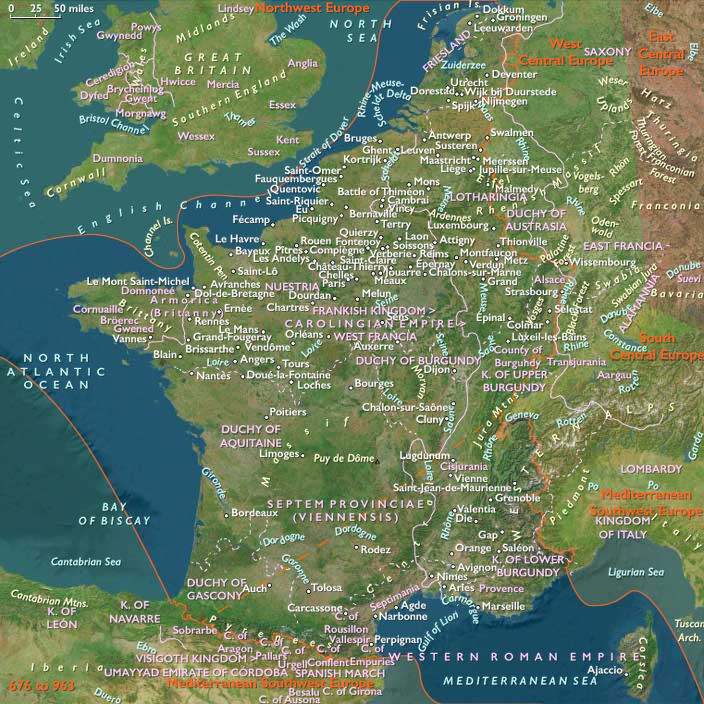
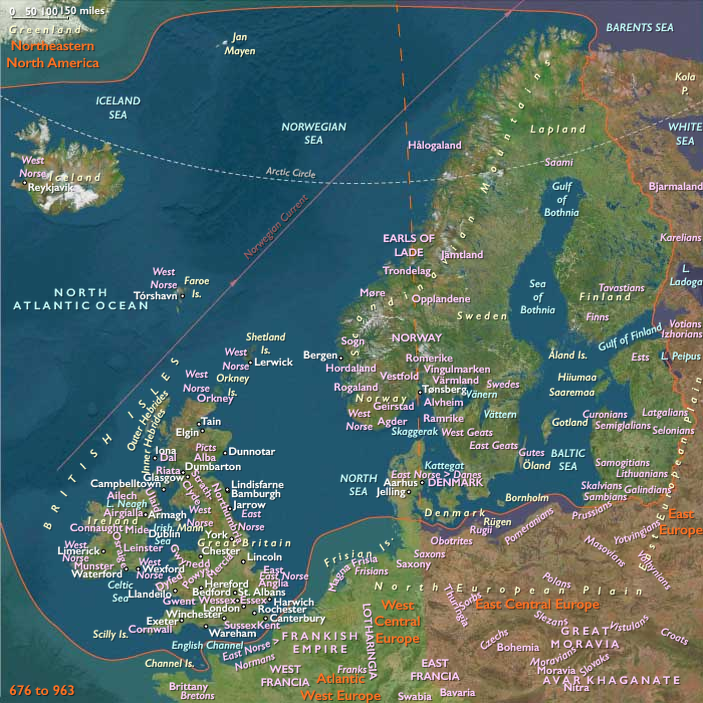
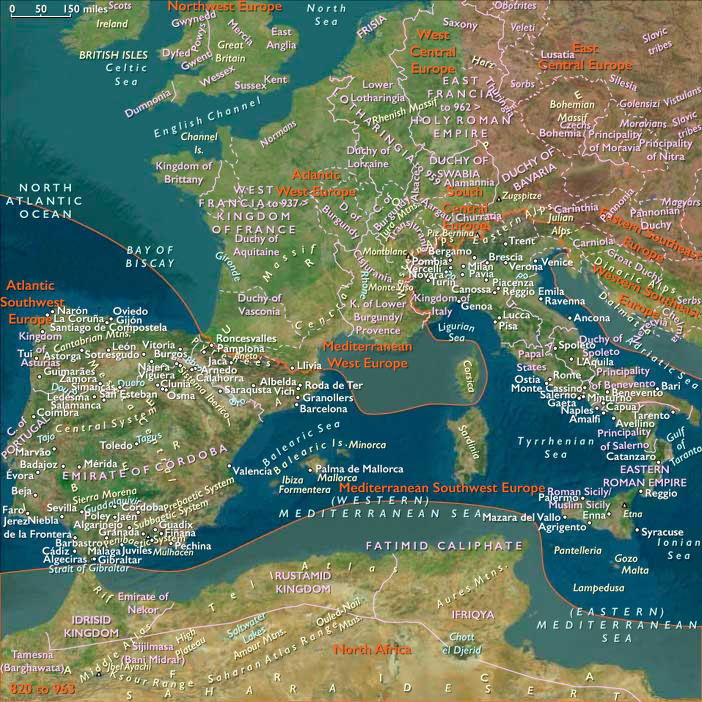
Between 868 and 879, Atlantic West Europe—including West Francia, Normandy, Brittany, Aquitaine, Burgundy, and the Low Countries—witnessed continued political fragmentation, intensified Viking incursions, and important shifts in royal and regional power dynamics.
Political and Military Developments
-
Heightened Viking Incursions
- The Siege of Paris (885–886) was foreshadowed during this era as Vikings increasingly targeted the Seine Valley and other waterways, leading local nobles to take stronger defensive measures.
- Cities such as Rouen, Nantes, and Bordeaux were repeatedly assaulted, accelerating the region’s militarization.
-
Declining Carolingian Authority
- Charles the Bald (r. 843–877) struggled to maintain central authority; his rule increasingly relied on granting extensive privileges to regional counts and dukes.
- Following Charles the Bald’s death in 877, his successors, Louis the Stammerer (r. 877–879) and subsequently Louis III and Carloman II, inherited a fragmented realm with weakened royal power.
-
Rise of Regional Autonomy
- Nobles and regional counts (notably in Aquitaine, Anjou, and Flanders) consolidated their territorial control, governing almost autonomously and resisting centralized oversight.
- Brittany, under King Salomon (r. 857–874), reached the peak of its autonomy, even participating in diplomacy with external powers independent of West Francia.
Economic and Social Developments
-
Continued Growth of Fortified Settlements
- Increased Viking raids accelerated the fortification and settlement of towns, contributing to the growth of fortified urban centers that later emerged as key medieval cities.
- Towns along rivers like the Seine and Loire further developed trade and defensive structures, supporting nascent urban economies despite intermittent disruptions from Viking attacks.
-
Feudal Economy and Manorial System
- The fragmentation of central authority reinforced the feudal system, with local lords exerting stronger economic control through manorial estates and serfdom, reshaping rural societies.
Religious and Cultural Developments
-
The Church’s Role Amid Instability
- Bishops and abbots emerged as crucial political figures, offering spiritual and temporal leadership amid Viking threats and weakening royal control.
- Archbishop Hincmar of Rheims continued to assert considerable influence on West Frankish politics and theological disputes.
-
Preservation of Scholarship and Manuscripts
- Monasteries, despite suffering attacks, continued safeguarding manuscripts, maintaining the foundations of Carolingian intellectual heritage.
Legacy
The period 868–879 solidified the transition toward political decentralization and regional autonomy across Atlantic West Europe. Persistent Viking incursions shaped military, economic, and social structures, while weakened royal power set the stage for enduring feudal fragmentation and increased local governance.
Provence had been legally a part of the Italian kingdom from 863.
Following the death of Louis the Stammerer and the division of his realm between his two sons, Carloman and Louis, some nobles advocate electing a sole king, but eventually both brothers are elected kings.
Although doubts are cast upon their legitimacy, the brothers had obtained recognition and in March 880 divide their father's realm at Amiens, Carloman receiving Burgundy and Aquitaine.
However, Duke Boso has renounced his allegiance to both brothers and had been elected King of Provence, or Lower Burgundy.
The brothers Carloman and Louis march against him in the summer of 880, taking Mâcon and the northern parts of Boso's realm.
They unite their forces with those of Charles the Fat and unsuccessfully besiege Vienne from August to November.
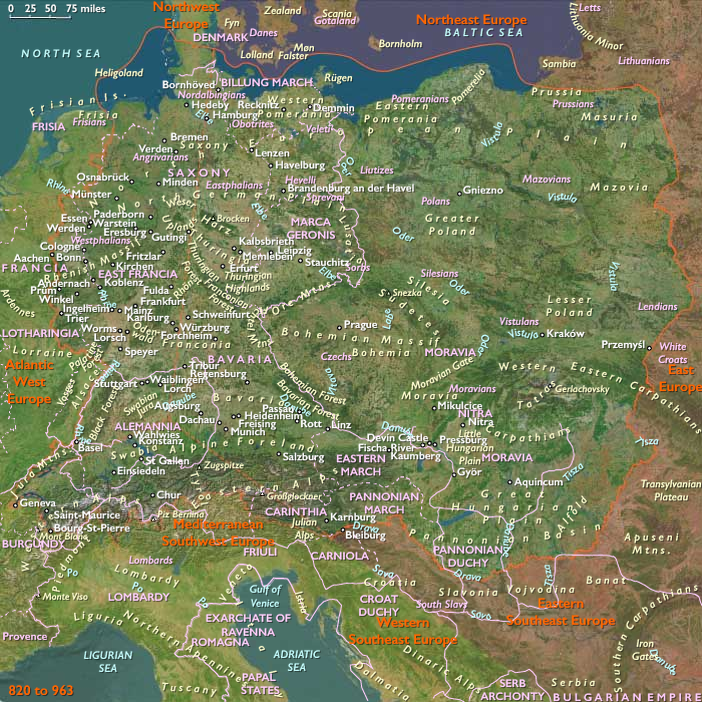
The Battle of Thimeon (879): Louis the Younger's Victory Against the Vikings
By 879, Viking incursions into the Frankish kingdoms had reached a new level of intensity, particularly along the Scheldt River and deeper into the Carolingian heartlands. Norsemen from England had established permanent settlements along the river, using them as staging grounds for further attacks.
The Viking Threat in East Francia and West Francia (879)
- Since the summer of 879, Vikings had been increasing their attacks on the Frankish kingdom, raiding deep into the interior.
- West Francia under Louis III and Carloman II suffered the greatest devastation, with Viking forces sacking cities, monasteries, and trade centers.
- East Francia, ruled by Louis the Younger, also came under heavy Viking pressure, particularly along the Rhine and its tributaries.
Louis the Younger's Response and the Treaty of Ribemont (879)
- Christmas 879 → Louis the Younger celebrates the holiday at Frankfurt am Main, then meets with the West Frankish kings, Louis III and Carloman II, to negotiate a settlement of territorial claims.
- The Treaty of Ribemont → Signed in early 880, the treaty cements the division of Lotharingia, ensuring East Francia retains the region.
- With his borders secure from West Francia, Louis the Younger turns north to confront the Viking settlement on the Scheldt River.
The Battle of Thimeon (879)
- Louis leads his army northward, targeting Viking strongholds in the Low Countries.
- The two sides clash near Thimeon, close to modern Charleroi, Belgium.
- The battle is a decisive Frankish victory, with an estimated 5,000 Vikings killed—one of the largest losses suffered by Norse forces in the Frankish world.
- However, the victory comes at a heavy cost:
- Hugh of Saxony, Louis' only surviving son, is killed in battle.
- Hugh, an illegitimate son, had been a prominent military leader, serving as Count of Saxony and fighting border skirmishes against both Vikings and Hungarians.
Aftermath and Impact of the Battle
- The Viking settlement on the Scheldt is weakened but not fully eradicated—future raids continue in the 880s and 890s.
- Louis the Younger, devastated by the loss of his son, has no surviving heirs, creating uncertainty over East Francia’s succession.
- The Treaty of Ribemont (880), signed shortly after, secures Lotharingia for East Francia, ensuring that West Francia does not benefit from his victory.
- The Viking threat remains, though Louis' strong defense of his kingdom serves as an example for future Frankish rulers facing Norse incursions.
The Battle of Thimeon (879) represents one of the most significant victories against Viking forces in East Francia, but the death of Hugh of Saxony leaves Louis the Younger's kingdom vulnerable, setting the stage for further instability in the Carolingian world.
Louis the Younger Expels the Norse from the Royal Palace of Nijmegen (879)
Following his victory at the Battle of Thimeon in 879, Louis the Younger continues his campaign against the Vikings, who had established strongholds throughout Frisia and the Low Countries. Among their key holdings was the royal palace of Nijmegen, an important Carolingian imperial residence that had fallen into Viking hands.
The Recapture of Nijmegen
- After defeating the Norse at Thimeon, Louis marches north to liberate Nijmegen, a symbolic and strategic site for Carolingian rule in Lotharingia.
- The Vikings had occupied the palace, using it as a fortified base for launching further raids into East Francia.
- With his army strengthened by his recent victory, Louis successfully drives out the Norse, restoring the Carolingian presence in the region.
Strategic Importance of Nijmegen
- The royal palace of Nijmegen had been one of Charlemagne’s key residences, and its occupation by Viking forces was both a military threat and a symbolic humiliation.
- By retaking Nijmegen, Louis the Younger reasserts Carolingian authority in the northern frontier, securing an important defensive position along the Rhine and Meuse rivers.
- This victory also helps stabilize Lotharingia, which had been under constant Viking incursions since the early 860s.
Impact of Louis’ Campaign Against the Norse (879)
- The defeat at Thimeon and the expulsion from Nijmegen represent a major setback for Viking forces in East Francia.
- Viking control over Frisia and the Low Countries is weakened, though Norse attacks will continue in the 880s and 890s.
- Louis proves himself a capable military leader, securing his northern borders while also solidifying his claim to Lotharingia after the Treaty of Ribemont (880).
Though Viking activity persists in the region, the expulsion of the Norse from Nijmegen in 879 stands as a key victory in the Carolingian struggle against Norse expansion, helping to reaffirm royal control over the Rhinelandand Carolingian heartlands.
In the same month that Louis the Younger defeats the Viking host at the Battle of Thimeon, a Saxon host commanded by Duke Bruno, the king's brother-in-law, suffers a heavy defeat near Hamburg, where Bruno and many other Saxon nobles fall.
As the example of the victory at Thimeon illustrates, however, no single military victory can stop the tide of Viking incursions.
The Battle of Saucourt (881): A Carolingian Victory Against the Vikings
Following their defeat at the Battle of Thimeon (879) at the hands of Louis the Younger, King of East Francia, the Vikings resume their devastating raids into the Frankish kingdom, striking deeper into West Francia. Their continued plundering prompts a decisive Frankish response, culminating in the Battle of Saucourt (881), one of the most significant military victories against the Norse invaders.
The Viking Raids Leading Up to Saucourt
- November 880 → Viking forces reach Kortrijk, continuing their assaults on Carolingian territories in the Low Countries.
- December 880 → The Norse sack Cambrai and Arras, targeting key Frankish cities and religious centers.
- Early 881 → The Vikings plunder Amiens and Corbie, pushing further into the heart of West Francia.
The Battle of Saucourt (881): A Rare Pitched Battle Against the Vikings
- Facing relentless Viking incursions, Louis III of West Francia (son of Louis the Stammerer) and his brother Carloman II rally their forces.
- Unlike previous encounters, where the Franks often relied on fortifications or defensive tactics, this battle is a pitched engagement, a rare direct field battle against Viking forces.
- At Saucourt, a hamlet between Valines and Fressenneville, about 10 miles west of Abbeville, the Frankish army meets the Norse warriors head-on.
- The battle is a decisive Carolingian victory, with an estimated 8,000 Viking warriors slain.
Celebration in the Ludwigslied
- The victory at Saucourt is commemorated in the Old High German poem Ludwigslied ("Song of Louis"), celebrating Louis III’s leadership and divine favor in battle.
- The poem, composed shortly after the battle, frames the victory as a Christian triumph over pagan invaders, reinforcing the Carolingian monarchy’s role as a defender of Christendom.
Impact and Consequences of the Battle
- Severe Viking losses → The 8,000 dead Vikings represent one of the largest recorded Norse casualties in a single battle.
- Temporary relief for West Francia → The Viking forces in the region are significantly weakened, allowing the Franks to reestablish control over key cities.
- Louis III’s rising reputation → The victory enhances his prestige, solidifying his status as a capable warrior-king.
- Continued Viking Threat → Despite this setback, Viking raids will continue throughout the 880s and 890s, showing that while the Franks can win battles, they struggle to prevent further incursions.
Conclusion: A Rare but Crucial Frankish Victory
The Battle of Saucourt (881) stands as one of the most significant Frankish victories against the Vikings, temporarily halting Norse expansion in West Francia. The Ludwigslied immortalizes the battle, framing it as a moment of divine intervention and Carolingian resilience, though Viking pressure on Francia remains a persistent challenge in the coming decades.
Richard, called the Justiciar, is a Bosonid, the son of Bivin of Gorze and Richildis.
His elder brother is Boso of Provence and his younger sister is Richildis, second wife of Charles the Bald.
After the death of the Emperor Louis II in 875, Richard and Boso had accompanied Charles to Italy for his imperial coronation.
In Pavia, while preparing for his return journey in February 876, Charles had nominated Boso "Duke and Viceroy of Italy and Duke of Provence."
On Charles' death in 877, Boso had returned to France and confided the realm of Italy and the duchy of Provence to Richard and Hugh the Abbot as missi dominici.
When Boso declared himself "King of Provence" in 879 following the death of Louis the Stammerer, Richard had defected from Boso and taken Boso's county of Autun, which Carloman II had confirmed to him in 880.
The two had joined battle on the Saône and Richard had captured Mâcon and garrisoned it in the name of Carloman and Louis III under the command of Bernard Plantapilosa, a relative of the hereditary Counts of Mâcon.
After taking Lyon, he had besieged his brother's capital of Vienne, where he had been joined by Louis, Carloman, and the emperor Charles the Fat.
Richard eventually drives Boso out in September 882 and captures his wife Ermengard and children Engelberga and Louis, sending them as prisoners to Autun.
Boso goes into hiding in Provence.
The Death of Louis III and the Crisis of West Francia (882)
On August 5, 882, Louis III, King of West Francia, dies after falling from his horse while chasing a girl with amorous intent. His sudden and unexpected death occurs at Saint-Denis, a central location within his realm, and he is buried in the royal mausoleum of the Basilica of Saint-Denis.
The Aftermath: Carloman Becomes Sole King
- Louis III had no heirs, leaving his brother Carloman II as the sole ruler of West Francia.
- Carloman inherits a kingdom in crisis, beset by Viking invasions, feudal revolts, and territorial instability.
The Dire Condition of West Francia (882)
-
Viking Incursions
- Norman raiders continue to plunder towns, monasteries, and cities, particularly in the Seine and Loire valleys.
- The kingdom’s defensive structures are inadequate, and Carloman struggles to muster a unified military response.
-
Weak Royal Authority
- The power of the West Frankish monarchy is limited, as local lords grow increasingly independent.
- Even within his own kingdom, Carloman’s authority is heavily circumscribed, with nobles asserting regional autonomy.
-
Revolts in Burgundy
- Feudal lords in Burgundy rise in rebellion, further weakening royal influence over the region.
- This signals the continued fragmentation of the Carolingian realm, as local rulers refuse to recognize centralized authority.
Legacy of Louis III
- Though his reign was short (879–882), Louis III is remembered for his victory over the Vikings at Saucourt (881), immortalized in the Ludwigslied.
- His death marks another step in the decline of the Carolingian monarchy, accelerating the rise of feudal states.
- With West Francia increasingly vulnerable, Carloman faces the daunting task of holding together a kingdom on the brink of disintegration.
Though Louis III’s reign was defined by both military triumph and personal recklessness, his untimely death leaves West Francia in a precarious state, setting the stage for continued instability and the eventual collapse of Carolingian rule.
The Death of Carloman II and the Last Reunion of the Frankish Kingdom (884–885)
On December 12, 884, Carloman II, King of West Francia, dies while hunting, leaving his kingdom without a direct heir. His sudden death forces the Frankish nobility to seek a new ruler, leading them to invite his cousin, Emperor Charles the Fat, to assume the kingship of West Francia.
Charles the Fat Becomes King of West Francia (885)
- Charles the Fat, already ruler of East Francia and Italy, gladly accepts the offer, reuniting the entire Carolingian Empire for the last time.
- This moment marks the final restoration of Charlemagne’s empire, though Charles lacks the strength or political acumen to hold it together for long.
- The Anglo-Saxon Chronicle claims that Charles inherited all of Carloman’s kingdom except Brittany, but contemporary sources do not support this fully—Brittany had already been semi-independent for decades under its own rulers.
Coronation and Governance of West Francia
- Charles is likely crowned King of West Francia by Geilo, Bishop of Langres, on May 20, 885, at Grand in the Vosges (southern Lorraine).
- Geilo even develops a special West Frankish royal seal for Charles, symbolizing his new role in the western kingdom.
- However, Charles' rule in West Francia is distant and impersonal:
- He largely delegates authority to the higher nobility rather than ruling directly.
- Unlike earlier Carolingian rulers, he does not actively engage with West Frankish affairs, leaving the kingdom weak and vulnerable to Viking and feudal threats.
Challenges Facing Charles the Fat
- Viking Raids → Even as Charles takes the throne, the Vikings are preparing for one of their most devastating sieges—Paris in 885–886.
- Fragmentation of Authority → The feudal nobility continues to gain power, as Charles fails to assert strong centralized control.
- Lack of Personal Leadership → Unlike his predecessors, Charles governs impersonally, allowing regional lords to act independently, further weakening royal influence.
Significance of Charles the Fat’s Accession
- Marks the last time the Frankish kingdom is fully reunited under one Carolingian ruler.
- Demonstrates the weakening of the Carolingian monarchy, as Charles is chosen by the nobility but does not govern effectively.
- Sets the stage for the eventual disintegration of the Carolingian Empire, as regional lords and external threats erode central authority.
Though Charles the Fat’s reign briefly restores Charlemagne’s empire, his inability to govern effectively or decisively ensures that West Francia and East Francia will soon separate permanently, leading to the emergence of France and Germany as distinct medieval realms.