Cao Pi
Chinese poet, author, and emperor of the state of Cao Wei
Years: 187 - 226
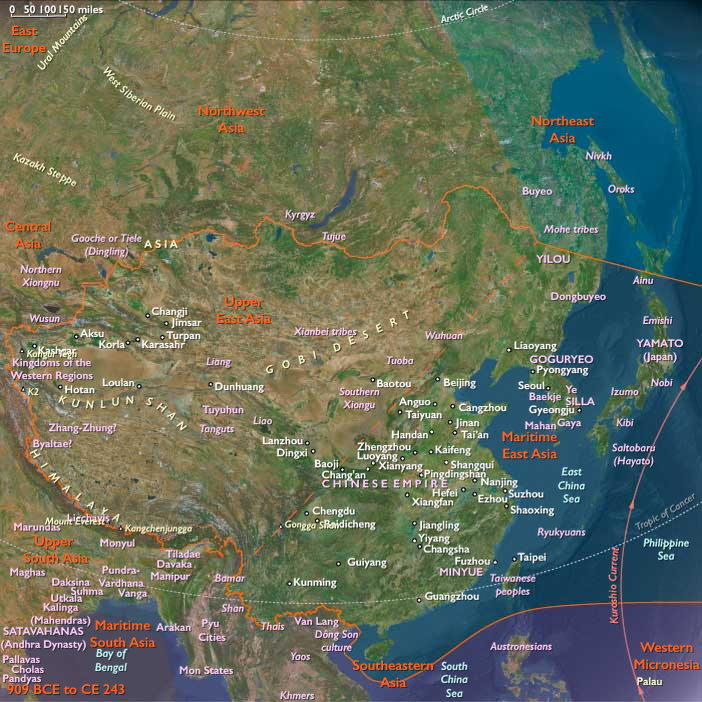
Cao Pi (187 – 29 June 226), formally known as Emperor Wen of Wei, is the first emperor of the state of Cao Wei during the Three Kingdoms period of Chinese history.
Born in Qiao County, Pei Commandery (present-day Bozhou, Anhui), he is the second son of the late Han Dynasty warlord Cao Cao.
Cao Pi, like his father, is a poet.
The first Chinese poem using seven syllables per line is the poem Yan Ge Xing by Cao Pi.
He also writes over a hundred articles on various subjects.
Cao Pi is the eldest son of Cao Cao and his concubine (later wife) Lady Bian.
Of all his brothers, Cao Pi is the most shrewd.
After the defeat of rival warlord Yuan Shao at the Battle of Guandu, he takes the widow of Yuan Shao's son Yuan Xi, Lady Zhen, as a consort, although eventually she loses his favor and is forced to commit suicide.
After he becomes emperor, his new favorite, Guo Nüwang, becomes empress.
In 220, Cao Pi forces Emperor Xian, last ruler of the Han Dynasty, to abdicate and proclaims himself Emperor of Wei.
Cao Pi continues his father's war against the rival states of Shu Han and Eastern Wu but is unsuccessful.
Unlike his father, he concentrates most of his efforts on his home country.
During his reign, he formally establishes Chen Qun's nine-rank system as the base for civil service nomination, which draws many talents into his government.
On the other hand, he drastically reduces the power of princes, stripping off their power to oppose him, but at the same time, rendering them unable to assist the emperor if a crisis arises within the state.