Callinus
Greek poet
Years: 705BCE - 640BCE
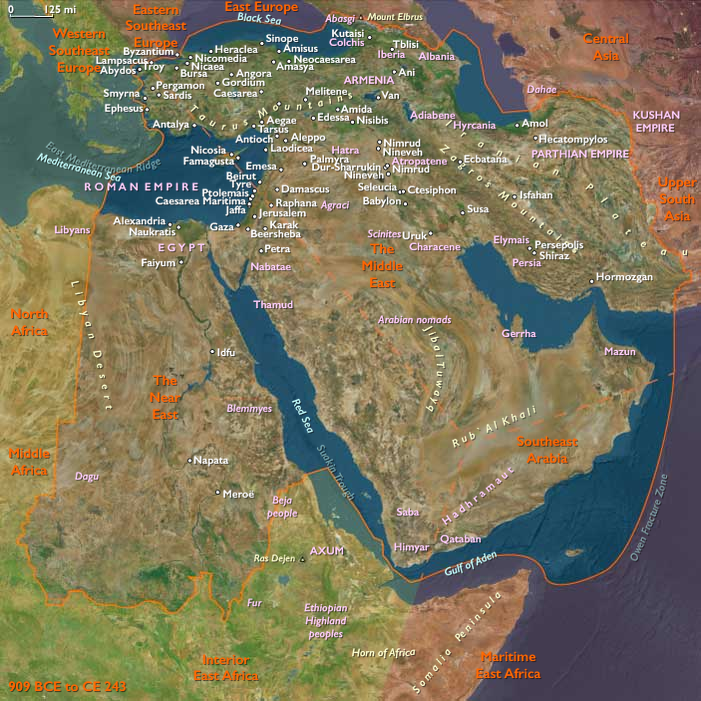
Callinus (also known as Kallinus) is a poet who lives in the ancient Greek city of Ephesus in Asia Minor in the mid-7th century BCE.
He is the earliest known Greek elegiac poet.
Very little is known about his life.
He may have taken part in the war between Ephesus and Magnesia on the Maeander, since he so eloquently describes it.
This must have happened before 727 BCE, since Magnesia was destroyed by the Treres, a Cimmerian tribe.
He also mentions the destruction of Sardis by the Cimmerians in 678 BCE.
Only a few fragments of the poetry of Callinus have survived.
One of the longest such fragments, consisting of 21 lines of verse, is a patriotic elegy to his fellow Ephesians urging them to fight the invading Cimmerians, who were menacing the Greek colonies in Asia Minor: "It is honorable to fight for city and family, death finds everyone."
He used his elegiac poetry as a means of propaganda and patriotism.
The poetry of Callinus is considered representative of the genre of martial exhortation elegy.
The language characteristic of this genre can be seen in Callinus I.
18-19: “For there is a longing among the entire people when the strong-hearted man dies, and while alive he is worthy of demigods.” Scholar Elizabeth Irwin notes that works of this genre often allude to the language and the thematic content of Homer’s Iliad.
Such compositions were accompanied by a flute or some other form of musical pipe and would be played on military campaigns or in social contexts.