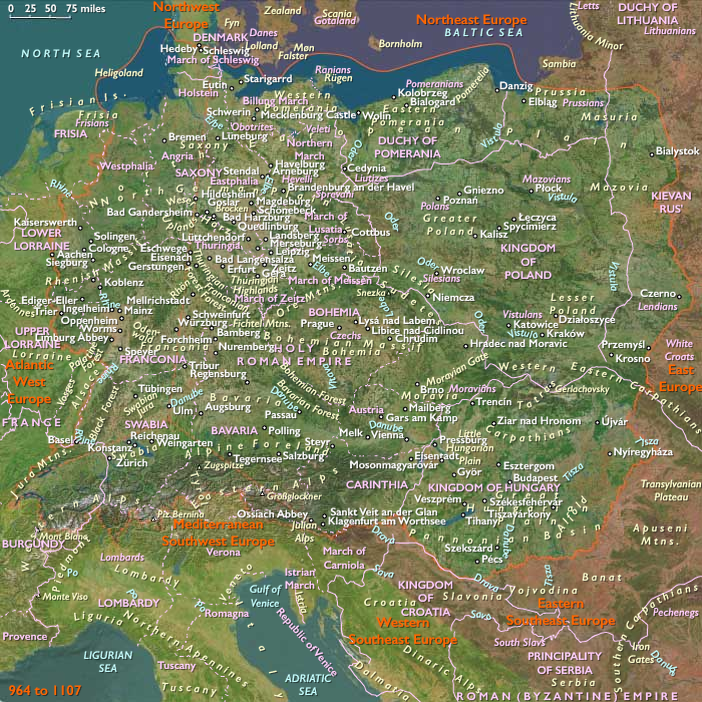
Bruno, or Boniface, born to a noble family of Querfurt (now in Saxony-Anhalt), is rumored to have been a relative of the Holy Roman Emperor Otto III.
At the age of six he had been sent to be educated in Magdeburg, seat of Adalbert of Magdeburg, the teacher and namesake of Saint Adalbert.
While still a youth he had been made a canon of Magdeburg cathedral.
The fifteen-year-old Otto III had made Bruno a part of his royal court.
While in Rome for Otto's imperial coronation, Bruno had met Saint Adalbert of Prague, the first Apostle of the Prussians, killed a year later, which will inspire Bruno to write a biography of St. Adalbert when he reaches the recently Christianized and consolidated Kingdom of Hungary himself.
Bruno had spent much time at the monastery where Adalbert had become a monk and where abbot John Canaparius may have written a life of Saint Adalbert.
Later, Bruno had entered a monastery near Ravenna, founded by Otto, and had undergone severe ascetic training under the guidance of St. Romuald.
Otto III had hoped to open a monastery between the Elbe and the Oder (somewhere in the pagan lands that became Brandenburg or Western Pomerania) to help convert the local population into Christianity.
Pope Sylvester II had appointed Bruno to head a mission among the pagan peoples of Eastern Europe In 1003.
Owing to the regional conflict between the Holy Roman Emperor Henry II and Duke Boleslaus I of Poland, he had delayed the plans for the monastery, and sets out for Hungary, where he visits the places that Saint Adalbert of Prague had attended.
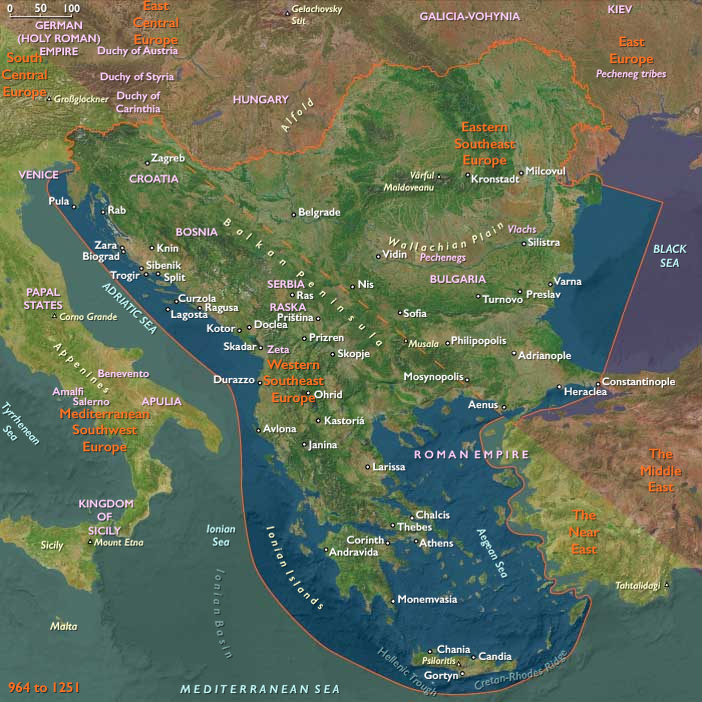
Bruno tries to get Ajtony, or Ahtum, the Duke of Banat, who is under jurisdiction of Patriarchate of Constantinople, to come under jurisdiction of Patriarchate of Rome, but this precipitates a large controversy leading to organized opposition from local monks.
Bruno elects to gracefully exit the region after he first finishes his book, the famous "Life of St. Adalbert," a literary memorial of much worth giving a history of the (relatively recent) conversion of the Hungarians.