Bernardo de Gálvez y Madrid, Count of Gálvez
Spanish military leader and colonial administrator
Years: 1746 - 1786
Bernardo de Gálvez y Madrid, Viscount of Galveston and Count of Gálvez (July 23, 1746 – November 30, 1786) is a Spanish military leader and colonial administrator who serves as colonial governor of Louisiana and Cuba, and later as Viceroy of New Spain.
Gálvez aids the American Thirteen Colonies in their quest for independence and leads Spanish forces against Britain in the Revolutionary War, defeating the British at the Siege of Pensacola (1781) and reconquering Florida for Spain.
He spends the last two years of his life as Viceroy of New Spain, succeeding his father Matías de Gálvez y Gallardo.
The city of Galveston, Texas is named for him.
Related Events
Filter results
Showing 10 events out of 40 total
Spain had officially entered the American Revolutionary War on May 8, 1779, with a formal declaration of war by King Charles III.
This declaration is followed by another on July 8 that authorizes his colonial subjects to engage in hostilities against the British.
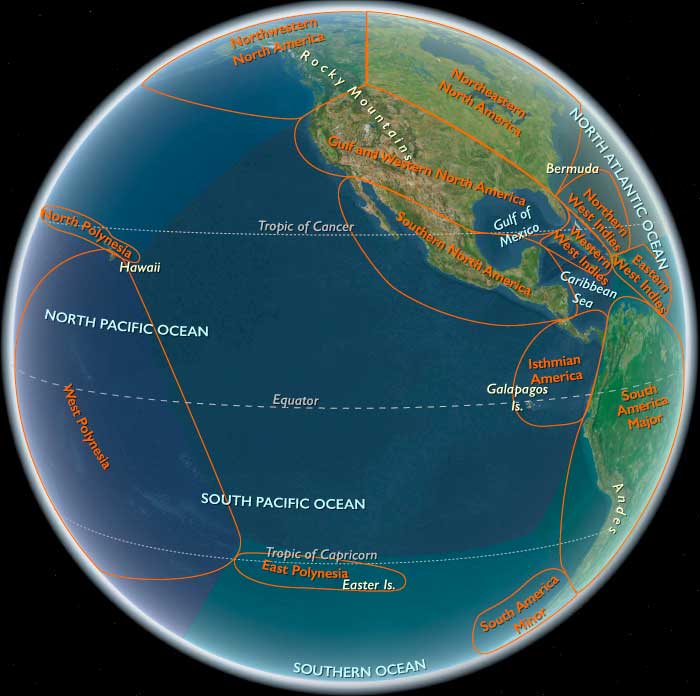
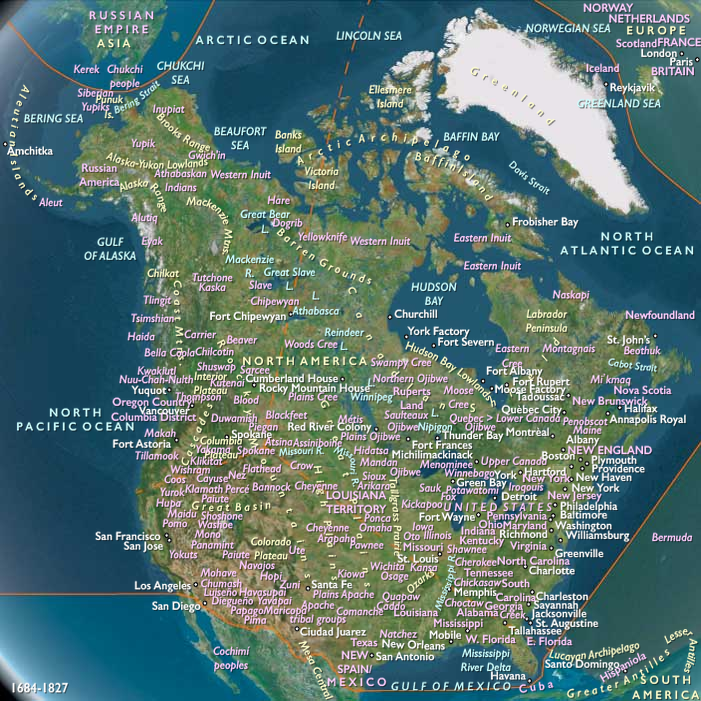
When Bernardo de Gálvez, the colonial Governor of Spanish Louisiana, receives word of this on July 21, he immediately begins to secretly plan offensive operations to take British West Florida.
Gálvez, who has been planning for the possibility of war since April, intercepts communications from the British at Pensacola indicating that the British are planning a surprise attack on New Orleans; he decides to launch his own attack first.
To this end, he conceals from the public his receipt of the second proclamation.
Gálvez had originally planned to march from New Orleans on August 20.
However, a hurricane sweeps over New Orleans on August 18, sinking most of his fleet and destroying provisions.
Undeterred, Gálvez rallies the support of the colony and on August 27 set outs by land toward Baton Rouge, using as an explanation for the movement the need to defend Spanish Louisiana from an expected British attack.
He leads a force that consists of five hundred and twenty regulars, of whom about two-thirds are recent recruits, sixty militiamen, eighty free blacks and mixed race people, and ten American volunteers headed by Oliver Pollock.
The force grows by another six hundred men, including natives and Acadians, as they march upriver.
The force at its peak numbers over fourteen hundred, but this number is reduced due to the hardships of the march by several hundred before they reach Fort Bute.
Galvez’s force attacks Fort Bute, a decaying relic of the French and Indian War that is defended by a token force, at dawn on September 7.
Most of the garrison surrenders after a brief skirmish in which one German is killed.
The six who escape capture make their way to Baton Rouge to notify the British troops there of the fort's capture.
After several days' rest, Gálvez advances on Baton Rouge, only fifteen miles (twenty-four kilometers) from Fort Bute.
When Gálvez arrives at Baton Rouge on September 12, he finds a well-fortified town garrisoned by over four hundred regular army troops and one hundred and fifty militia under the overall command of Lieutenant Colonel Alexander Dickson.
The troops consist of British Army regulars from the 16th and 60th Regiments, as well as some artillerymen, and several companies of Germans from the 3rd Waldeck Regiment.
Gálvez first sends a detachment of men further up the river to break communications between Baton Rouge and British sites further upriver.
Unable to directly advance his own artillery before the fort, Gálvez orders a feint to the north through a wooded area, sending a detachment of his poorly trained militia to create disturbances in the forest.
The British turn and unleash massed volleys at this body, but the Spanish forces, shielded by substantial foliage, suffer only three casualties.
Gálvez digs siege trenches while this continues and establishes secure gunpits within musket range of the fort.
He places his artillery pieces there, opening fire on the fort on September 21.
The British endure three hours of shelling before Dickson offers to surrender.
Gálvez demands and is granted terms that include the capitulation of the eighty regular infantry at Fort Panmure (modern Natchez, Mississippi), a well-fortified position that would have been difficult for Gálvez to take militarily.
Dickson surrenders three hundred and seventy-five regular troops the next day; Gálvez has Dickson's militia disarmed and sent home.
Baton Rouge will remain in Spanish hands for the rest of the war, and Britain will cede both West and East Florida to Spain in the 1783 Treaty of Paris.
It will not become American territory until 1810.
Gálvez now sends a detachment of fifty men to take control of Panmure.
He also dismisses his own militia companies, leaves a sizable garrison at Baton Rouge, and returns to New Orleans with about fifty men.
The victory at Baton Rouge has cleared the Mississippi River estuary entirely of British forces and put the lower reaches of the river firmly under Spanish control.
American and Spanish privateers, within a few days of Gálvez' victory, capture several British supply ships on Lake Pontchartrain, including the remarkable capture of one ship carrying fifty-four Waldecker troops and ten to twelve sailors by a sloop crewed by fourteen native Louisianans.
Gálvez is promoted to brigadier general for his successful campaign, and his exploits are immortalized in the poetry of Julien Poydras.
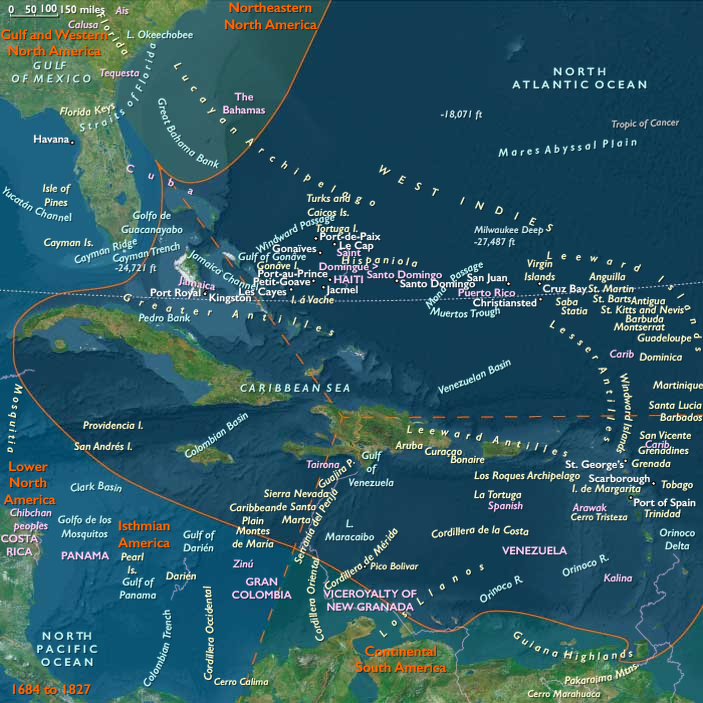
He immediately begins planning an expedition against Mobile and Pensacola, the remaining British strongholds in West Florida, which will culminate in the capture of Pensacola, the West Florida capital, in 1781.
In September 1779 he had gained complete control over the lower Mississippi River by capturing Fort Bute, then shortly thereafter obtaining the surrender of the remaining British forces on the river following the Battle of Baton Rouge.
Following these successes, he began planning operations against Mobile and Pensacola, the remaining British presence in the province of West Florida.
Gálvez has assembled a mixed force of Spanish regulars and militia in New Orleans.
He had requested additional troops from Havana for operations against Mobile and Pensacola in 1779, but his requests had been rejected.
Before departing New Orleans, he dispatches one of his lieutenants to Havana to make one last request.
A fleet of twelve ships carrying seven hundred and fifty-four men had set sail on January 11, 1780, reaching the mouth of the Mississippi on January 18.
They are joined on January 20 by the Gálveztown (brig sloop), under the command of Captain William Pickles and with a crew of fifty-eight.
A storm had scattered the fleet on February 6, but all ships had arrived outside Mobile Bay by February 9.
The fleet had encountered significant problems actually getting into the bay.
Several ships had run aground on sand bars, and at least one, the Volante, had been wrecked as a result.
Gálvez had salvaged guns from the wreck and set them up on Mobile Point to guard the bay entrance.
On February 20, reinforcements had arrived from Havana, bringing the force to about twelve hundred men.
By February 25, the Spanish had landed their army on the shores of the Dog River, about ten miles (sixteen kilometers) from Fort Charlotte.
They are informed by a deserter that the fort is garrisoned by three hundred men.
By 1763, when the British took over following the French and Indian War, the fort was in ruins.
While it was repaired at that time, by the time hostilities with Spain neared in 1779, it was again in disrepair.
The garrison's regulars are primarily from the 60th regiment, and are augmented by Loyalists from Maryland and Pennsylvania, as well as local volunteers, in total about three hundred men.
Ever since news of Gálvez' successes had reached Mobile, Elias Durnford, who had taken command of Fort Charlotte in January 1780, had been directing improvements to the fort's defenses.
On March 1, Gálvez had sent Lt. Col. Francisco Bouligny to deliver a letter to Durnford offering to accept his surrender, which was politely rejected.
Gálvez began setting up gun batteries around the fort the next day.
Durnford wrote to General John Campbell at Pensacola requesting reinforcements.
On March 5 and 6, most of the Pensacola garrison left on a march toward Mobile.
Delayed by difficult river crossings, this force will be unable to assist the Fort Charlotte garrison.
While the Spanish engaged in siege operations to move their guns nearer the fort, Gálvez and Durnford had engaged in a courteous written dialogue.
For example, Gálvez had politely criticized Durnford for burning some houses in order to deny the cover they provided to the Spaniards.
Durnford had responded by pointing out that the other side of the fort (away from most of the town) offered a better vantage point for attack.
All the while, the Spanish had continued to dig trenches and bombard the fort
On March 13, the walls of Fort Charlotte were breached, and Durnford capitulates the next day, surrendering his garrison.
However, since he knows that Pensacola is strongly defended, and armed with powerful cannons, he again requests large-scale naval support from Havana.
He learns in April that additional reinforcements, including British Royal Navy vessels, have arrived at Pensacola.
Without Spanish reinforcements, he leaves a garrison in Mobile, and departs for Havana to raise the troops and equipment needed for an attack on Pensacola.