Benito Mussolini
Prime Minister of Italy
Years: 1883 - 1945
Benito Amilcare Andrea Mussolini (July 29, 1883 – April 28, 1945) is an Italian politician and journalist who is the leader of the National Fascist Party.
He rules as the Prime Minister of Italy from the fascist coup d'état in 1922 until his deposition in 1943, and Duce ("Leader") of Italian Fascism from the establishment of the Fasci Italiani di Combattimento in 1919 to his execution in 1945 during the Italian Civil War.
As dictator of Italy and founder of fascism, Mussolini inspires far-right totalitarian rulers such as Adolf Hitler, Francisco Franco, and António de Oliveira Salazar.
Mussolini is originally a socialist politician and a journalist at the Avanti! newspaper.
In 1912, he becomes a member of the National Directorate of the Italian Socialist Party (PSI), but is expelled from the PSI for advocating military intervention in the First World War, in opposition to the party's stance on neutrality
In 1914, Mussolini founds a new journal, Il Popolo d'Italia, and serves in the Royal Italian Army during the war until he is wounded and discharged in 1917.
Mussolini denounces the PSI, his views now centering on Italian nationalism instead of socialism, and later founds the fascist movement, which comes to oppose egalitarianism and class conflict, instead advocating "revolutionary nationalism" transcending class lines.
Following the March on Rome in October 1922, Mussolini becomes the youngest Italian Prime Minister up to this time
After removing all political opposition through his secret police and outlawing labor strikes, Mussolini and his followers consolidate their power through a series of laws that transform the nation into a one-party dictatorship.
Within five years, Mussolini has established dictatorial authority by both legal and illegal means and aspires to create a totalitarian state
In 1929, Mussolini signs the Lateran Treaty with the Vatican, ending decades of struggle between the Italian state and the Papacy, and recognizes the independence of Vatican City.
Mussolini's foreign policy aima to expand the sphere of influence of Italian fascism.
In 1923, he begins the "Pacification of Libya" and orders the bombing of Corfu in retaliation for the murder of an Italian general.
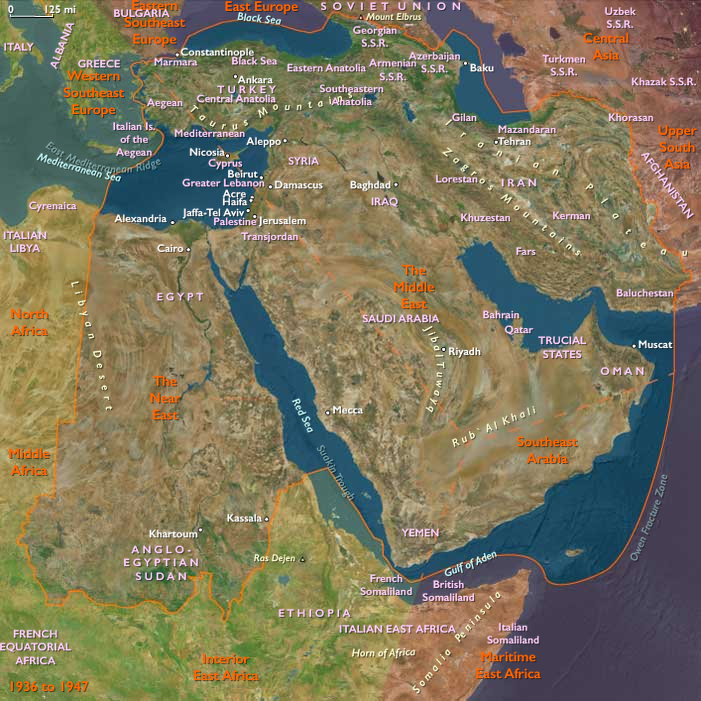
In 1936, Mussolini forms Italian East Africa (AOI) by merging Eritrea, Somalia and Ethiopia following the Abyssinian crisis and the Second Italo–Ethiopian War.
In 1939, Italian forces occupy Albania.
1936 and 1939, Mussolini orders the successful Italian military intervention in Spain in favor of Francisco Franco during the Spanish civil war
Initially, Mussolini's Italy tries to avoid the outbreak of a second global war by taking part in the Stresa front, the Lytton Report, the Treaty of Lausanne, the Four-Power Pact and the Munich Agreement.
However, Italy then alienates herself from Britain and France by aligning with Germany and Japan.
Germany invades Poland on September 1, 1939, resulting in declarations of war by France and the UK and the start of the Second World War.
On June 10, 1940—with the Fall of France imminent—Italy officially enters the war and eventually occupies parts of southeast France, Corsica, and Tunisia.
Mussolini plans to concentrate Italian forces on a major offensive against the British Empire in Africa and the Middle East, known as the "parallel war", while expecting the collapse of the UK in the European theater.
The Italians invade Egypt, bomb Mandatory Palestine, and occupy British Somaliland with initial success.
However, the British government refuses to accept proposals for a peace that would involve accepting Axis victories in Europe; plans for an invasion of the UK do not proceed and the war continues.
In October 1940, Mussolini sends Italian forces into Greece, starting the Greco-Italian War.
The Royal Air Force prevents the Italian invasion and allows the Greeks to push the Italians back to Albania.
The Balkan campaign continues until June 1941, and leads to the Axis occupation of Greece and Yugoslavia.
Furthermore, the German invasion of the Soviet Union and the Japanese attack on Pearl Harbor force Mussolini to send an Italian army in Russia and declare war on the United States.
Mussolini is aware that Italy, whose resources are reduced by the campaigns of the 1930s, is not ready for a long conflict against three superpowers but opts to remain in the conflict to not abandon the fascist imperial ambitions.
In 1943, Italy suffers major disasters: by February the Red Army has completely destroyed the Italian Army in Russia and in May the Axis collapses in North Africa despite previous Italian resistance at the second battle of El Alamein.
On July 9, the Allies invade Sicily and by the 16th it becomes clear the German summer offensive in the USSR has failed.
As a consequence, early on July 25, the Grand Council of Fascism passes a motion of no confidence in Mussolini; later that day the King dismisses him as head of government and has him placed in custody, appointing Pietro Badoglio to succeed him as Prime Minister.
After the king agrees to the armistice with the allies, on September 12, 1943, Mussolini is rescued from captivity in the Gran Sasso raid by German paratroopers and Waffen-SS commandos led by Major Otto-Harald Mors.
Hitler, after meeting with the rescued former dictator, now puts Mussolini in charge of a puppet regime in northern Italy, the Italian Social Republic (Italian: Repubblica Sociale Italiana, RSI), informally known as the Salò Republic.
In late April 1945, in the wake of near total defeat, Mussolini and his mistress Clara Petacci attempt to flee to Switzerland, but both were captured by Italian communist partisans and summarily executed by firing squad on April 28, 1945 near Lake Como.
The bodies of Mussolini and his mistress are taken to Milan, where they are hung upside down at a service station to publicly confirm their demise.