Bayinnaung
3rd king of the Toungoo dynasty of Burma
Years: 1516 - 1581
Bayinnaung (January 16, 1516 – October 10, 1581) is the third king of the Toungoo dynasty of Burma (Myanmar).
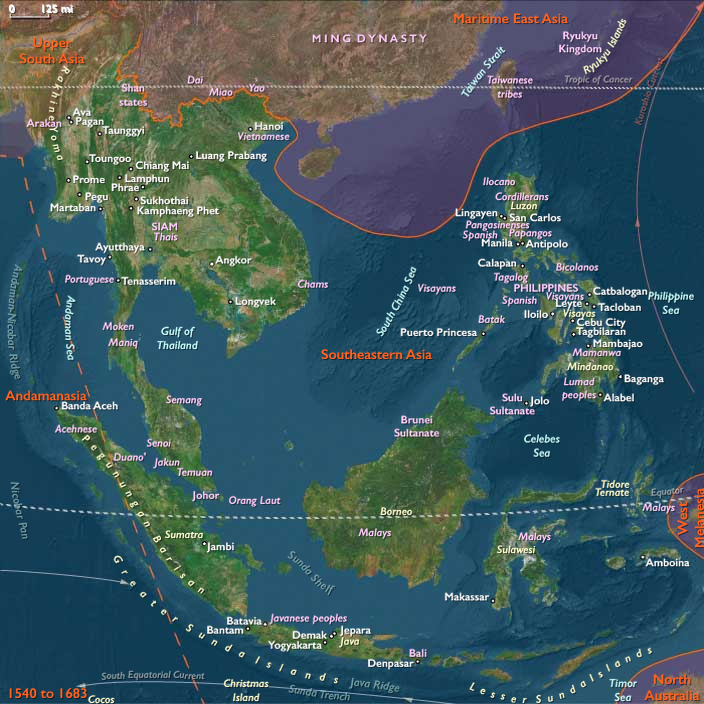
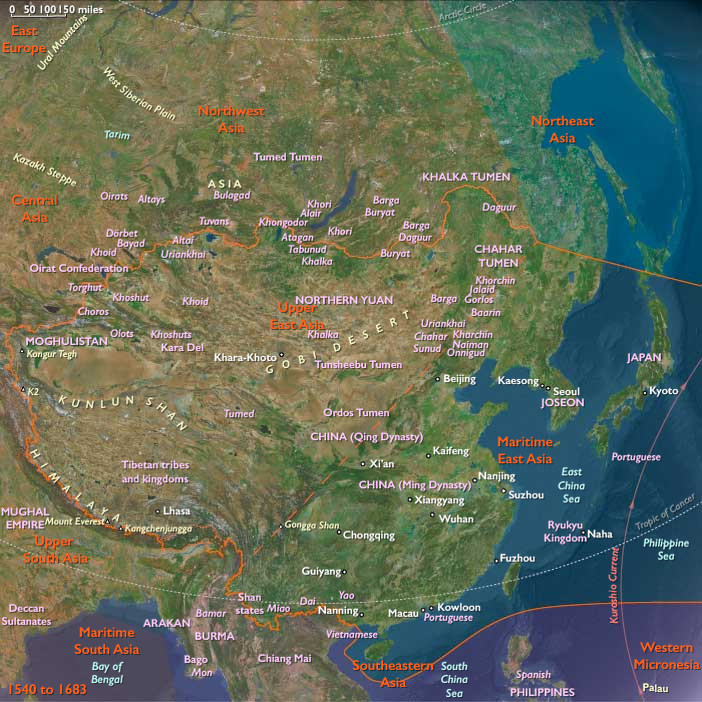
During his thirty-year reign, Bayinnaung assembles the largest empire in the history of Southeast Asia, which includes much of modern day Burma, Manipur, Mong Mao (Chinese Shan States, Yunnan), Lan Na (northern Thailand), Siam (southern Thailand) and Lan Xang (Laos).
Although he is best remembered for his empire building, Bayinnaung's greatest legacy is his integration of Shan States into the Irrawaddy-valley-based Burmese kingdoms, which eliminates the threat of Shan raids into Upper Burma, an overhanging concern to Upper Burma since the late thirteenth century.
After the conquest of Shan States in 1557, the king puts in an administrative system that reduces the power of hereditary Shan saophas (chiefs), and brings Shan customs in line with lowland norms.
His Shan policy will be followed by Burmese kings up to the final fall of the kingdom to the British in 1885.
Bayinnaung cannot, however, replicate this administrative policy everywhere in his far flung empire, a loose collection of former sovereign kingdoms, whose kings are loyal to him as the Cakravartin (Universal Ruler), not the kingdom of Toungoo.
Indeed, Siam revolts just after three years of his death in 1584.
By 1599, all the sub-kings have revolted, and Bayinnaung's empire collapses completely.
He is considered one of the three greatest kings of Burma, along with Anawrahta and Alaungpaya.
Some of the most prominent places in modern Myanmar are named after him.
He is also well known in Thailand as Phra Chao Chana Sip Thit ("King of the Ten Directions").