Battus III of Cyrene
fifth Greek Cyrenaean king
Years: 635BCE - 530BCE
Battus III of Cyrene, surnamed The Lame (Greek: Βάττος ο Χωλός, flourished 6th century BC) was the fifth Greek Cyrenaean king and a member of the Battiad dynasty.


Related Events
Filter results
Showing 10 events out of 10 total
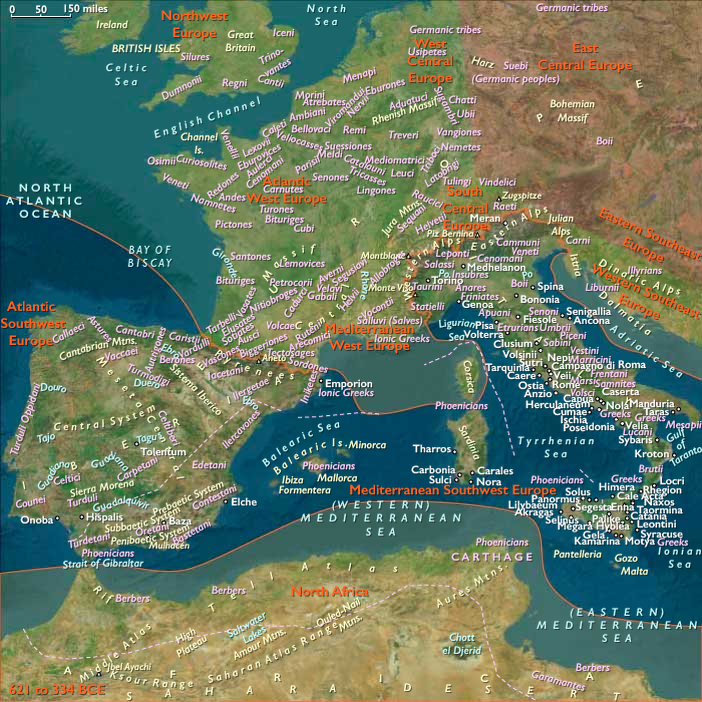
North Africa (765–622 BCE)
Carthaginian Ascendancy and Greek Colonization
Expansion and Influence of Carthage
Between 765 and 622 BCE, Carthage firmly establishes itself as a prominent political and commercial power in North Africa and the wider Mediterranean region. Building upon its strategic location near modern-day Tunis, Carthage expands its trading networks, fostering alliances and rivalries with various Mediterranean powers, particularly Greek city-states in Sicily and southern Italy. Archaeological evidence confirms habitation of Carthage from around 750 BCE, roughly sixty-four years after its traditionally cited founding date of 814 BCE.
The city's ascendance brings increased wealth, enabling extensive urban development and fortification projects. Notably, Carthage fortifies its harbor, developing sophisticated facilities that accommodate its expanding navy and merchant fleets. This maritime supremacy facilitates trade in commodities such as precious metals, luxury goods, grains, and textiles, further enriching the city's economy and bolstering its political influence.
Greek Colonization and the Founding of Cyrene
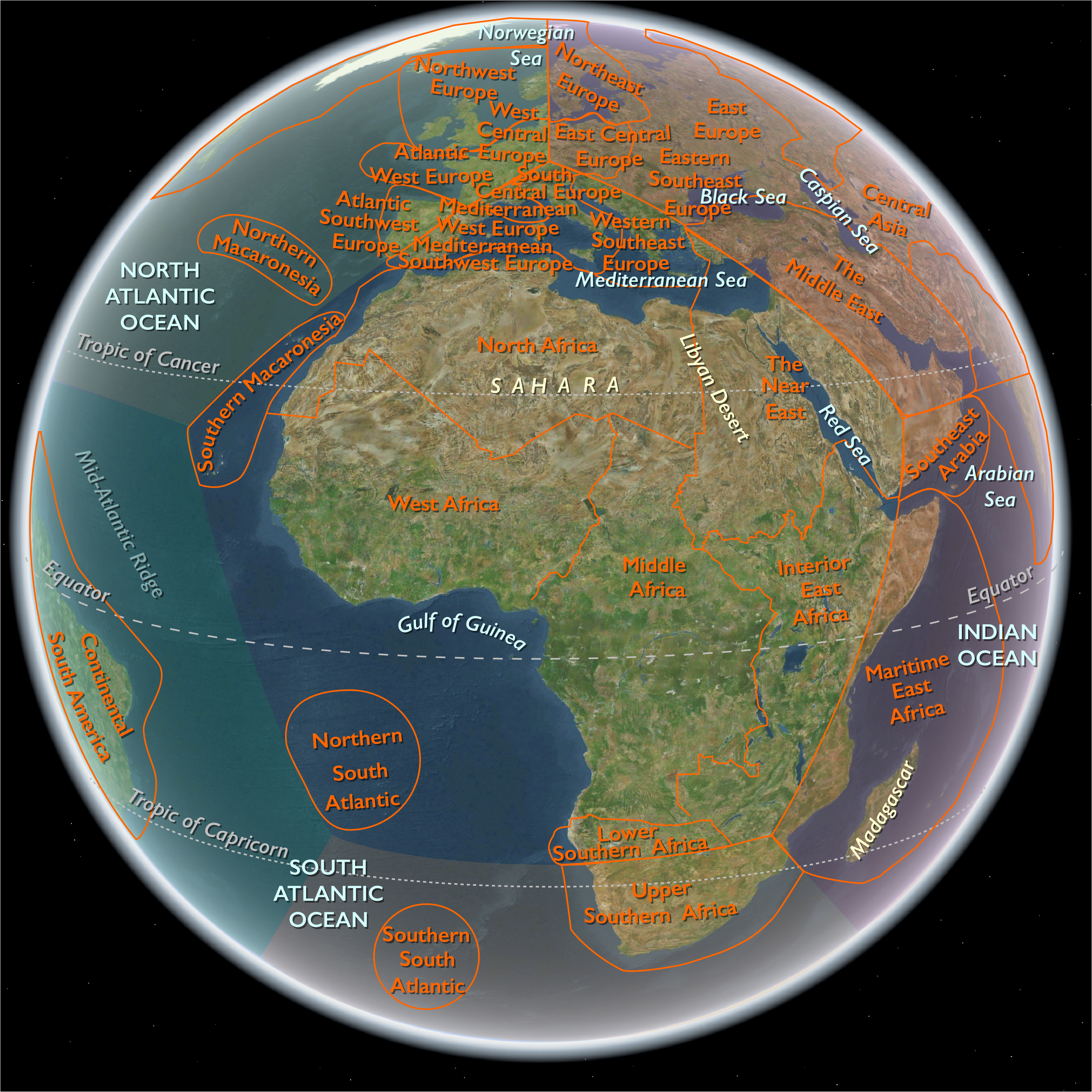
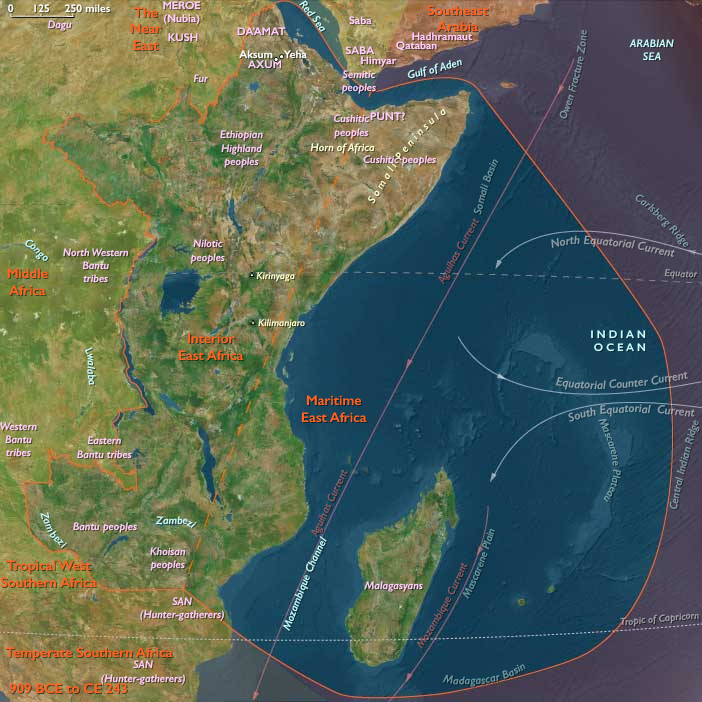
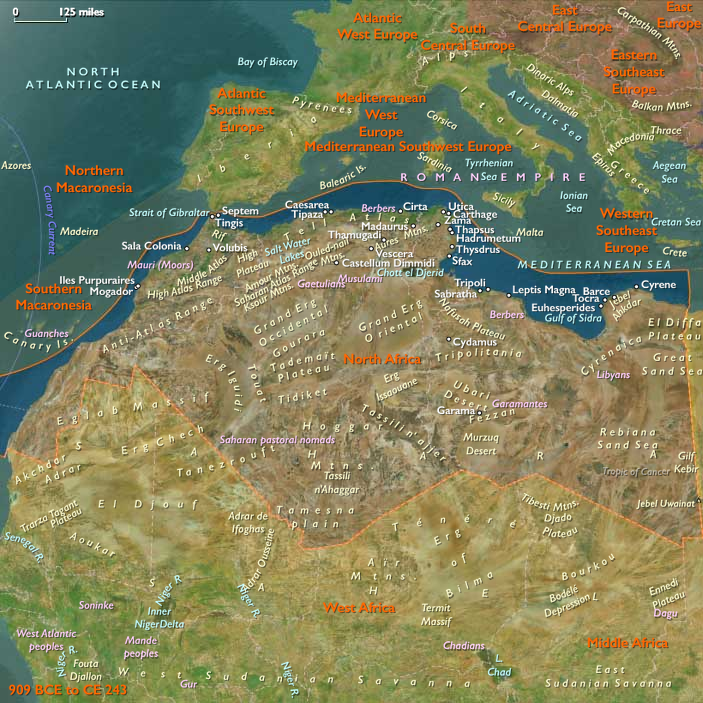
During this era, Greek colonization of North Africa intensifies markedly. While Minoan and Greek seafarers had long explored the North African coastline, systematic Greek settlement begins in earnest in the seventh century BCE. A severe population crisis on the small Cycladic island of Thera prompts colonists, guided by the oracle at Delphi, to establish the city of Cyrene around 631 BCE. Berber guides lead them to a fertile highland area approximately twenty kilometers inland, famously described as a region where a "hole in the heavens" would provide ample rainfall.
Cyrene, named after a local spring nymph, is founded by settlers led by a figure known as Battus, whose name, derived from a Libyan word, signifies "king." The colony occupies a strategic high ridge five miles from the sea, situated in the fertile foothills of the Akhdar Mountains, northeast of present-day Benghazi. Cyrene rapidly develops into a prosperous colony, exploiting the fertile agricultural land and establishing robust trade connections with mainland Greece and other Mediterranean powers.
Interactions and Conflicts with Greek Powers
Carthaginian competition with Greek settlements, especially in Sicily and Southern Italy, intensifies during this period. Carthaginian ambitions increasingly clash with the territorial interests of Greek city-states such as Syracuse, leading to periodic conflicts that foreshadow the extensive Punic Wars of subsequent centuries. The Greek historian Herodotus records these early tensions, often depicting Carthaginians unfavorably due to ongoing Greek rivalries.
Despite hostilities, cultural and economic exchanges between Carthaginians and Greeks flourish. Greek artistic and architectural influences permeate Carthaginian culture, manifesting in evolving styles of pottery, sculpture, and urban planning.
Development of Berber Societies
Inland Berber societies in regions such as the Atlas Mountains and Saharan oases continue to thrive, maintaining significant cultural independence. While coastal Berber groups engage increasingly with Carthaginian and Greek trade networks, interior communities remain largely autonomous, preserving their distinct cultural identities through resilient tribal structures and localized governance.
Cultural Integration and Innovation
Phoenician settlers in Carthage introduce technological advancements and agricultural practices adopted by local Berber populations. The Phoenician alphabet promotes limited attempts at written communication within Berber communities. Religious and cultural exchanges, exemplified by the worship of Carthaginian deities such as Melqart, lead to hybridized spiritual practices among coastal Berber groups.
Legacy and Regional Dynamics
By 622 BCE, Carthage and Cyrene have solidified their statuses as influential regional powers, shaping complex socio-economic dynamics along the North African coast. The interaction among Carthaginian, Greek, and Berber cultures establishes enduring foundations, significantly influencing the historical trajectory of the region.
North Africa (621–610 BCE)
Regional Consolidation and Cultural Exchange
Carthage: Continued Growth and Stability
Between 621 and 610 BCE, Carthage continues to strengthen its economic dominance and consolidate political stability along the North African coast. The city further expands its maritime capabilities, refining naval technologies and enhancing harbor infrastructure to manage increased trade volumes. Carthaginian merchants extend their trading networks deeper into the Mediterranean, solidifying commercial ties with distant regions such as Iberia, Sicily, and the Italian Peninsula.
Developments in Cyrene
During this period, the Greek colony of Cyrene sees significant expansion and prosperity. Founded less than a decade earlier, Cyrene continues to capitalize on its fertile hinterland, cultivating and exporting valuable agricultural products such as grain, olives, and livestock. Its strategic location in the Akhdar Mountains ensures ample rainfall and fertile conditions, underpinning its economic and population growth. Cyrene's early successes attract further migration from Greek mainland cities, reinforcing its status as a flourishing Hellenic outpost in North Africa.
Berber Societies and Cross-cultural Interaction
Berber communities across North Africa experience sustained interaction with both Carthaginian and Greek settlers during these years. Coastal Berbers increasingly adopt elements of Phoenician and Greek technology, agriculture, and culture, while still maintaining robust indigenous traditions and identities. The interior Berber societies remain relatively autonomous, continuing to thrive independently around the Atlas Mountains and desert oases, though indirectly benefiting from increased regional trade and economic activity.
Diplomacy and Regional Power Dynamics
Interactions between Carthage and Cyrene during this period are largely marked by peaceful coexistence, driven by mutual economic interests and clearly demarcated spheres of influence. Diplomatic contacts help establish stable trade relations, minimizing potential conflicts. However, competition over trade routes and regional influence with other Mediterranean powers remains an ongoing source of strategic maneuvering, setting the stage for future geopolitical developments.
Cultural Flourishing and Integration
The growing cultural exchanges between Berber, Greek, and Carthaginian communities enrich regional artistic and religious practices. The integration of Phoenician and Greek artistic influences into local Berber craftsmanship results in distinctive hybrid cultural forms, visible in pottery, textiles, and metalwork. Religious syncretism also becomes more prevalent, reflecting a dynamic fusion of Phoenician deities such as Melqart with indigenous Berber religious traditions.
Legacy and Foundations for Future Growth
By 610 BCE, North Africa stands as a region characterized by increasing economic prosperity, cultural vibrancy, and relatively stable geopolitical structures. Carthage and Cyrene's ascendancy significantly shapes the area's historical trajectory, with their economic and cultural innovations laying enduring foundations for subsequent regional development.
North Africa (609–598 BCE)
Consolidation, Punic Culture, and Emerging Rivalries
Continued Ascendancy of Carthage
From 609 to 598 BCE, Carthage continues its trajectory of expansion and economic prosperity along the North African coast. The city further enhances its naval dominance, leveraging increasingly sophisticated maritime technology to maintain and expand trade networks across the Mediterranean. Trade flourishes with regions such as Sicily, Iberia, and various Greek colonies, reinforcing Carthage's critical role as a commercial hub.
By the end of the seventh century BCE, Phoenician colonial culture acquires a distinctly "Punic" character, marking the emergence of a unique cultural identity in the Western Mediterranean. Around 650 BCE, Carthage itself had founded colonies, and within fifty years it engages in conflicts independently with Greek city-states, emphasizing its growing autonomy and regional power. Carthage's strategy differs from contemporaneous powers like Rome in that it prioritizes maritime trade and overseas dominance over immediate territorial expansion inland, partly influenced by strong Libyan tribes restricting local expansion.
During this period, Carthage also colonizes the Syrtis region, extending from Thapsus in Tunisia to Sabratha in Libya, consolidating its control over existing Phoenician colonies along the North African coast. Details of these territorial incorporations remain scarce, but the establishment of regional hegemony is clear.
Significant urban and civic development within Carthage occurs, including improvements to city fortifications, residential expansion, and growth in artisanal crafts and industries, underpinning its economic and military capabilities.
Cyrene's Growth and Internal Stability
Cyrene, benefiting from a fertile hinterland and advantageous geographical position, continues to prosper. The Greek colony deepens its agricultural output, increasing exports of grain, olives, and livestock, further enhancing its economic prominence. Continued Greek migration bolsters its population, strengthening cultural and economic ties to mainland Greece and other Hellenic colonies.
Emergence of Strategic Rivalries
While Carthage and Cyrene largely maintain peaceful coexistence due to clearly delineated zones of influence and mutually beneficial trade, tensions occasionally surface over competing commercial interests and territorial ambitions. Carthage's increasing assertiveness in maritime commerce begins to create underlying competitive dynamics, especially regarding access to lucrative trading markets and maritime routes, setting the stage for potential future conflicts.
Berber Societal Developments
During this period, Berber communities experience continued evolution driven by interactions with Carthaginian and Greek settlers. Coastal Berber populations adopt advanced agricultural methods and maritime techniques from Phoenician traders, further integrating economically with coastal city-states. However, interior Berber societies around the Atlas Mountains and desert regions remain predominantly independent, preserving distinct cultural identities and tribal structures.
Cultural Synthesis and Artistic Expression
Cultural exchanges between Berber, Greek, and Carthaginian communities intensify, fostering a dynamic synthesis of artistic, religious, and technological traditions. Hybrid cultural forms become increasingly prominent in pottery, textiles, and metalwork, demonstrating the creative adaptation of external influences into local Berber contexts. Religious syncretism continues, blending Phoenician and Greek religious traditions with indigenous Berber beliefs, enhancing regional cultural complexity.
Setting Foundations for Future Dynamics
By 598 BCE, North Africa is characterized by robust economic growth, intricate cultural interactions, and nascent geopolitical rivalries. Carthage and Cyrene remain pivotal regional powers, their interactions and competitive dynamics shaping the historical and cultural landscape of North Africa for generations to come.
North Africa (597–586 BCE)
Consolidation, Punic Culture, and Emerging Rivalries
Carthaginian Commercial Dominance & Punic Identity
From 597 to 586 BCE, Carthage continues to strengthen its grip on maritime trade and regional power. By this time, Phoenician colonial culture has evolved into a distinct Punic identity, especially visible in its expanded coastal network and fortified colonies. Carthage’s overseas hegemony, focused on protecting trade routes rather than inland conquest, has firmly emerged. Carthage had established colonies in the Syrtis region and forged dominance over other coastal cities, setting the stage for its rise as the leading commercial center of the Western Mediterranean.
Rising Mercenary Culture & Greek Influence
Significantly, by the late seventh century BCE Carthage increasingly relies on mercenary forces, many of whom were likely Greek or of Greek descent. This reflected the city-state’s cosmopolitan military composition and underscores a substantial Greek ethnic presence within the Punic army. Such Hellenic influence—both ethnic and tactical—is consistent with the recent genetic findings from April 2025, which show that Carthage’s population was more closely linked to Sicilian-Aegean ancestries than to its Levantine founders.
Strategic Relations with Cyrene
Amid Carthage’s rising cosmopolitan identity, the Greek colony of Cyrene flourishes, though occasional tension arises over trade and influence. Cyprus‑derived Cyrene thrives agriculturally and maintains strong cultural and economic ties to mainland Greece, marking it as a Hellenic counterpoint to Punic Carthage.
Berber Communities and Cultural Adaptation
Berber societies continue to adapt under the influence of Punic and Greek cultures. While coastal Berbers participate in maritime commerce and technological exchanges, interior tribes preserve autonomy. The evolving multicultural environment encourages some Berber integration into mercenary forces, reflecting a blending of military, economic, and cultural roles.
Cultural Synthesis and Artistic Expression
Material culture during this era becomes richly hybridized. Punic urban centers blend Phoenician traditions, Greek mercantile and military influences, and indigenous Berber practices in pottery, textiles, metalwork, and religious life. Hybrid worship—such as the identification of Melqart with Heracles—illustrates this syncretism.
By 586 BCE, North Africa is already a mosaic of trade networks, ethnically diverse militaries, and complex cultural identities, centered on Carthage’s ascendant Punic civilization. The prominent Greek component within the Carthaginian state—militarily, ethnically, and genetically—marks a significant shift that will define the region’s character in the centuries ahead.
North Africa (585–574 BCE)
Expansion, Cultural Integration, and Regional Stability
Carthage's Continued Maritime Expansion
Between 585 and 574 BCE, Carthage significantly advances its maritime and commercial expansion, becoming the Phoenicians' largest western colony after 580 BCE due to its exceptional harbor facilities and strategic central location. Now only nominally under Tyrean control, Carthage aggressively expands its influence across the western Mediterranean, establishing colonies in western Sicily, parts of North Africa, Sardinia, the Balearic Islands, and regions of Spain. Its sophisticated harbor infrastructure and powerful naval capabilities bolster trade connections and firmly secure its position as a premier Mediterranean economic power.
Relations with Cyrene and Greek Settlements
Carthage maintains mostly peaceful but increasingly competitive relations with the Greek colony of Cyrene. Clearly established spheres of influence help minimize direct conflicts. However, intensified competition over maritime trade routes and access to valuable resources leads to ongoing diplomatic maneuvering and occasional minor confrontations, indicating underlying tensions that foreshadow future rivalries.
Cyrene continues to thrive economically, benefiting from robust agricultural exports and sustained Hellenic migration. Its growing prosperity and strategic importance strengthen cultural and economic connections with mainland Greece, positioning it as a key regional actor.
Berber Communities and Economic Integration
Coastal Berber communities increasingly integrate with Carthaginian trade networks, adopting advanced Phoenician agricultural practices, maritime commerce techniques, and artisanal crafts. This economic cooperation fosters prosperity while allowing Berber societies to maintain essential cultural identities.
Inland Berbers maintain significant autonomy, preserving traditional lifestyles in regions like the Atlas Mountains and Sahara. Their relative isolation helps sustain distinct tribal identities and social structures, though indirect trade interactions with coastal areas enhance economic stability.
Cultural Synthesis and Hybridization
During this period, intensified cultural exchange among Berber, Carthaginian, and Greek communities results in vibrant hybrid cultural forms. This blending is evident in local pottery, textiles, and metalwork, showcasing a dynamic fusion of traditions. Religious practices also exhibit pronounced syncretism, combining indigenous Berber beliefs with Phoenician and Greek spiritual traditions.
Establishing Regional Stability
By 574 BCE, North Africa is characterized by significant stability founded on robust economic prosperity, dynamic cultural integration, and established regional alliances. Carthage's expansive maritime influence and Cyrene's flourishing economy reinforce their positions as central powers, while Berber communities adeptly navigate cultural and economic integration. These developments lay a solid foundation for the region's ongoing geopolitical and cultural evolution.
Near East (573–562 BCE): Diplomatic Realignments and Power Shifts
Naukratis and Greek Influence in Egypt
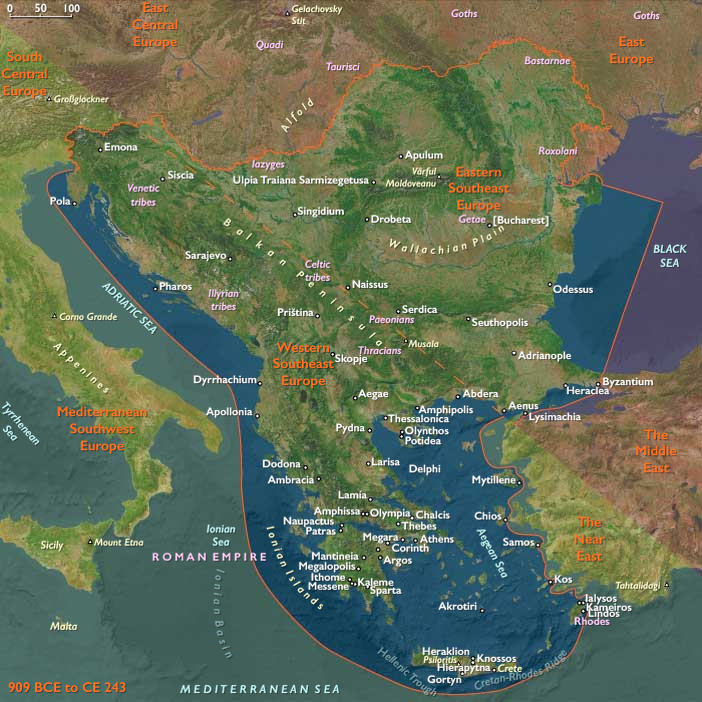
The Ionian city of Miletus had earlier founded Naukratis, a prominent Greek settlement in Egypt’s Nile Delta. By this period, Greeks from various city-states have also settled here, creating a dynamic cultural and commercial hub. As an emporion, or exclusive trading station, Naukratis becomes a pivotal center for Greek-Egyptian interactions, significantly influencing cultural relations in the pre-Hellenistic Mediterranean. To manage Greek influence more carefully, Egyptian Pharaoh Amasis II (reigned 570–526 BCE) confines all Greek merchants to Naukratis, southwest of his capital, strengthening Egyptian control over foreign trade.
Turmoil and Diplomacy in Cyrene
In neighboring Libya, the prosperous Greek colony of Cyrene sees its harmonious Greek-Libyan relations disrupted around 570 BCE due to increased immigration of Greek settlers and internal factional disputes under King Battus III. Conflict escalates, resulting in Cyrene repulsing an Egyptian invasion around the same year. However, this hostility transitions into diplomacy: Pharaoh Amasis II successfully forges an alliance with Cyrene by marrying Ladice, daughter of King Battus, consolidating Egyptian influence and mitigating tensions along Egypt’s western border.
Amasis II’s Rise and Egypt’s Resurgence
Previously a victorious Egyptian general under Pharaoh Psamtik II, Amasis II ascends the throne following a rebellion against Pharaoh Apries (Wahibre), who had disastrously mismanaged conflicts in Libya and internal military tensions. In 570 BCE, Egyptian native soldiers, suspecting betrayal by Apries, rally around Amasis. Following Apries’ defeat and exile, he returns with Babylonian support in 567 BCE but is likely killed in battle against Amasis’ forces. To legitimize his reign further, Amasis marries Apries’ daughter, Chedebnitjerbone II, becoming Egypt's uncontested ruler.
Egypt’s Mediterranean Ambitions and Greek Alliances
Under Amasis, Egypt asserts control over Cyprus around 570 BCE, with the island’s kingdoms formally recognizing him as their overlord. Cypriot art and statuary from this period frequently mirror Egyptian conventions, showcasing Egypt’s wide cultural influence. Amasis diligently cultivates strong alliances within the Greek world, making significant diplomatic gestures, including financial support for the reconstruction of the temple at Delphi. His friendly relations extend notably to Polycrates, tyrant of Samos, and to Croesus, the wealthy king of Lydia.
Nebuchadnezzar II and Babylonian Constraints
Meanwhile, Babylon, under King Nebuchadnezzar II, attempts to challenge Egyptian ascendancy. In the fourth year of Amasis’ reign (ca. 567 BCE), Nebuchadnezzar leads a military campaign against Egypt. This assault fails, forcing the Babylonians to retreat and redirect their energies to stabilizing their vast empire. The unsuccessful invasion underscores Egypt’s resilience and the limitations of Babylonian military capabilities at the empire's farthest reaches.
Edomite and Nabataean Movements in Jordan
The weakening of Judah following the Babylonian captivity provides a political vacuum in the region now known as Jordan. As Edomites increasingly relocate into southern Palestine—where they will later become known as Idumaeans in Roman times—an Arabian people, the Nabataeans, begin moving into traditional Edomite territory. Nabataean inscriptions gradually appear, signaling shifting settlement patterns and foreshadowing the rise of Nabataea as a regional power.
Legacy of the Era
This era notably represents a significant diplomatic and cultural reshuffling in the Near East. Egypt under Amasis II experiences heightened prosperity, expanded regional dominance, and increased integration with the Greek world. Meanwhile, Babylonia, despite its vast territorial holdings, encounters strategic limitations. The dynamics between Greek colonies, local powers, and major empires underline a complex geopolitical landscape that sets the stage for subsequent historical developments.
North Africa (573–562 BCE)
Maritime Dominance, Diplomatic Strategies, and Cultural Flourishing
Carthage's Maritime Supremacy
From 573 to 562 BCE, Carthage further entrenches its maritime and economic supremacy in the Western Mediterranean. The city’s extensive trade networks continue to expand, linking North Africa firmly with Sicily, Sardinia, the Balearics, and Iberia. Carthaginian merchants and colonists consolidate control over these critical maritime routes, enhancing the city's economic wealth and political influence. Carthage's sophisticated harbor infrastructure supports a robust navy, safeguarding trade routes and fostering secure economic conditions.
Diplomatic Dynamics with Cyrene and Greek Powers
Carthage maintains diplomatic stability with Cyrene despite underlying competitive tensions. Clearly delineated areas of influence ensure relatively peaceful relations, yet rivalry over trade and territorial ambitions subtly intensifies. Diplomatic engagement remains crucial as both powers navigate their shared interests and overlapping spheres of influence.
Cyrene continues its economic ascent, reinforced by substantial agricultural productivity and continued Greek immigration. Its strategic and economic significance fosters strong cultural and commercial relationships with the broader Hellenic world, maintaining a balanced yet competitive dynamic with Carthage.
Berber Integration and Economic Prosperity
Coastal Berber societies deepen their integration into Carthaginian trade networks, benefiting significantly from increased economic opportunities. The exchange of agricultural techniques, maritime practices, and artisanal innovations enhances their prosperity. Berber communities effectively leverage these exchanges to bolster their economic stability while preserving core cultural practices.
Inland Berber tribes sustain significant autonomy, upholding traditional livelihoods around the Atlas Mountains and Saharan regions. These communities, largely unaffected by coastal politics, continue to maintain their distinct tribal identities, yet increasingly benefit from indirect interactions with coastal economic hubs.
Cultural Innovation and Syncretism
The intensified interactions among Berber, Carthaginian, and Greek populations yield rich cultural innovations. Hybrid artistic expressions, particularly evident in pottery, textiles, and metalwork, reflect an increasingly interconnected and diverse cultural landscape. Religious syncretism deepens, integrating indigenous Berber spiritual beliefs with Phoenician and Greek religious traditions, further enriching regional cultural complexity.
Regional Stability and Future Foundations
By 562 BCE, North Africa showcases considerable regional stability driven by Carthage’s maritime dominance, Cyrene’s economic strength, and effective diplomatic interactions. The dynamic integration of coastal and inland Berber communities adds resilience and depth to the region’s social and economic structures. These developments lay robust foundations for continued prosperity and influence, setting the stage for future geopolitical and cultural trajectories in North Africa.
Near East (561–550 BCE): Wealth of Croesus and Ionian Intellectual Flourishing
Croesus and the Prosperity of Lydia
The wealthy Croesus, succeeding his father Alyattes as king of Lydia, rapidly becomes renowned for his extraordinary riches, derived chiefly from extensive trade networks. Croesus notably issues coins made from electrum—an alloy of gold and silver that the Greeks call "white gold" (today known as "green gold"). Although electrum coins had been minted previously, possibly beginning with King Gyges, Croesus refines the system significantly. His earliest coins bear distinctive motifs: facing heads of a lion and a bull, a design he later transfers to a groundbreaking bimetallic series featuring separate coins of pure gold and pure silver. Recent scholarship debates whether this pure-metal coinage was issued by Croesus himself or introduced later by his Persian successors. Nonetheless, Croesus' innovations deeply influence monetary systems in Greece, coinciding with the initial Greek production of silver coins.
Ephesus and the Temple of Artemis
During this period, Croesus asserts authority over the prominent Ionian city of Ephesus, which had previously been ruled by local tyrants allied by marriage to Lydia’s kings. His patronage significantly enhances Ephesus' religious and architectural status, especially through the lavish rebuilding of the Artemisium (Temple of Artemis), one of the ancient world’s architectural marvels. Following a destructive flood in the seventh century BCE, reconstruction under Croesus' sponsorship begins around 560 BCE, led by the acclaimed Cretan architect Chersiphron and his son Metagenes. The temple, reputedly the first Greek temple constructed entirely of marble, spans approximately 377 by 180 feet (115 by 55 meters), becoming the largest and most celebrated temple of its era. Decorated with detailed columns bearing reliefs of mythical figures and inscriptions commemorating Croesus’ donations, the Artemisium houses a revered archaic statue of Artemis. Its grandeur secures its place as one of the legendary Seven Wonders of the Ancient World. At this time, the Ephesians relocate their primary settlement onto the plain, prompting legal and civic reforms reportedly drafted by the Athenian lawgiver Aristarchus.
Intellectual Legacy of the Milesian Philosophers
In the nearby city of Miletus, significant philosophical advancements continue to shape early Western thought. The pioneering philosopher Thales of Miletus, renowned for his work on geometry, astronomy, and navigational methods, passes away around this time. Thales famously holds that water is the fundamental substance underlying all existence, asserting that the Earth itself floats upon water.
Thales’ student and intellectual heir, Anaximander of Miletus, also dies shortly after his teacher. Distinguished for challenging Thales' single-element theory, Anaximander introduces the concept of the apeiron ("boundless" or "indefinite"), an infinite and undefined principle from which all matter emerges and into which it eventually returns. Rejecting traditional mythology, Anaximander seeks rational explanations for cosmological phenomena, hypothesizing a cylindrical Earth and creating the first known map of the world, while also proposing early theories about marine life's origins.
Completing this lineage of Milesian philosophers, Anaximenes proposes yet another innovative cosmology, suggesting air (aer) as the foundational substance of all existence. According to Anaximenes, transformations among air, water, fire, and earth result from processes of condensation and rarefaction—thus offering early explanations for various natural phenomena, including celestial bodies and divine entities.
Legacy of the Era
The decade spanning 561 to 550 BCE is marked by extraordinary cultural and economic dynamism in the Near East. Lydia under Croesus achieves unmatched commercial prosperity and innovation in monetary systems, leaving a lasting economic legacy. Ephesus, benefiting from Lydian patronage, becomes architecturally iconic through the construction of the magnificent Artemisium. Concurrently, the Milesian philosophers—Thales, Anaximander, and Anaximenes—profoundly influence the intellectual landscape, laying foundational stones for Western philosophy and science through their rational, observational approaches to understanding nature.
North Africa (561–550 BCE)
Economic Prosperity, Strategic Rivalries, and Cultural Integration
Carthage’s Maritime and Economic Consolidation
From 561 to 550 BCE, Carthage continues to solidify its dominant maritime and economic position within the Western Mediterranean. The city's naval strength enables the expansion and fortification of trade routes, reinforcing economic relationships with Iberia, Sardinia, Sicily, and other Mediterranean territories. This period sees Carthage establishing new colonies and securing existing ones, further enhancing its commercial and political influence across the region.
The city's sophisticated harbor and maritime infrastructure ensure secure and efficient trade, promoting sustained economic growth. Carthage's wealth and stability attract diverse populations, strengthening its cosmopolitan character and enriching its cultural life.
Increased Rivalries and Diplomatic Maneuvering
During this decade, relations with Greek city-states, particularly Cyrene, grow increasingly competitive. Economic prosperity and territorial ambitions fuel tensions, prompting careful diplomatic negotiations to prevent significant conflicts. Cyrene maintains its trajectory of economic and cultural prosperity, continuing to thrive through agriculture and sustained Hellenic migration, further intensifying its strategic importance in Mediterranean geopolitics.
Berber Integration and Economic Expansion
Berber communities, especially along coastal regions, continue to integrate deeply into Carthaginian trade networks, enjoying substantial economic benefits. They adopt advanced agricultural practices, maritime commerce, and innovative artisanal skills introduced by Phoenician settlers, which significantly enhance their economic security and quality of life.
In contrast, inland Berber societies in mountainous and desert regions retain their traditional autonomy and cultural identities, benefiting indirectly from expanding trade and economic networks, which enable stable interaction with coastal markets without compromising their cultural distinctiveness.
Cultural Flourishing and Syncretism
This era marks a continued flourishing of cultural interactions among Berber, Carthaginian, and Greek communities. Art and craftsmanship—evident in pottery, textiles, and metalwork—reflect a vibrant fusion of indigenous and foreign influences, showcasing the rich diversity and creativity fostered by these interactions.
Religious and cultural syncretism remains prominent, with local Berber traditions increasingly integrating Phoenician and Greek religious practices. This blend of spiritual and cultural traditions contributes significantly to the region's evolving identity and stability.
Foundations for Future Development
By 550 BCE, North Africa maintains a robust economic prosperity, driven by Carthaginian maritime dominance and complemented by Cyrene's sustained growth. The careful diplomatic balance and strategic management of regional rivalries have prevented major conflicts, ensuring a stable environment conducive to further economic and cultural development. These dynamics lay essential groundwork for the continued geopolitical and cultural evolution of the region.
North Africa (549–538 BCE)
Maritime Dominance, Diplomatic Stability, and Cultural Expansion
Carthaginian Expansion and Maritime Influence
From 549 to 538 BCE, Carthage further solidifies its dominance in Mediterranean maritime trade, leveraging its powerful navy and advanced harbor facilities. Continued expansion and the fortification of key colonies in regions like Iberia, Sicily, Sardinia, and the Balearic Islands enhance Carthage’s strategic economic position. Its growing commercial empire ensures sustained prosperity and heightened political influence throughout the Mediterranean.
Diplomatic Relations and Rivalries with Greek Colonies
During this period, Carthage navigates carefully managed diplomatic relationships with Greek city-states, particularly Cyrene. Despite persistent competition, especially over control of trade routes and resource-rich territories, diplomatic measures continue to mitigate significant conflicts. Cyrene's economic success and strategic position enhance its stature as an influential Mediterranean power, further intensifying competitive dynamics with Carthage.
Integration and Prosperity of Berber Communities
Coastal Berber populations increasingly integrate economically and culturally with Carthaginian trade networks, adopting Phoenician agricultural practices, maritime techniques, and artisanal innovations. These interactions significantly boost regional prosperity, enhancing quality of life and economic security for Berber communities while preserving their cultural heritage.
Inland Berber societies remain autonomous, maintaining their traditional social structures and livelihoods. While geographically isolated, these communities benefit indirectly from expanding coastal trade and economic activity, ensuring continued stability and independence.
Cultural Flourishing and Increased Syncretism
Cultural interactions among Berber, Carthaginian, and Greek populations continue to thrive, fostering creative hybrid expressions in art, pottery, textiles, and metalwork. These interactions lead to enriched regional cultural identities, exemplified through increased religious and cultural syncretism. Indigenous Berber beliefs increasingly intertwine with Phoenician and Greek spiritual practices, reflecting the region's growing cultural complexity and interconnectedness.
Stability and Foundations for Continued Growth
By 538 BCE, North Africa remains stable and prosperous, supported by Carthage's robust maritime empire and Cyrene’s flourishing economy. Strategic diplomacy and economic interdependence help manage regional rivalries effectively, ensuring an environment conducive to ongoing development. These conditions solidify a resilient foundation, paving the way for continued geopolitical influence and cultural enrichment in the region.