Basil II
Emperor of the Eastern Roman (Byzantine) Empire
Years: 958 - 1025
Basil II (Greek: Basileios II; 958 – 15 December 1025) is a Byzantine Emperor from the Macedonian dynasty who reigns from 10 January 976 to 15 December 1025.
He is known in his time as Basil the Porphyrogenitus and Basil the Young to distinguish him from his supposed ancestor Basil I the Macedonian.
The first part of his long reign is dominated by civil war against powerful generals from the Anatolian aristocracy.
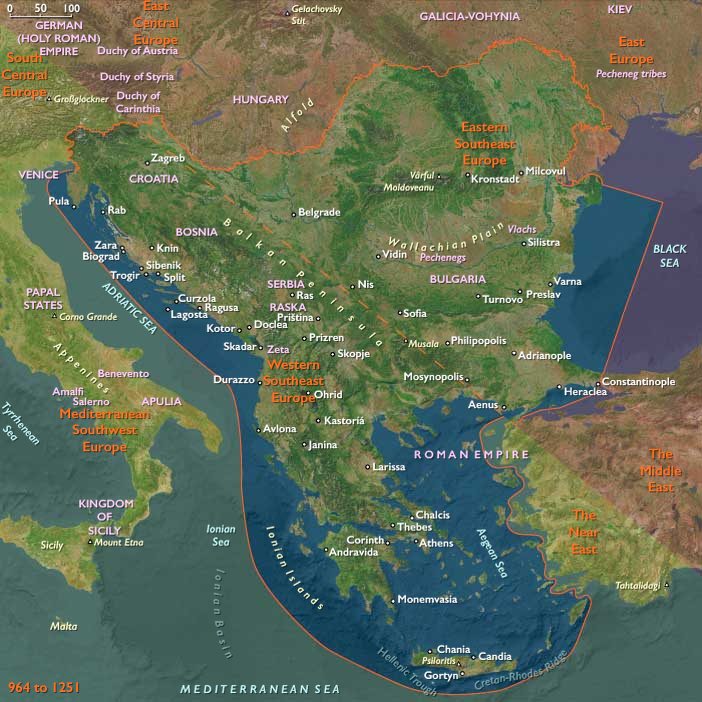
Following their submission, Basil oversees the stabilization and expansion of the Byzantine Empire's eastern frontier, and above all, the final and complete subjugation of Bulgaria, the Empire's foremost European foe, after a prolonged struggle.
For this he is nicknamed by later authors as "the Bulgar-slayer" (Greek: Boulgaroktonos), by which he is popularly known.
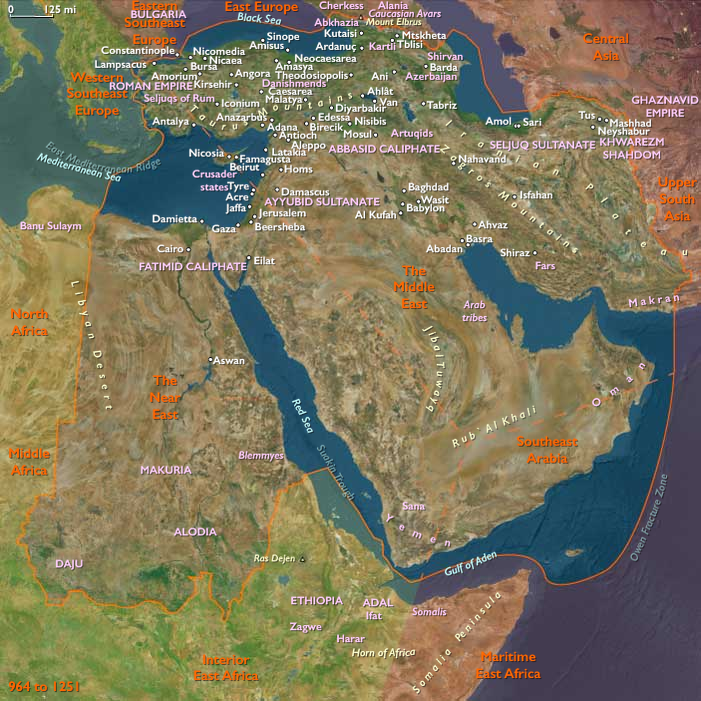
At his death, the Empire stretches from Southern Italy to the Caucasus and from the Danube to the borders of Palestine, its greatest territorial extent since the Muslim conquests, four centuries earlier.
Despite near-constant warfare, Basil also shows himself a capable administrator, reducing the power of the great landowning families who dominate the Empire's administration and military, and filling the Empire's treasury.
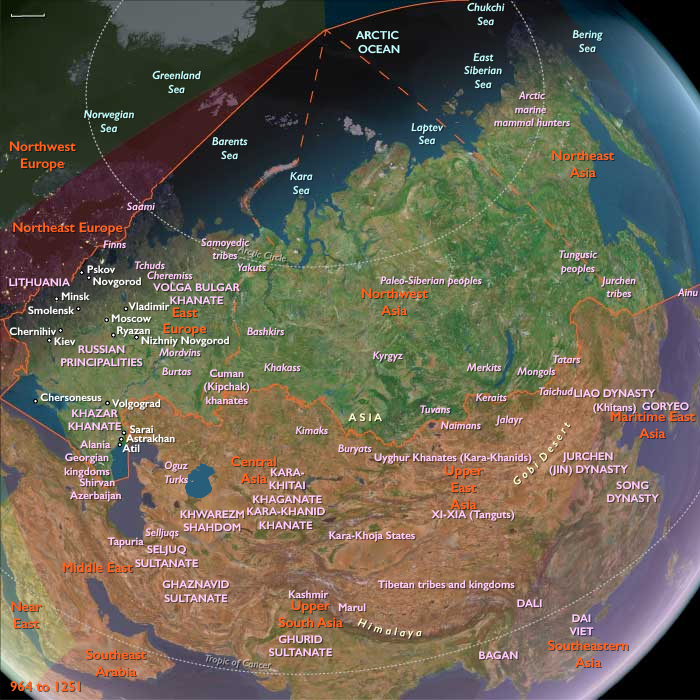
Of far-reaching importance is Basil's decision to offer the hand of his sister Anna to Vladimir I of Kiev in exchange for military support, which leads to the Christianization of the Kievan Rus', and the incorporation of Russia within the Byzantine cultural sphere.