Baldomero Espartero, Prince of Vergara
Regent of Spain
Years: 1793 - 1879
Don Joaquín Baldomero Fernández-Espartero y Alvarez de Toro, 1st Prince of Vergara, 1st Duke of la Victoria, 1st Duke of Morella, 1st Count of Luchana, 1st Viscount of Banderas (27 February 1793 – 8 January 1879) is a Spanish general and political figure.
He is associated with the radical (or progressive) wing of Spanish liberalism and becomes their symbol and champion after taking credit for the victory over the Carlists in 1839.
His noble titles, Duke of La Victoria, are granted by Isabella II to him as a result.
The title Prince of Vergara is granted to him by King Amadeo of Spain in 1870.
Related Events
Filter results
Showing 10 events out of 10 total
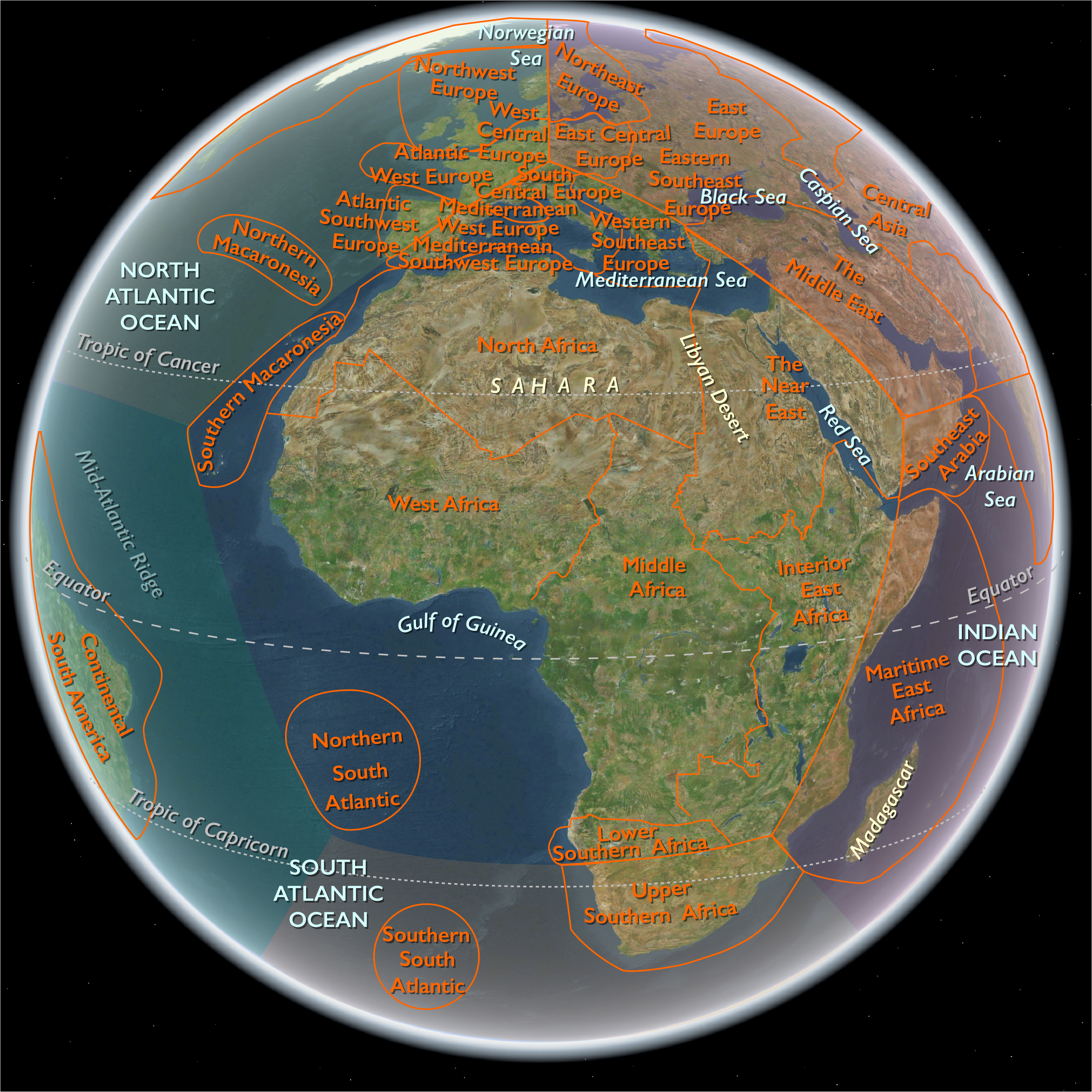
Atlantic Southwest Europe (1828–1839): Liberal Turmoil, Constitutional Struggles, and Early Industrialization
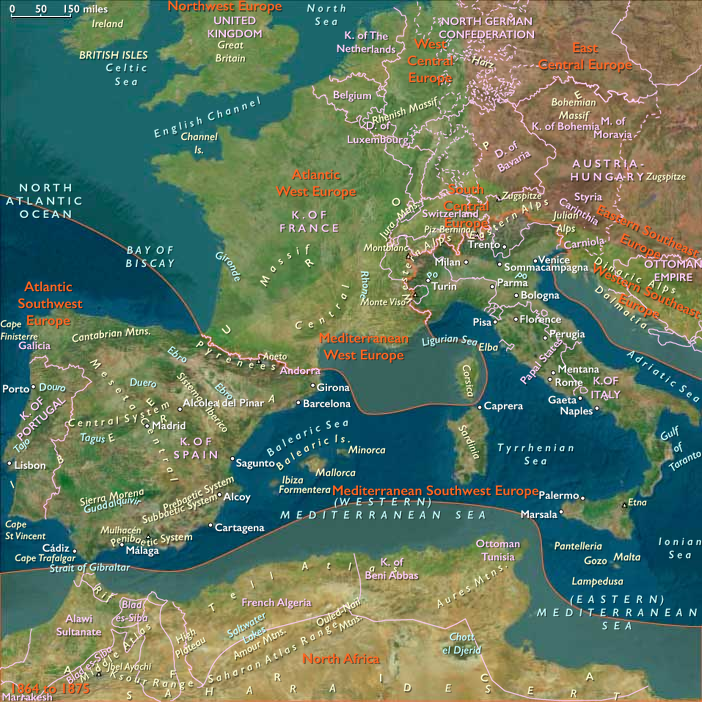
Between 1828 and 1839, Atlantic Southwest Europe—including northern and central Portugal (Lisbon, Porto), Galicia, Asturias, Cantabria, northern León and Castile, the Basque Country, and northern Navarre—entered a turbulent period defined by liberal revolutions, civil conflicts, constitutional struggles, and the early stages of industrialization. Portugal faced a bitter civil war between liberals and absolutists, while Spain grappled with similar tensions erupting into the First Carlist War. These upheavals reshaped regional identities, intensified political alignments, and set lasting foundations for modern governance and economic development.
Political and Military Developments
The Portuguese Liberal Wars (1828–1834)
-
Portugal descended into civil conflict known as the Liberal Wars between supporters of constitutional monarchy (Liberals) and absolutist factions loyal to Dom Miguel, who seized power in 1828.
-
Northern Portugal, especially Porto, became a bastion of liberal resistance during the 1832–1833 siege, famously enduring over a year of intense combat and hardship until liberal forces, led by Dom Pedro IV, successfully defeated Miguelist troops.
-
The liberal victory in 1834 resulted in Queen Maria II ascending the throne, solidifying constitutional monarchy, curtailing the political power of the Church and aristocracy, and definitively shifting Portugal toward parliamentary governance.
The First Carlist War in Northern Spain (1833–1839)
-
In Spain, King Ferdinand VII’s death in 1833 sparked the First Carlist War, a conflict between supporters of Ferdinand's daughter, Isabella II, backed by liberals, and those favoring Ferdinand's brother, Carlos V (Don Carlos), representing traditionalist absolutism.
-
Northern Spanish regions—particularly the Basque Country, Navarre, and rural areas of Cantabria, Asturias, and Galicia—became major battlegrounds. Carlists attracted significant rural support, leveraging regional discontent toward centralization and threats to traditional fueros (regional privileges).
-
The Carlist slogan "God, Country, and King" resonated strongly in conservative rural communities, although urban centers like Bilbao and Santander generally remained loyal to Isabella and liberal governance.
-
The conflict concluded provisionally with the Convention of Vergara (1839), negotiated by the liberal General Baldomero Espartero and moderate Carlist General Rafael Maroto, preserving Basque and Navarrese fueros and promising their integration within the Spanish liberal framework, though tensions lingered unresolved.
Economic Developments: Early Industrialization and Commercial Expansion
Industrialization in Northern Spain
-
Northern Spain, particularly the Basque Country and Cantabria, witnessed rapid industrial growth focused on iron mining, metallurgy, and shipbuilding. The development of ironworks around Bilbao and Santander laid foundations for significant future industrial expansion.
-
Coal mining in Asturias began modestly but steadily, supplying fuel to emerging industrial enterprises, gradually transforming the regional economy toward industrial capitalism.
Portuguese Economic Reorientation
-
Post-war economic recovery in northern Portugal focused on renewed maritime commerce, agricultural improvements, and early manufacturing industries around Porto and Lisbon, gradually reintegrating Portugal into European trade networks.
-
British influence remained strong, reflected in port wine exports from Porto and textile manufacturing, stabilizing the economy after the disruptions of civil war.
Social and Urban Developments: Urban Growth Amid Rural Distress
Urban Expansion and Social Change
-
Urban areas, particularly Porto, Lisbon, Bilbao, and Santander, grew significantly due to commercial and industrial opportunities. This attracted rural migrants seeking employment, causing rapid urbanization and increased social mobility but also deepening urban poverty and social tensions.
-
The growing middle class in these cities embraced liberal and constitutional ideologies, strongly influencing local politics and cultural life.
Rural Distress and Social Tensions
-
In Galicia, Asturias, northern León, and rural parts of Navarre, poverty persisted, aggravated by war disruptions and limited agricultural productivity. This fueled migration toward cities and overseas colonies (particularly Brazil and the Americas), significantly reshaping demographic patterns.
Religious and Cultural Developments: Liberal Reforms and Traditionalist Resistance
Ecclesiastical Reforms and Conflict
-
Liberal victories in Portugal (1834) and Spain (1839) significantly impacted Church authority. Portugal officially dissolved religious orders (1834), confiscating monastic lands and curtailing Church privileges. Similar measures, albeit more limited, were initiated in Spain, setting the stage for future ecclesiastical conflicts.
-
The suppression of religious orders and confiscation of church lands (desamortización) led to profound societal shifts, intensifying conflict between liberals and conservative religious elements, particularly in rural areas and among Carlists in Spain.
Cultural Expression and Romanticism
-
Romanticism emerged as the dominant cultural movement, promoting national and regional pride through literature, art, and folklore. Prominent authors and artists explored historical themes and regional identities, fueling nationalist and regionalist sentiments, especially visible in Galicia, the Basque Country, and northern Portugal.
-
The revival of regional languages (Galician, Basque) and cultural traditions expressed resistance to centralization, asserting distinctive regional identities amid national conflicts.
Legacy and Significance
The era from 1828 to 1839 marked a critical turning point for Atlantic Southwest Europe:
-
Political Liberalization and Constitutionalism: Liberal victories in Portugal and Spain definitively advanced constitutional governance, though conservative resistance persisted, sowing seeds for future conflict.
-
Economic Modernization and Industrial Growth: Early industrialization, particularly in the Basque Country and Cantabria, significantly transformed regional economies, initiating sustained economic growth and industrial development.
-
Strengthening of Regional Identities: Intense conflicts reinforced distinct regional identities and autonomy claims, particularly through the Carlist Wars in northern Spain, highlighting enduring tensions between centralizing national governments and local traditions.
Ultimately, these developments laid foundational structures for modern state formation, industrial economies, and ongoing struggles over regional autonomy, deeply influencing subsequent historical trajectories across Atlantic Southwest Europe.
The Spanish army’s displeasure at regent Maria Cristina’s attempts to overturn the constitution of 1837 results in her exile in 1840.
The Spanish civil war that ended in 1839 had lasted over seven years, the fighting spanning most of the country at one time or another, although the main conflict had centered on the Carlist homelands of the Basque Country and Aragon.
This first of the so-called Carlist Wars has left civilian politicians discredited, and generals have become the arbiters of politics not as intruders, as in 1814-20, but as part of the political machinery.
They have become the “swords” of the two main political groups.
The moderados, who are upper-middle-class oligarchic liberals fearful of democratic violence and upholders of the prerogatives of the crown, represent the conservative stream in liberalism.
Their rivals, the progresistas, are the heirs of the exaltados and represent a lower stratum of the middle class; the progresistas are prepared to use the discontent of the urban masses in order to bring pressure on the crown to give them office.
Their instrument is the Urban Militia.
General Baldomero Espartero, Prince of Vergara, had begun to dabble in politics in 1836; on his return to Madrid in 1840, he becomes head of the government and selects a cabinet of ministers who agree with his progressive ideas.
Espartero uses his military faction and his supporters among the younger progresista politicians and their artisan followers in the great cities to oust Maria Cristina, who in October resigns the regency rather than accept his program of reforms.
She departs for Paris.

The Cortes, or Spanish parliament, appoints Baldomero Espartero regent in May 1841.
Espartero's regency reveals his faulty understanding of politics.
The progressive party is not united, and when Agustïn Argüelles is appointed tutor to young Isabella II by the Cortes, Maria Cristina's protests from Paris gain the support of the moderates.
Generals Concha and Diego de Léon unsuccessfully attempt to seize Isabella in September 1841.
At Pamplona, Espartero defeats the pro-Maria Cristina insurrection led by Concha and de Léon.
The severity with which he crushes their rebellion makes his government unpopular, however.
Barcelona rises in November 1842, a year after Espartero's crushing of the military insurrection by the moderates, and declares a republic, but Espartero suppresses by December, with equally harsh measures.
Baldomero Espartero has proven a disappointment to the radical progresistas, who now ally with his conservative opponents under his military and political rival, Ramón María Narváez.
In a pronunciamiento led by Generals Narváez, Juan Prim and Francisco Serrano, an alliance of Moderates, Progressives, and Republicans moves against Espartero.
Narváez, representing the new alliance, seizes Madrid on July 15, obliging Espartero to flee to England.
Narváez is asked to form a government under Isabella II, who, thirteen years old on October 10, 1843, is declared of age, and Narváez becomes Lieutenant General of the Kingdom, inaugurating what will be known as the Moderate Era.
The Spanish generals are forced to call in civilian and radical support, which turns their pronunciamiento into a mild revolution.
Isabella survives only through the political timidity of Espartero, who had returned to Spain in 1849, living in retirement at Logroño.
Unprepared to accept the backing of the Democrats as the “George Washington of Spain”, he accepts an alliance with O'Donnell, who is determined to arrest the drift to radicalism.
O'Donnell, as minister of war, shares control of affairs with Espartero.
The Cortes confiscates Church lands.
Baldomero Espartero had resigned power in O'Donnell's favor, and Isabella II has asked him to form a government as the 44th Prime Minister of Spain.
For his new administration, O'Donnell forms the Unión Liberal Party, which is designed to combine Progressive, Moderate, and Carlist factions.
O'Donnell will attempt to define moderate policies for Spain with this new party, advocating laissez-faire policies and confiscating church land.
He will soon dismissed on October 12 after only a few months in powe.
The revolutionary spirit that has just overthrown the Spanish government lacks direction; the coalition of liberals, moderates, and republicans are now faced with the incredible task of finding a government that will suit them better than Isabella.
Control of the government passes to Francisco Serrano, an architect of the revolution against Baldomero Espartero's dictatorship.
The Cortes initially reject the notion of a republic; Serrano is named regent while a search is launched for a suitable monarch to lead the country.
The liberal provisional government under Serrano and Prim, formed on October 5, abolishes the Jesuit order and provides for freedom of the press and universal suffrage.
Meanwhile, a revolt against Spanish rule begins in Cuba, which, along with Puerto Rico, is the last possession of Spain in America.
Cubans had long resented the failure to reform rule by captains general, to grant some autonomy, and to ease the economic sacrifices that had been imposed by the Spanish tariff system.