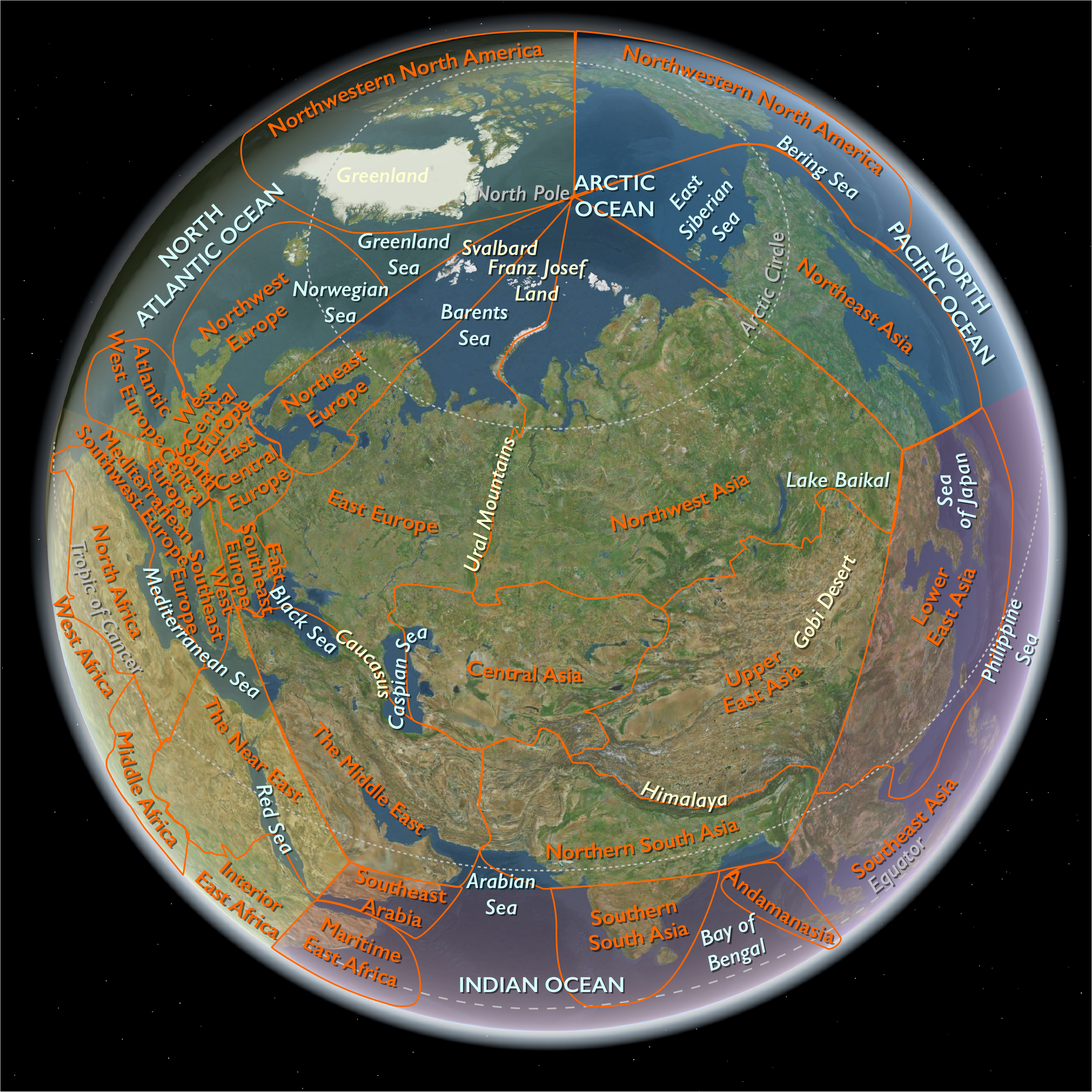
Central Asia (1252 – 1395 CE): Chaghatay Fragmentation, Moghulistan, and Timur’s Transoxiana
Geographic and Environmental Context
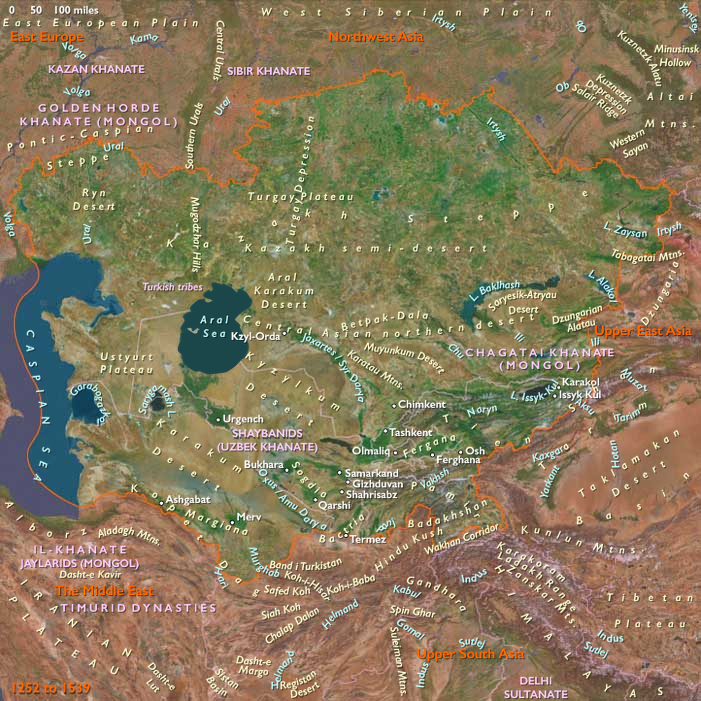
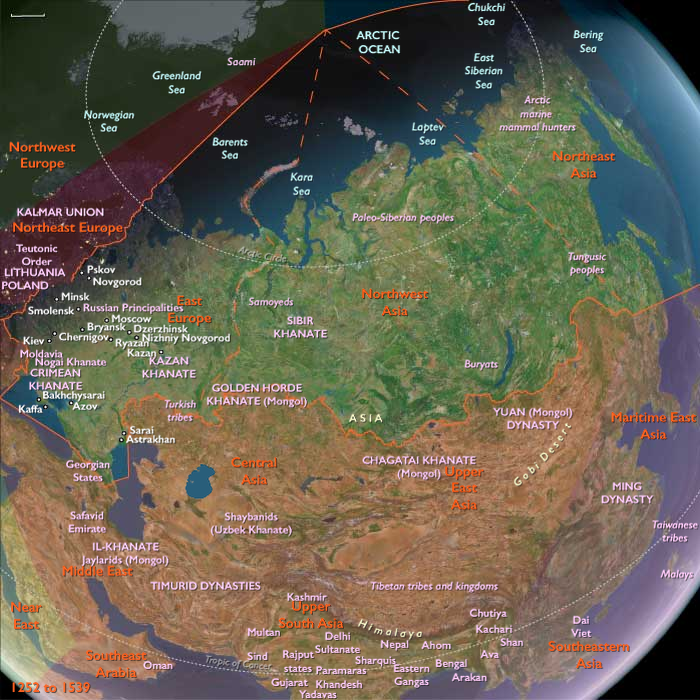
Central Asia includes the Syr Darya and Amu Darya basins (Transoxiana), Khwarazm and the Aral–Caspian lowlands, the Ferghana Valley, the Merv oasis and Kopet Dag piedmont, the Kazakh steppe to the Aral littoral, and the Tian Shan–Pamir margins.
-
Oasis belts (Bukhara–Samarkand, Khwarazm/Urgench, Ferghana, Merv) alternated with steppe and desert corridors (Kyzylkum, Karakum, Jetysu).
Climate and Environmental Shifts
-
Late Medieval Warm Period conditions yielded to the early Little Ice Age after c. 1300: cooler winters and episodic droughts stressed marginal pastures and canals.
-
Oases remained productive when canals were maintained; pasture shocks widened transhumance ranges on the steppe.
Societies and Political Developments
-
Mongol–Chaghatay framework (13th–14th c.):
-
After the Mongol conquest (early 1200s), Transoxiana lay within the Chaghatay ulus.
-
Islamization of the ruling elite advanced in the 14th century (e.g., Tarmashirin), but the ulus fractured into western Transoxiana vs. eastern Moghulistan (Jetysu–eastern Turkestan).
-
Moghulistan (mid-14th c. onward):
-
Transoxiana’s city–amirs and Sufi networks:
-
Timur (Tamerlane) and the Timurid ascendancy (from 1370):
-
Timur seized Samarkand (1370), unifying Transoxiana via alliances and campaigns.
-
He defeated the western and eastern Chaghatay rivals and intervened across Khwarazm, Khurasan, and the steppe (notably against Tokhtamysh at Kondurcha, 1391, and the Terek, 1395).
-
By the mid-1390s Samarkand stood as Timur’s capital and a revived caravan metropolis.
Economy and Trade
-
Oasis agriculture: wheat, barley, cotton, melons, orchards (apricot, pomegranate); irrigation via canal revetments and qanat galleries.
-
Pastoral production: horses, sheep, felt, hides, and remounts from steppe confederations.
-
Caravan commerce:
-
Transoxiana–Khwarazm linked to Volga–Caspian routes (furs, slaves, metals) and to Khurasan–Iran (textiles, dyes).
-
Ferghana–Kashgar–Turfan tied Moghulistan to China’s oases; jade, cotton, and raisins moved east–west.
-
Monies & markets: silver and copper coinages circulated alongside barter; late-Yuan collapse shifted some silk traffic south, while Timurid security restored Transoxiana’s bazars.
Subsistence and Technology
-
Canal maintenance and barrage repairs under strong amirs (and Timur later) sustained yields; abandonment under weak rule led to salinization and field loss.
-
Textiles & crafts: silk and cotton weaving, leatherwork, inlayed metalware, paper mills (Samarkand tradition).
-
Military tech: composite bows, heavy cavalry, lamellar armor; siege craft and early gunpowder bombards employed in late-14th-century campaigns.
Movement and Interaction Corridors
-
Oxus–Jaxartes (Amu/Syr) corridors funneled caravans between Khwarazm, Bukhara–Samarkand, and the Ferghana gates.
-
Hexi/Tarim rim road connected Kashgar–Yarkand to Turfan–Hami and onward to China; when conflict rose, traffic detoured via Khurasan–Persian Gulf lanes.
-
Steppe arcs (Ustyurt, Betpak-Dala, Ili) moved herds and armies between the Aral littoral, Moghulistan, and the Volga.
Belief and Symbolism
-
Islamic scholarship & Sufism: madrasas and khānqāhs flourished; Naqshband (1318–1389) catalyzed a sober, urban-rooted Sufism influential among merchants and elites.
-
Court patronage: Qurʾanic schools, endowments, and shrine complexes reinforced legitimacy; saints’ cults knit town and countryside.
Adaptation and Resilience
-
Twin economies: oasis farming + steppe herding provided ecological complementarity; caravans stitched the two.
-
Political redundancy: when the Chaghatay framework fractured, city-amirs, Sufi networks, and caravan guilds maintained local order; later Timurid consolidation restored regional security.
-
Route flexibility: merchants shifted between Caspian–Volga, Tarim–Gansu, and Khurasan–Gulf corridors as wars or epidemics (e.g., Black Death, 1340s) disrupted one path.
Long-Term Significance
By 1395, Central Asia had reconfigured under Timurid leadership:
-
Transoxiana regained primacy as a caravan heartland centered on Samarkand.
-
Moghulistan stabilized the eastern steppe–oasis zone under Islamizing elites.
-
Sufi orders, urban crafts, and restored irrigation prepared the ground for the Timurid cultural boom of the 15th century and renewed Silk Road vitality between the Caspian, Tarim, and Indian worlds.