The Near East (909–898 BCE): New Foundations and Regional Stability
Rise of Dorian Cities
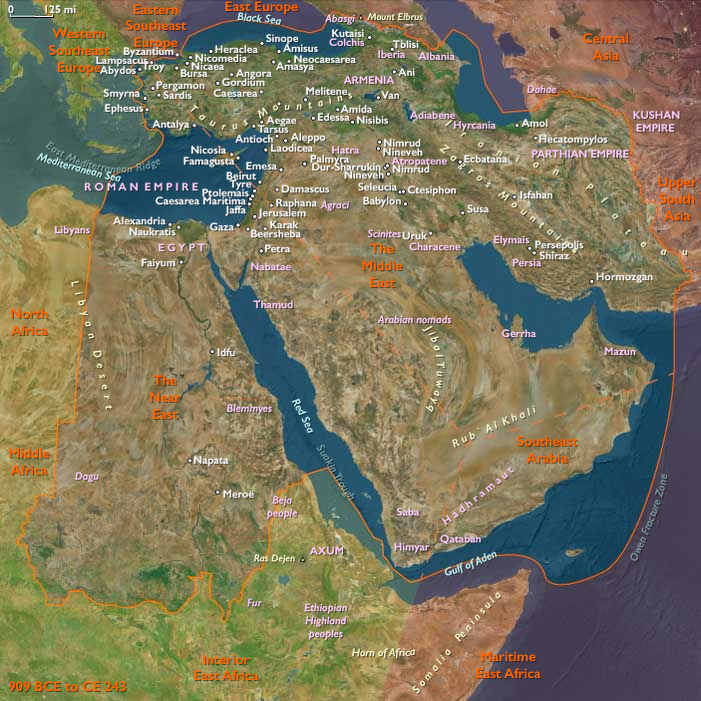
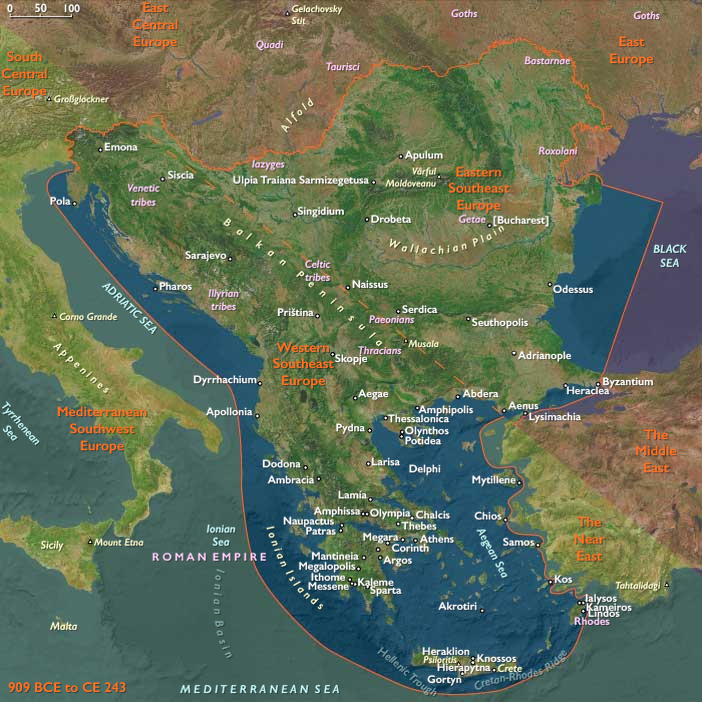
Around 900 BCE, Knidos (Cnidus) is established on the southern shore of the Gulf of Kos, in present-day southwestern Turkey. Founded by settlers likely from Lacedaemon (Sparta), Knidos swiftly becomes an influential Hellenic city. Alongside neighboring cities including Halicarnassus (modern Bodrum, Turkey), Kos, and the Rhodian cities of Lindos, Kameiros, and Ialysos, Knidos joins the Dorian Hexapolis, a confederation renowned for its communal assemblies held at the Triopian headland, where games honoring Apollo, Poseidon, and local nymphs are celebrated.
The city of Halicarnassus also emerges as a significant Dorian colony during this era. Traditions attribute its founding to settlers from the Greek cities of Troezen and Argos, a heritage reflected in symbolic iconography—such as Medusa, Athena, Poseidon, and the trident—on its coinage. The legendary founder, Anthes, is prominently recognized, with inhabitants proudly calling themselves the Antheadae.
Egyptian Stability and Temple Construction
In Egypt, the Third Intermediate Period continues, marked by a politically fragmented but relatively stable rule under the Twenty-second Dynasty, founded by the Libyan-descended Shoshenq I in 945 BCE. After Shoshenq’s death around 924–922 BCE, his son, Osorkon I, ascends the throne, initiating a prosperous and extensive reign noted for prolific temple-building projects. While the political capital remains at Tanis, rival regional dynasties persist in Upper Egypt, though none significantly challenge the dynasty’s central authority during Osorkon’s reign.
Religious Reform and Political Consolidation in Judah
Meanwhile, the Kingdom of Judah, under the reign of Asa (c. 913–873 BCE), enjoys a period of religious reform and political stability. Asa, praised by biblical tradition, vigorously promotes adherence to Judaism by eliminating pagan cults, removing idols, persecuting idol worshipers, and even deposing his own grandmother, Queen Mother Maacah, for her involvement in pagan practices. A crackdown on ritual prostitution and a large-scale religious celebration in Jerusalem enhance Asa’s popularity, attracting migrants from northern tribes, particularly Ephraim and Manasseh, who are drawn by Judah’s renewed stability and prosperity.
Israel’s Political Turmoil
In contrast, the Northern Kingdom of Israel experiences considerable internal upheaval. Jeroboam I (c. 931–910 BCE according to Edwin R. Thiele; 922–901 BCE according to William F. Albright), founder and first king of the northern tribes, had established Shechem as his capital and enacted significant religious reforms, notably erecting golden calf shrines at Dan and Bethel to consolidate religious and political control. However, upon his death, his son Nadab inherits a weakened kingdom.
Nadab’s brief two-year reign (c. 910–909 BCE) ends abruptly during a siege at Gibbethon, a contested town in southern Dan. Here, Baasha, a rival military leader, orchestrates a conspiracy, assassinates Nadab, and subsequently annihilates the house of Jeroboam, plunging Israel into further instability.
Summary of the Era
Between 909 and 898 BCE, the Near East witnesses a juxtaposition of emerging prosperity and persistent fragmentation. The establishment of prominent Dorian cities, religious consolidation under Asa in Judah, and sustained stability in Egypt contrast sharply with the political instability and dynastic upheaval characterizing Israel. These developments lay critical foundations for the regional power dynamics that will continue to evolve throughout the Iron Age.