Augustus II the Strong
Elector of Saxony, King of Poland and Grand Duke of Lithuania
Years: 1670 - 1733
Frederick Augustus I or Augustus II the Strong (German: August II der Starke; Polish: August II Mocny; Lithuanian: Augustas II; 12 May 1670 – 1 February 1733) was Elector of Saxony (as Frederick Augustus I), Imperial Vicar, and becomes King of Poland and Grand Duke of Lithuania (as Augustus II).
Augustus's great physical strength earns him the nicknames "the Strong," "the Saxon Hercules" and "Iron-Hand."
He likes to show that he lives up to his name by breaking horseshoes with his bare hands and engaging in fox tossing with a single finger.
In order to be elected King of the Polish-Lithuanian Commonwealth, Augustus converts to Roman Catholicism.
He owes allegiance to the Imperial Habsburgs as a member of the Order of the Golden Fleece.
As Elector of Saxony, he is perhaps best remembered as a patron of the arts and architecture.
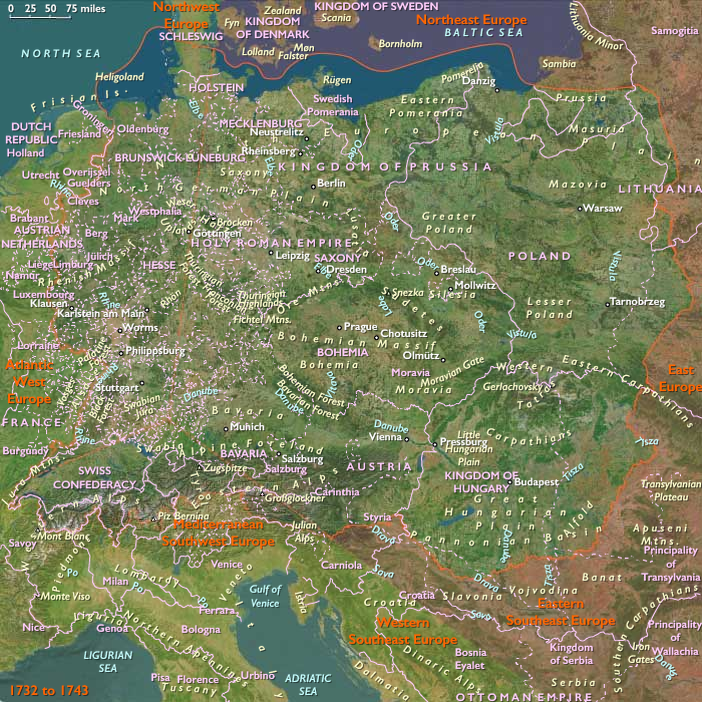
He establishes the Saxon capital of Dresden as a major cultural center, attracting artists from across Europe to his court.
Augustus also amasses an impressive art collection and builds lavish baroque palaces at Dresden and Warsaw.
As King of Poland, his reign is not successful.
He embroils the Polish-Lithuanian Commonwealth in the Great Northern War, which leads to the Russian Empire strengthening its influence over the Commonwealth, and he fails to achieve internal reforms and to bolster royal power in the Commonwealth.