Augustus
first emperor of Rome
Years: 63BCE - 19
Augustus (Latin: Imperator Gaius Julius Caesar Augustus; 23 September 63 BCE – 19 August CE 14) is considered the first emperor of the Roman Empire, which he rules alone from 27 BCE until his death in CE 14.
Born Gaius Octavius Thurinus, he is adopted posthumously by his great-uncle Gaius Julius Caesar in 44 BCE via his last will and testament, and between then and 27 BCE is officially named Gaius Julius Caesar.
In 27 BCE, the Senate awards him the honorific Augustus ("the revered one"), and thus consequently he is Gaius Julius Caesar Augustus.
The young Octavius comes into his inheritance after Caesar's assassination in 44 BCE.
In 43 BCE, Octavian joins forces with Mark Antony and Marcus Aemilius Lepidus in a military dictatorship known as the Second Triumvirate.
As a triumvir, Octavian rules Rome and many of its provinces.The triumvirate is eventually torn apart under the competing ambitions of its rulers: Lepidus is driven into exile, and Antony commits suicide following his defeat at the Battle of Actium by Octavian's fleet under the command of Agrippa in 31 BCE.
After the demise of the Second Triumvirate, Octavian restores the outward facade of the Roman Republic, with governmental power vested in the Roman Senate, but in practice retains his autocratic power.
It takes several years to determine the exact framework by which a formally republican state could be led by a sole ruler; the result becomes known as the Roman Empire.
The emperorship is never an office like the Roman dictatorship which Caesar and Sulla had held before him; indeed, he declined it when the Roman populace "entreated him to take on the dictatorship".
He is not known as what we would call "Emperor" in his lifetime; "Imperator" is (to begin with) simply a title given to an unusually successful general.
But Augustus is given, among other titles, that of "princeps", "the first (of citizens)".
Originally it has no royal connotations.
By law, Augustus holds a collection of powers granted to him for life by the Senate, including those of tribune of the plebs and censor.
He is consul until 23 BCE.
His substantive power stemsfrom financial success and resources gained in conquest, the building of patronage relationships throughout the Empire, the loyalty of many military soldiers and veterans, the authority of the many honors granted by the Senate, and the respect of the people.
Augustus' control over the majority of Rome's legions establishes an armed threat that could be used against the Senate, allowing him to coerce the Senate's decisions.
With his ability to eliminate senatorial opposition by means of arms, the Senate becomes docile towards him.
His rule through patronage, military power, and accumulation of the offices of the defunct Republic becomes the model for all later imperial governments.
The reign of Augustus initiates an era of relative peace known as the Pax Romana, or Roman peace.
Despite continuous wars on the frontiers, and one yearlong civil war over the imperial succession, the Mediterranean world remains at peace for more than two centuries.
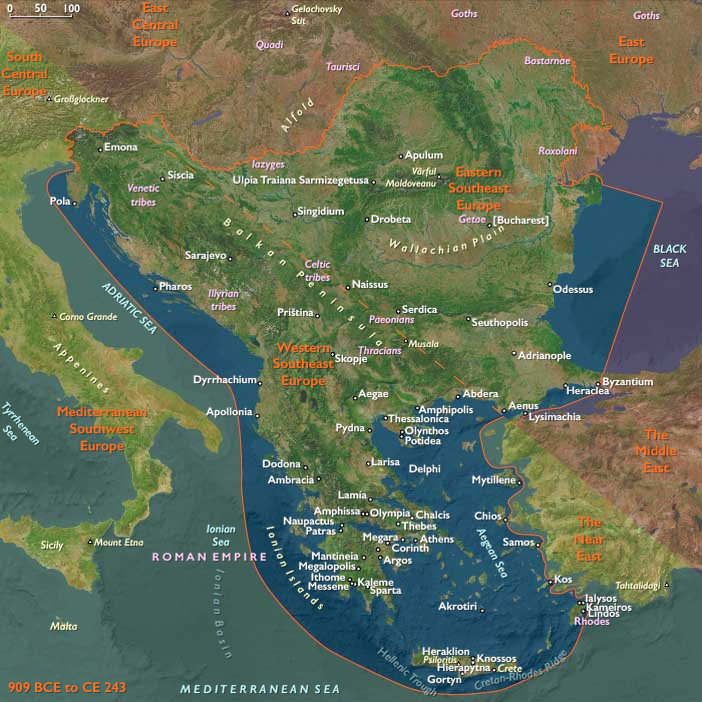
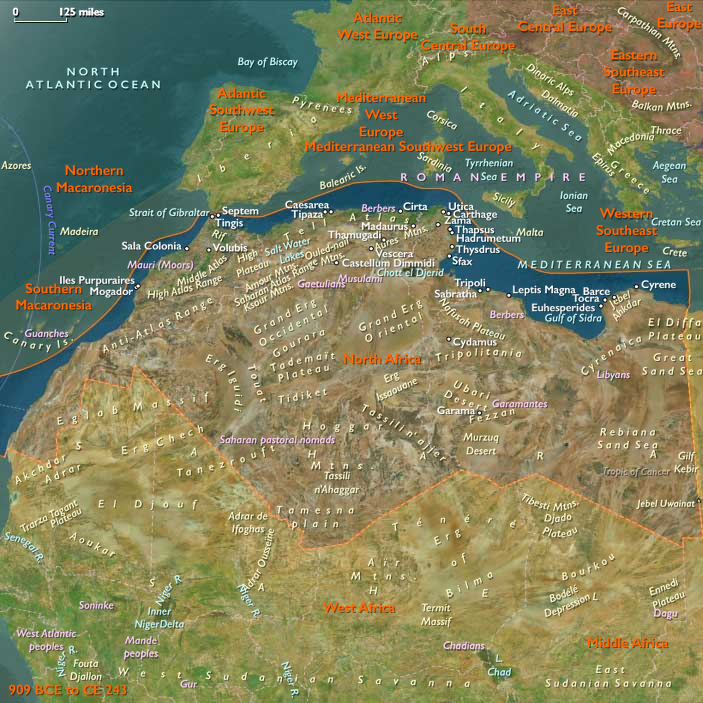
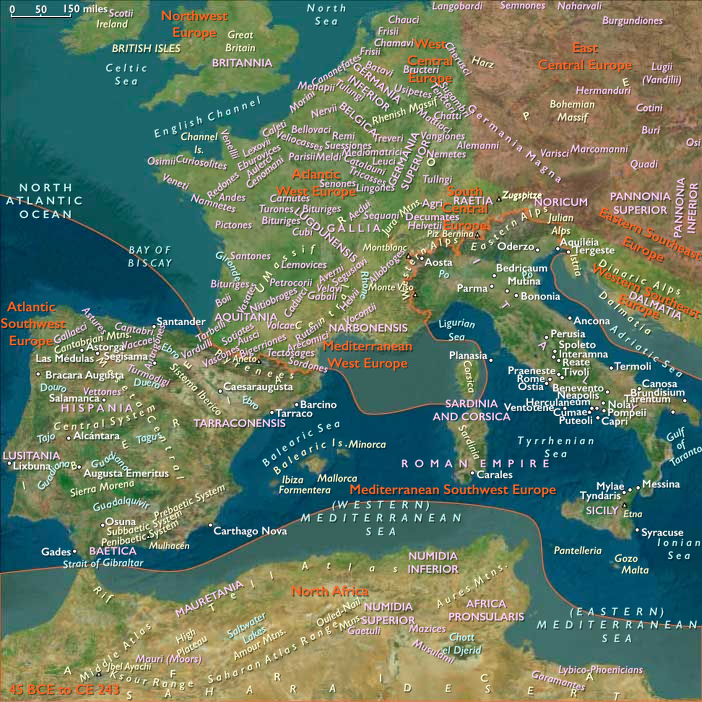
Augustus enlarges the empire dramatically, annexing Egypt, Dalmatia, Pannonia, and Raetia, expands possessions in Africa, and completes the conquest of Hispania.
Beyond the frontiers, he secures the empire with client states, and makes peace with Parthia through diplomacy.
He reforms the Roman system of taxation, develops networks of roads with an official courier system, established a standing army, establishes the Praetorian Guard, and creates official police and firefighting services for Rome.
Much of the city is rebuilt under Augustus; and he writes a record of his own accomplishments, known as the Res Gestae Divi Augusti, which has survived.
Upon his death in CE 14, Augustus is declared a god by the Senate—to be worshipped by the Romans.
His names Augustus and Caesar are adopted by every subsequent emperor; and the eighth month of the Roman calendar, previously named Sextilis, is renamed Augustus (August in English) in his honor.
He is succeeded by his adopted son (also stepson and former son-in-law), Tiberius.