Asparukh of Bulgaria
founder of the of the First Bulgarian Empire
Years: 640 - 701
Asparukh (also Asparuh, Isperih or Ispor) is ruler of a Bulgar kingdom in the second half of the 7th century and is credited with the establishment of the First Bulgarian Empire in 680/681.

Related Events
Filter results
Showing 7 events out of 7 total
East Central Europe (652–663 CE): Fragmentation after Samo, Dissolution of Old Great Bulgaria, and Continuing Thuringian Autonomy
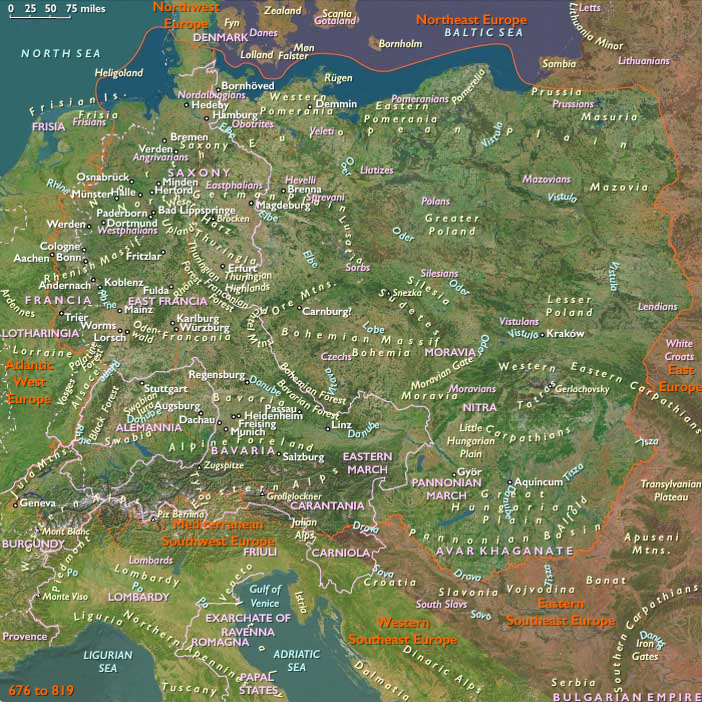
Between 652 and 663 CE, East Central Europe—encompassing Poland, Czechia, Slovakia, Hungary, and those portions of Germany and Austria lying east of 10°E and north of a line stretching from roughly 48.2°N at 10°E southeastward to the Austro-Slovenian border near 46.7°N, 15.4°E—entered a period of fragmentation and realignment. Following King Samo’s death (ca. 658 CE), his unified Slavic federation began to fracture into smaller regional principalities, particularly in Bohemia and Moravia, reshaping the political landscape. Concurrently, Old Great Bulgaria faced internal instability after the death of Khan Kubrat (ca. 650s CE), leading to the dispersal of Bulgar groups. Some Bulgars migrated southward into the Balkans, where they would eventually establish the later Bulgarian state, becoming heavily Slavicized in subsequent centuries. Meanwhile, the Frankish Duchy of Thuringia, under Duke Radulf, continued to assert its practical autonomy from weakened Merovingian rule, further emphasizing the fragmentation of Frankish authority.
Political and Military Developments
Fragmentation of Samo’s Slavic Federation
-
Following Samo’s death (ca. 658 CE), the unified West Slavic federation dissolved into multiple independent or semi-independent tribal entities, particularly in Bohemia, Moravia, and surrounding regions. This political fragmentation allowed localized leadership structures to re-emerge, setting the stage for future distinct medieval Slavic principalities.
Dissolution and Migration of Old Great Bulgaria
-
After Khan Kubrat’s death (mid-650s CE), internal rivalries among his sons fractured Old Great Bulgaria. This led to the dispersal of various Turkic-speaking Bulgar groups:
-
Asparuh’s Bulgars migrated southwestward toward the Danube, laying the foundations for the later medieval Bulgarian state in the Balkans, which became predominantly Slavic in language and culture.
-
Other Bulgar groups migrated northward or eastward, contributing to ongoing regional ethnic shifts in Eastern Europe.
-
Continued Autonomy of Thuringia under Radulf
-
Duke Radulf of Thuringia maintained practical independence from Merovingian kings, who proved increasingly unable to reassert centralized control. This sustained autonomy clearly reflected the Merovingian monarchy’s diminishing power during this era of the rois fainéants.
Avar Re-consolidation Efforts
-
The Avar Khaganate, previously weakened by Bulgar and Slavic uprisings, took advantage of regional fragmentation to modestly reconsolidate and stabilize its reduced territory within the Carpathian Basin.
Economic and Technological Developments
Adaptation and Continuity in Regional Trade
-
Despite political instability, economic exchange and regional trade persisted, linking fragmented Slavic principalities, Thuringia, Bavaria, Avar territories, and Byzantine markets. Trade in agricultural goods, luxury textiles, metal products, and regional crafts continued actively.
Localized Defensive Infrastructure
-
Fragmentation spurred Slavic and Bulgar communities to maintain and further enhance local defensive systems, including fortified settlements and earthwork fortifications, essential to regional security in the absence of centralized authority.
Cultural and Artistic Developments
Emergence of Distinct Slavic Regional Cultures
-
With the dissolution of Samo’s federation, Bohemian and Moravian communities developed distinct localized identities, characterized archaeologically by varied styles in pottery, jewelry, and settlement designs.
Transition of Bulgar Identity
-
Following the collapse of Old Great Bulgaria, the migrating Bulgar groups, particularly those moving into the Balkans, gradually absorbed Slavic influences, initiating a transition toward the predominantly Slavic cultural identity associated with later medieval Bulgaria.
Persistence of Avar Cultural Influence
-
The Avars retained notable influence across the region, particularly through their distinctive styles in metalwork and decorative arts, maintaining continued cultural interactions despite earlier territorial losses.
Settlement and Urban Development
Fragmented Slavic and Bulgar Settlements
-
The dissolution of political unity under Samo and Kubrat’s successors resulted in numerous smaller fortified settlements rather than larger centralized urban centers, reflecting localized governance structures.
Thuringian and Bavarian Urban Stability
-
Thuringia under Radulf and Bavarian territories remained stable and prosperous frontier zones, benefiting from ongoing regional trade and reduced direct military pressures from weakened Merovingian central authority.
Social and Religious Developments
Decentralized Leadership Structures
-
After Samo’s death, decentralized Slavic political leadership emerged prominently across Bohemia, Moravia, and adjacent territories. Leadership became increasingly local and tribal, with limited overarching regional authority.
Thuringian Autonomy and Aristocratic Rule
-
Thuringia under Radulf maintained robust aristocratic governance, further illustrating the diminished practical authority of Merovingian kings, who became symbolic figureheads dependent upon powerful regional dukes.
Long-Term Consequences and Historical Significance
The era 652–663 CE represented a pivotal transitional period marked by political fragmentation and realignment across East Central Europe. The end of Samo’s federation and Old Great Bulgaria reshaped the regional geopolitical landscape, creating smaller, localized entities that would eventually evolve into distinct medieval states. Radulf’s continued autonomy in Thuringia underscored the declining authority of the Merovingian monarchy, providing early evidence of the shift toward powerful local aristocratic rule. These developments set enduring patterns for future ethnic identities, state formations, and cultural trajectories in East Central Europe.
East Central Europe (664–675 CE): Continued Regional Fragmentation, Emergence of Proto-States, and Avar Reconsolidation
Between 664 and 675 CE, East Central Europe—encompassing Poland, Czechia, Slovakia, Hungary, and those portions of Germany and Austria lying east of 10°E and north of a line stretching from roughly 48.2°N at 10°E southeastward to the Austro-Slovenian border near 46.7°N, 15.4°E—continued to witness profound political and cultural transformations resulting from the collapse of earlier federations. Following the dissolution of Samo’s Kingdom and the fragmentation of Old Great Bulgaria, smaller, decentralized tribal polities began solidifying into early proto-states in Bohemia and Moravia. Concurrently, the Avars sought to recover some lost influence by carefully re-consolidating their authority within a more limited area of the Carpathian Basin. In Thuringia, sustained autonomy under Radulf’s successors highlighted persistent Merovingian royal weakness, demonstrating the continued transition toward powerful regional aristocracies.
Political and Military Developments
Emergence of Early Proto-States in Bohemia and Moravia
-
Following the earlier collapse of Samo’s unified Slavic federation, distinct regional tribal leaders in Bohemia and Moravia increasingly solidified their power, laying the foundations for the future principalities of the Czechs and the Moravians.
-
These early proto-states developed stronger localized political and military institutions, effectively maintaining autonomy against weakened external powers.
Ongoing Fragmentation and Migration of the Bulgars
-
After Old Great Bulgaria’s collapse, multiple Turkic-speaking Bulgar groups continued migrating, especially into southeastern Europe. The most significant group, led by Asparuh, moved south across the Danube into the Balkans during this period, where they would eventually establish a long-lasting Bulgarian state in subsequent decades, becoming heavily Slavicized over time.
Thuringian Autonomy Under Radulf’s Successors
-
Thuringia continued enjoying practical independence from weakened Frankish kings, who failed repeatedly to reassert central authority. After Radulf’s death (mid-7th century), Thuringian dukes retained substantial autonomy, highlighting Merovingian royal impotence during the continuing era of rois fainéants.
Avar Reconsolidation Efforts
-
The Avar Khaganate, diminished by earlier upheavals, engaged in cautious reconsolidation, reasserting political control and re-stabilizing authority within a reduced Carpathian Basin territory.
Economic and Technological Developments
Sustained Regional Trade and Economic Integration
-
Economic integration persisted despite political fragmentation, with continued robust trading relationships among Bavarian, Thuringian, Avar, proto-state Slavic, Frankish, and Byzantine territories. Goods included agricultural produce, ironware, luxury textiles, and crafted products.
Fortification and Defensive Innovations
-
Growing regional stability and consolidation of localized political entities fostered continued fortification development, including fortified settlements, earthworks, and hillforts designed to secure emerging proto-states from external threats.
Cultural and Artistic Developments
Development of Distinct Regional Slavic Identities
-
Bohemia and Moravia increasingly developed separate cultural identities reflected archaeologically through distinct ceramics, jewelry, settlement designs, and burial practices, laying clear foundations for medieval regional identities.
Bulgar Cultural Transformation and Slavicization
-
The southward migration of Bulgar groups into the Balkans initiated their gradual cultural transformation, eventually resulting in their linguistic and cultural assimilation into predominantly Slavic populations.
Persistent Avar Cultural Legacy
-
Avar influence persisted strongly across the region, notably in artistic traditions, metalwork, weaponry, and decorative artifacts, continuing to shape cultural interactions with neighboring Slavic and Bavarian peoples.
Settlement and Urban Development
Growth of Proto-State Settlements in Bohemia and Moravia
-
Fortified settlements grew notably in Bohemia and Moravia, reflecting enhanced political stability, economic productivity, and nascent proto-state structures.
Stability of Bavarian and Thuringian Urban Centers
-
Bavarian settlements, notably Regensburg, and Thuringian communities continued benefiting from economic prosperity and reduced military threats, supporting sustained population growth and urban development.
Social and Religious Developments
Emergence of Stable Regional Leadership Hierarchies
-
Bohemian and Moravian societies developed increasingly stable hierarchical leadership, solidifying proto-state formations led by influential warrior elites capable of diplomatic and military coordination.
Thuringian Aristocratic Consolidation
-
Thuringia maintained stable aristocratic governance structures under Radulf’s successors, reinforcing local power structures at the expense of Merovingian royal authority.
Continuation of Avar Social Structures
-
Within their reduced territory, Avar societal and military hierarchy persisted strongly, enabling continued internal cohesion and external diplomatic engagement.
Long-Term Consequences and Historical Significance
The era 664–675 CE represented ongoing regional transformation in East Central Europe, characterized by the rise of early proto-state political structures in Bohemia and Moravia, the continued migrations and cultural transformation of Bulgar groups, and sustained Thuringian autonomy under weakened Merovingian royal authority. Concurrent Avar reconsolidation efforts provided stability within their remaining territories, ensuring continued cultural influence. Collectively, these developments set foundational patterns shaping future medieval political entities, cultural identities, and historical trajectories within East Central Europe.
Eastern Southeast Europe (664–675 CE): Consolidation, Strategic Growth, and Critical Innovations
Settlement and Migration Patterns
Demographic Consolidation and the Arrival of the Bulgars
From 664 to 675 CE, Eastern Southeast Europe experienced demographic consolidation following earlier migratory movements. A significant event was the arrival and settlement of the Bulgars under Khan Asparukh, who crossed the Danube and established themselves in the region, laying the foundations for the First Bulgarian Empire. The Bulgars integrated and displaced local Slavic populations, significantly altering regional demographics and politics.
Urban Development and Fortification
Urban centers such as Constantinople, Philippopolis, Adrianople, and Serdica continued significant enhancements in defensive structures and urban planning. These strategic developments provided security, enabling stable urban populations and growth, even amidst external threats from migrating peoples and military incursions.
Political and Military Developments
Leadership Changes and Military Campaigns
In 668 CE, Constantine IV ascended to sole rulership following the assassination of his father, Constans II. His reign was immediately challenged by military campaigns from Arab forces under Muawiyah I. Arab forces captured key regional cities like Amorion and Cyzicus and launched repeated sieges against Constantinople between 674 and 675 CE.
The Crucial Role of Greek Fire
The Arab naval sieges of Constantinople in 674 and 675 CE were dramatically repelled by the defenders' effective use of Greek fire, a revolutionary incendiary weapon invented by Kallinikos of Heliopolis around 665–670 CE. This petroleum-based compound, which ignited upon contact with water and could only be extinguished with sand, significantly altered military defenses and tactics.
Economic and Technological Developments
Sustained Economic Stability
The regional economy maintained consistent growth, bolstered by reliable agricultural output and dynamic trade networks. Constantinople's continued role as a major economic hub was essential in supporting broader regional economic resilience.
Technological Innovations
Technological progress, notably the invention of Greek fire, emphasized advancements in military fortifications and defensive capabilities. These innovations enhanced regional security, ensuring economic continuity and social cohesion.
Cultural and Artistic Developments
Flourishing Cultural Activities
Cultural and artistic endeavors thrived, reflecting the integration of classical traditions and Christian symbolism. Artistic production continued vigorously, strengthening community identity and cultural continuity.
Intellectual Resilience
Educational institutions and scholarly communities actively preserved and promoted classical and theological knowledge. Intellectual vitality persisted, adapting effectively to contemporary societal and political contexts.
Social and Religious Developments
Efficient and Adaptive Governance
Administrative systems demonstrated ongoing efficiency and adaptability, effectively managing resources, civic responsibilities, and regional defense. Strong provincial governance significantly contributed to regional stability and growth.
Expanding Christian Societal Role
Christianity continued expanding its profound influence, shaping the region's social, cultural, and political dynamics. The ongoing growth of religious institutions played a crucial role in community cohesion and societal stability.
Long-Term Consequences and Historical Significance
The period from 664 to 675 CE was characterized by significant demographic consolidation, strategic political shifts, robust urban fortifications, revolutionary military innovations, sustained economic resilience, and vibrant cultural and intellectual activity. These critical developments effectively reinforced Eastern Southeast Europe's regional stability, significantly influencing its future historical trajectory.
Asparukh, one of the sons of Kubrat, is followed by thirty thousand to fifty thousand Bulgars.
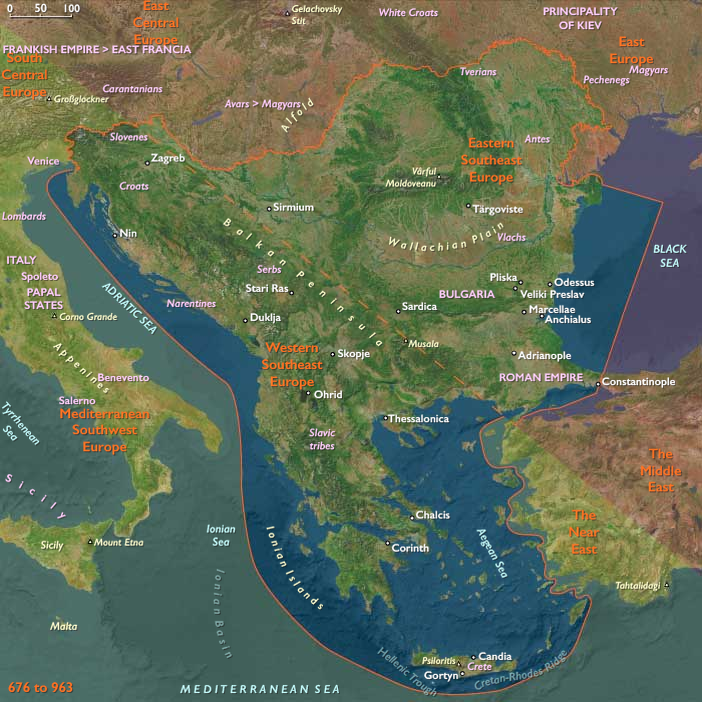
He reaches the Danube and, while the imperial capital, Constantinople, is besieged by Muawiyah I, Caliph of the Arabs (674–678), he and his people settle in the Danube delta, probably on the now disappeared Peuce Island.
The immigration of the first Bulgars overlaps that of the Slavs in the seventh century.
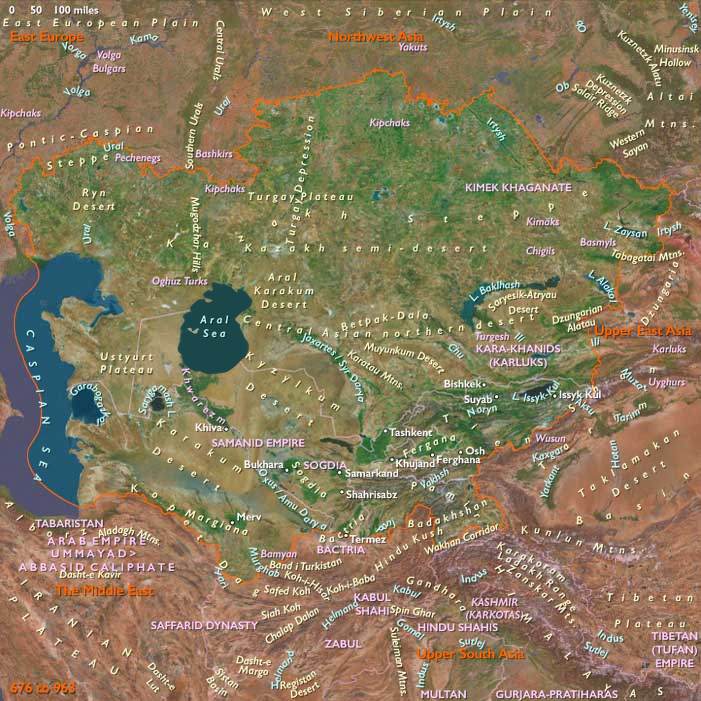
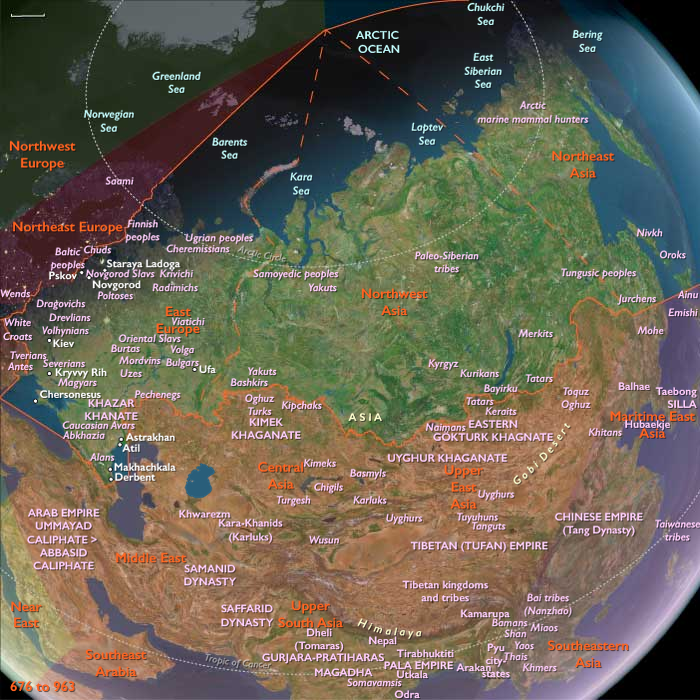
Of mixed Turkic stock (the word Bulgar derives from an Old Turkic word meaning "one of mixed nation- ality"), the Bulgars are warriors who had migrated from a region between the Urals and the Volga to the steppes north of the Caspian Sea, then across the Danube into the Balkans.
Besides a formidable reputation as military horsemen, the Bulgars have a strong political organization based on their khan (prince).
In 630 a federation of Bulgar tribes already existed; in the next years the Bulgars unite with the Slavs to oppose Byzantine control.
By 681 the khan Asparukh has forced Emperor Constantine V to recognize the first Bulgarian state.
The state, whose capital is at Pliska, near modern Shumen, combines a Bulgarian political structure with Slavic linguistic and cultural institutions.
The First Bulgarian Empire is able to defeat the Byzantine Empire in 811 and expand its territory eastward to the Black Sea, south to include Macedonia, and northwest to present-day Belgrade.
The Danube Bulgars, a Turkic tribe, had conquered the Slavs immediately south of the Danube, absorbing a large portion of ancient Dacia in 676.
The Bulgars, who will soon be permeated by Vlach and, even more thoroughly, by Slavic elements, will unite with the Slavs to oppose Imperial control.
At the same time, their conquests will carry them deeper into the ambit of Constantinopolitan Christianity.
The Bulgarian khan Asparukh, eluding Constantine IV's attempts to defeat him, has by 681 forced the emperor to recognize the first Bulgarian state, which, with its capital at Pliska (near modern Shumen), combines a Bulgarian political structure with Slavic linguistic and cultural institutions.
Occupying lands south of the Danube into the Thracian plain—much to the humiliation of Constantinople—the Bulgars have thus deprived the empire of control in the north and central Balkans.
The ancient Black Sea Port of Odessus in the northeastern portion of the Bulgars' kingdom becomes known under them as Varna.