Askia Mohammad I
ruler of the Songhai Empire
Years: 1443 - 1548
Askia Muhammad I (ca.
1443 – 1538), born Muhammad Ture or Mohamed Toure in Futa Tooro, later called Askia, also known as Askia the Great, is an emperor, military commander, and political reformer of the Songhai Empire in the late fifteenh century, the successor of Sunni Ali Ber.
Askia Muhammad strengthens his country and makes it the largest country in West Africa's history.
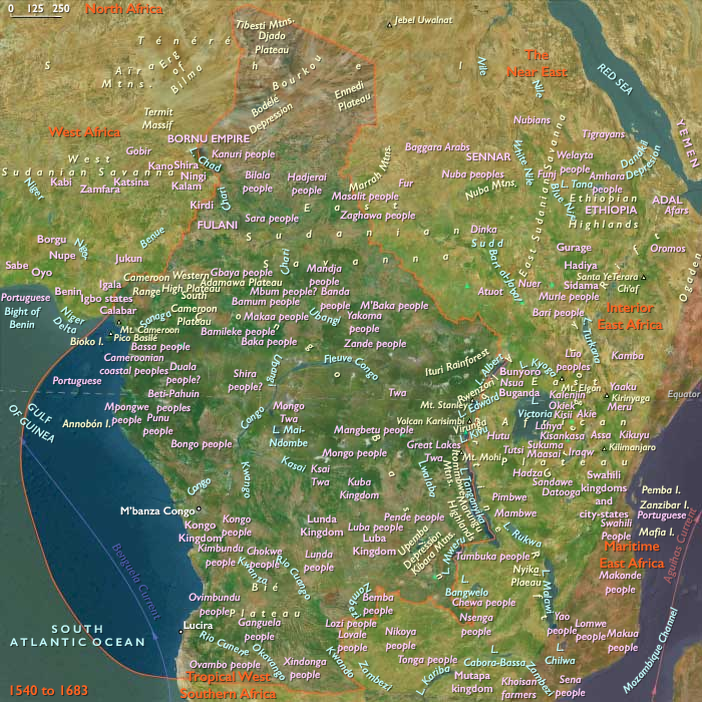
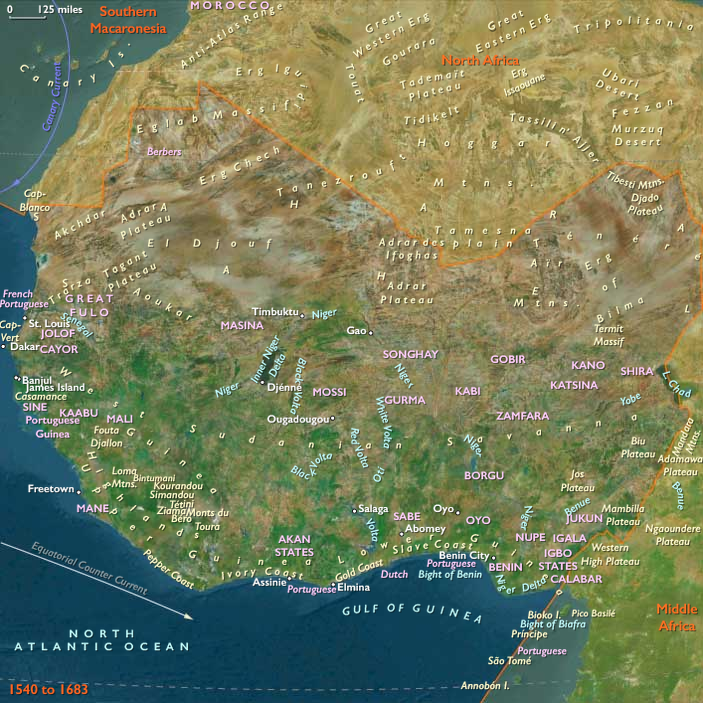
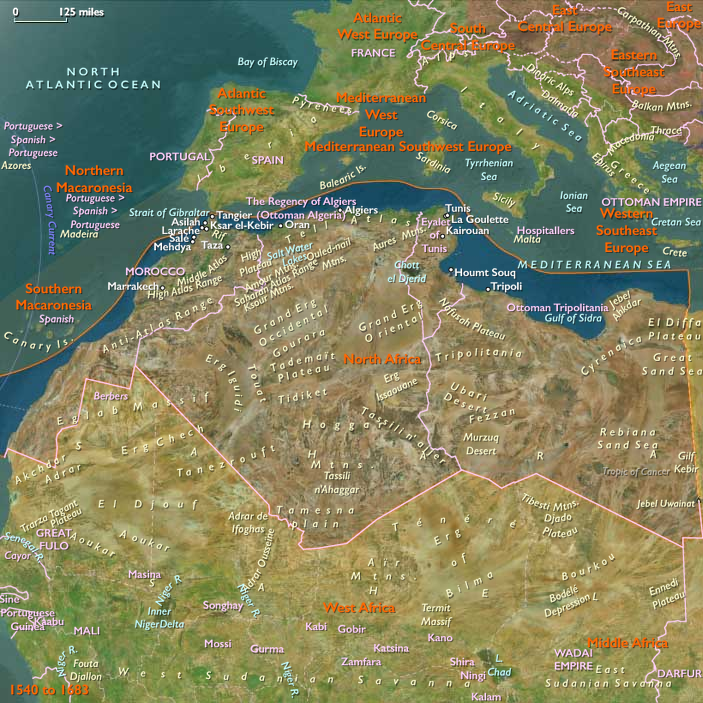
At its peak under his reign, the Songhai Empire encompasses the Hausa states as far as Kano (in present-day Nigeria) and much of the territory that had belonged to the Songhai empire in the west.
His policies result in a rapid expansion of trade with Europe and Asia, the creation of many schools, and the establishment of Islam as an integral part of the empire.
Due to his efforts, Songhai experiences a cultural revival it has never witnessed before, and the whole land flourishes as a center of all things valuable in learning and trade After Sunni Ali Ber dies, Sunni Baru, his son and intended successor, refuses to declare himself a Muslim.
His refusal gives one of Sunni Ali Ber's generals, Muhammad Ture, a reason to challenge his succession.
General Ture defeats Baru and ascends to the throne in 1493.
General Ture, later known as Askia Muhammad I or Askia the Great, subsequently orchestrates a program of expansion and consolidation that extends the empire from Taghaza in the North to the borders of Yatenga in the South; and from Air in the Northeast to Futa Djallon in Guinea.
In addition, Askia establishes standardized trade measures and regulations, initiated the policing of trade routes and also establishes an organized tax system.
He is overthrown by his son, Askia Mūsā, in 1528.