Artabanus IV of Parthia
ruler of the Parthian Empire
Years: 168 - 224
Artabanus IV of Parthia rules the Parthian Empire (c. 216 – 224).
He is the younger son of Vologases V who dies in 208.
Artabanus rebels against his brother Vologases VI, and soon gains the upper hand, although Vologases VI maintains himself in a part of Babylonia until about 228.


Related Events
Filter results
Showing 10 events out of 12 total
Artabanus IV of Parthia had rebelled against his brother Vologases VI of Parthia soon after the latter's succession to the throne around 212 and gained control over a greater part of the empire.
Vologases VI maintains himself in a part of Babylonia.
The Roman emperor Caracalla, wishing to make use of this civil war for a conquest of the East in imitation of his idol, Alexander the Great, marches into Mesopotamia under the pretext of marrying one of Artabanus' daughters.
Caracalla, according to the historian Herodian, tricked the Parthians in 216 into believing that he accepted a marriage and peace proposal, but then had the bride and guests slaughtered after the wedding celebrations.
The thereafter ongoing conflict and skirmishes become known as the Parthian war of Caracalla.
After deposing the kings of Osroene and Armenia to make them Roman provinces once more, he crosses the Tigris, destroys the towns, and spoils the tombs of Arbela, but when Artabanus advances at the head of an army, …
…Caracalla retires to Edessa.
The Praetorian prefect Macrinus is among Caracalla’s staff, as are other members of the praetorian guard.
Born in Caesarea (modern Cherchell, Algeria) in the Roman province of Mauretania to an equestrian family, Macrinus had received an education which allowed him to ascend to the Roman political class.
Over the years he had earned a reputation as a skilled lawyer.
Under the emperor Septimius Severus he became an important bureaucrat, and Caracalla in 212 had appointed him prefect of the Praetorian guard after the murder of Papianus.
While Macrinus likely enjoys the trust of Caracalla, this may have changed when, according to tradition, he was prophesied to depose and succeed the Emperor.
Rumors spread regarding Macrinus' alleged desire to take the throne for himself.
Given Caracalla's tendency towards murdering political opponents, Macrinus probably fears for his own safety should the Emperor become aware of this prophecy.
According to Dio, Caracalla had already taken the step of re-assigning members of Macrinus' staff.
Macrinus is confirmed in his new role by the Senate despite his equestrian background.
According to S.N.
Miller, this may have been due to both his background as an accomplished jurist and his deferential treatment of the senatorial class.
(Miller, S.N., "The Army and the Imperial House," The Cambridge Ancient History, Volume XII: The Imperial Crisis and Recovery (A.D. 193–324), S.A. Cook et al.
eds, Cambridge University Press, 1965, pp 50–2.)
He finds it necessary, however, to replace several provincial governors with men of his own choosing.
Caracalla's mother Julia Domna is initially left in peace, but when she starts to conspire with the military he orders her to leave Antioch.
Being at this time in an advanced stage of breast cancer (Cassius Dio) she chooses instead to starve herself to death.
In urgent matters of foreign policy, Macrinus displays a tendency towards conciliation and a reluctance to engage in military conflict.
He averts trouble in the province of Dacia by returning hostages that had been held by Caracalla, and he ends troubles in Armenia by granting that country's throne to Tiridates, whose father had also been imprisoned under Caracalla.
Less easily managed is the problem of Mesopotamia, which has been invaded by the Parthians in the wake of Caracalla's demise.
Monuments are built to revere Macrinus at a high point of his popularity.
The grand tetrastyle Capitoline Temple in Volubilis is erected to honor him in 217.
Meeting the Parthians in battle during the summer of this year, Macrinus achieves a costly draw near the town of Nisibis and as a result is forced to enter negotiations through which Rome is obliged to pay the enormous indemnity of two hundred million sesterces to the Parthian ruler Artabanus IV in return for peace.
However, Macrinus displays some financial farsightedness when he revalues the Roman currency.
He increases the silver purity of the denarius from 51.5% to 58%—the actual silver weight increasing from 1.66 grams to 1.82 grams.
Nevertheless, Macrinus' reluctance to engage in warfare, and his failure to gain victory over even a historically inferior enemy such as the Parthians causes considerable resentment among the soldiers.
This is compounded by him curtailing the privileges they had enjoyed under Caracalla and the introduction of a pay system by which recruits receive less than veterans.
After only a short while, the legions are searching for a rival emperor.
His popularity also suffered in Rome.
Not only has the new emperor failed to visit the city after taking power but a late-summer thunderstorm causes widespread fires and flooding.
Macrinus' appointee as urban prefect proves unable to repair the damage to the satisfaction of the populace and has to be replaced.
Caracalla, while traveling from Edessa to continue the war with Parthia, goes to visit a temple of Luna near the spot of the battle of Carrhae on April 8, 217, accompanied only by his personal bodyguard, which includes Macrinus.
The emperor’s escort gives him privacy to relieve himself at a roadside near Carrhae.
Events are not clear, but it is certain that Caracalla is assassinated, reportedly while urinating.
Caracalla's body is brought back from the temple by his bodyguards, along with the corpse of a fellow bodyguard.
The story as told by Macrinus is that the dead guard—Julius Martialis—had killed Caracalla with a single sword stroke.
Herodian says that Martialis' brother had been executed a few days earlier by Caracalla on an unproven charge; Cassius Dio, on the other hand, says that Martialis was resentful at not being promoted to the rank of centurion.
Macrinus, who (according to Herodian) was most probably responsible for having the emperor assassinated, has proclaimed himself emperor by April 11.
Macrinus also nominates his son Diadumenianus Caesar and successor and confers upon him the name "Antoninus", thus connecting him with the relatively stable reigns of the Antonine emperors of the second century.
The surviving members of the Severan dynasty, headed by Julia Maesa (Caracalla's aunt) and her daughters, foster this discontent.
When Macrinus came to power, he suppressed the threat against his reign by the family of his assassinated predecessor by exiling them—Julia Maesa, her two daughters, and her eldest grandson Elagabalus—to their estate near Emesa in Syria, where the Severan women plot, with Julia Maesa’s eunuch advisor and Elagabalus' tutor Gannys, to place another Severan on the imperial throne.
They use their hereditary influence over the cult of sun-deity Elagabalus (the Latinized form of El-Gabal) to proclaim Soaemias' son Elagabalus (named for his family's patron deity) as the true successor to Caracalla.
The false rumor is spread by Elagabalus, with the assistance of the Severan women, that he is Caracalla's illegitimate son and thus the child of a union between first cousins.
He is therefore due the loyalties of Roman soldiers and senators who had sworn allegiance to Caracalla.
Born around the year 203, as Varius Avitus Bassianus to the family of Sextus Varius Marcellus and Julia Soaemias Bassiana, his father had initially been a member of the equestrian class, but had later been elevated to the rank of senator.
His grandmother Julia Maesa is the widow of the Consul Julius Avitus, the sister of Julia Domna, and the sister-in-law of emperor Septimius Severus.
Her daughter Julia Soaemias is a cousin of Caracalla.
Other relatives include his aunt Julia Avita Mamaea and uncle Marcus Julius Gessius Marcianus and their son Alexander Severus.
Elagabalus's family holds hereditary rights to the priesthood of the sun god El-Gabal, of whom Elagabalus is the high priest at Emesa (modern Homs) in Syria.
Elagabalus was initially venerated at Emesa.
The name is the Latinized form of the Syrian Ilāh hag-Gabal, which derives from Ilāh ("god") and gabal ("mountain"), resulting in "the God of the Mountain" the Emesene manifestation of the deity.
The cult of the deity had spread to other parts of the Roman Empire in the second century.
For example, a dedication has been found as far away as Woerden (Netherlands).
The god is later imported and assimilated with the Roman sun god, who was known as Sol Indiges in republican times and as Sol Invictus during the second and third centuries.
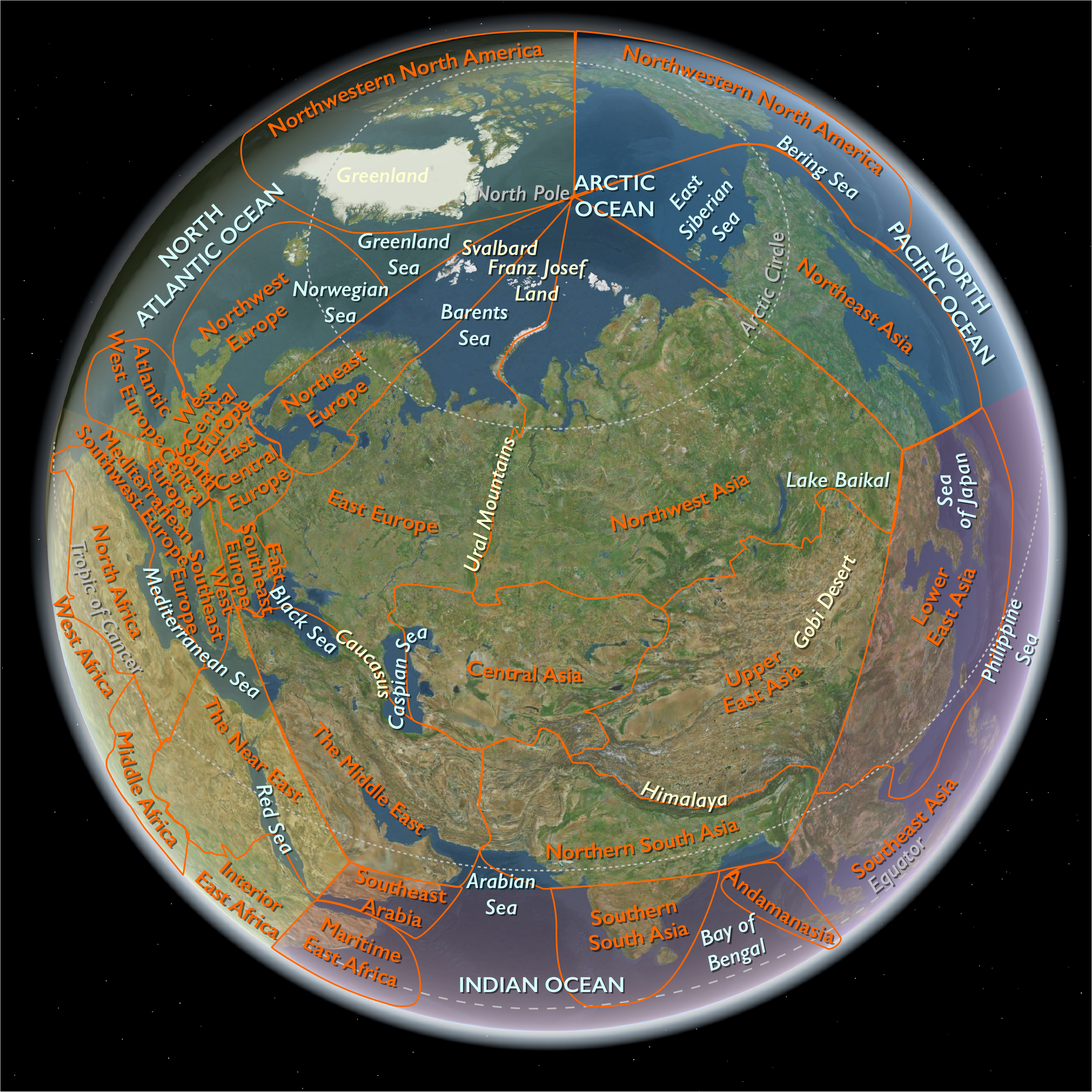
The Middle East: 220–231 CE
Collapse of Parthian Power and the Rise of the Sassanids
Between 220 and 231 CE, the geopolitical landscape of the Middle East undergoes a radical transformation with the collapse of the Parthian Empire, which had dominated the region for nearly five centuries. The decline culminates dramatically in 224 CE, when the Parthian king Artabanus IV is decisively defeated by Ardashir I, ruler of the Persian province of Persis (Fars).
This pivotal confrontation, the Battle of Hormozdgan, results in Artabanus IV’s death and signifies the definitive end of Parthian rule. Ardashir proclaims himself "King of Kings" and swiftly establishes the Sassanid dynasty, named after his ancestor, Sasan, thereby restoring a distinctly Persian imperial identity not seen since the fall of the Achaemenid Empire centuries earlier.
Ardashir I embarks on an ambitious program of centralization, consolidating power across the Iranian plateau and Mesopotamia, while vigorously promoting Zoroastrianism as the state religion, positioning it in opposition to Roman Christianity in the West. The Sassanids aggressively revive Persian culture, traditions, and language, deliberately distancing themselves from Hellenistic influences that characterized Parthian society.
By the end of this era, the Sassanid Empire firmly controls former Parthian territories, reshaping regional dynamics and setting the stage for centuries of intense rivalry and intermittent warfare with the Roman Empire, dramatically altering the trajectory of Middle Eastern history.
Conflicting accounts shroud the details of the fall of the Parthian Empire and subsequent rise of the Sassanid Empire in mystery.
One Babak, a descendant of a line of the priests of the goddess Anahita, was originally the ruler of a region called Kheir.
However, by the year 200, he had managed to overthrow Gocihr, and appoint himself as the new ruler of the Bazrangids.
His mother, Rodhagh, was the daughter of the provincial governor of Persis.
Babak and his eldest son Shapur managed to expand their power over all of Persis.
The subsequent events are unclear, due to the sketchy nature of the sources.
It is certain, however, that following the death of Babak, Ardashir, who at the time was the governor of Darabgird, got involved in a power struggle of his own with his elder brother Shapur.
Sources reveal that Shapur, leaving for a meeting with his brother, was killed when the roof of a building collapsed on him.
By the year 208, over the protests of his other brothers who were put to death, Ardashir had declared himself ruler of Persis.
Once Ardashir was appointed Shahenshah, he had moved his capital further to the south of Persis and founded Ardashir-Khwarrah (formerly Gur, modern day Firuzabad), constructing several great palaces and carving rock reliefs.
The city, well supported by high mountains and easily defendable through narrow passes, has become the center of Ardashir's efforts to gain more power.
The city is surrounded by a high, circular wall, probably copied from that of Darabgird, and on the north-side includes a large palace, remains of which still survive today.
After establishing his rule over Persis, Ardashir I has rapidly extended his territory, demanding fealty from the local princes of Fars, and gaining control over the neighboring provinces of Kerman, Isfahan, Susiana and Mesene.
This expansion quickly comes to the attention of Artabanus IV, the Parthian king, who initially orders the governor of Khuzestan to wage war against Ardashir in 224, but the battles are victories for Ardashir.
Artabanus, in a second attempt to destroy Ardashir, meets his opponent in battle at Hormozgan, near the modern city of Bandar Abbas, where the Parthian army is completely defeated, and Artabanus is killed.
According to one account, Ardashir and Artabanus fought in close combat on horseback.
Ardashir pretended to flee, turned around in the saddle and shot Artabanus through the heart.
This ends the four-hundred-year rule of the Arsacid Dynasty.
Following the death of the Parthian ruler, Ardashir I goes on to invade the western provinces of the now defunct Parthian Empire.
Factors that aided the rise to supremacy of the Sassanids include the Artabanus-Vologases dynastic struggle for the Parthian throne, which had probably allowed Ardashir to consolidate his authority in the south with little or no interference from the Parthians; and the geography of the Fars province, which separate it from the rest of Iran.
Ardashir, crowned in 224 at Ctesiphon as the sole ruler of Persia, takes the title Shahanshah, or "King of Kings" (the inscriptions mention Adhur-Anahid as his "Queen of Queens", but her relationship with Ardashir is not established), bringing the four hundred year-year-old Parthian Empire to an end, and beginning four centuries of Sassanid rule.
Claiming Achaemenid descent and proclaiming a revival of ancient glory, he names his dynasty after his ancestor Sasan (believed to be his grandfather) and embraces Zoroastrianism.