The Middle East: 261–250 BCE
The Rise of the Parthians and Shifts in Regional Power
Parthian Expansion and Greek Retreat
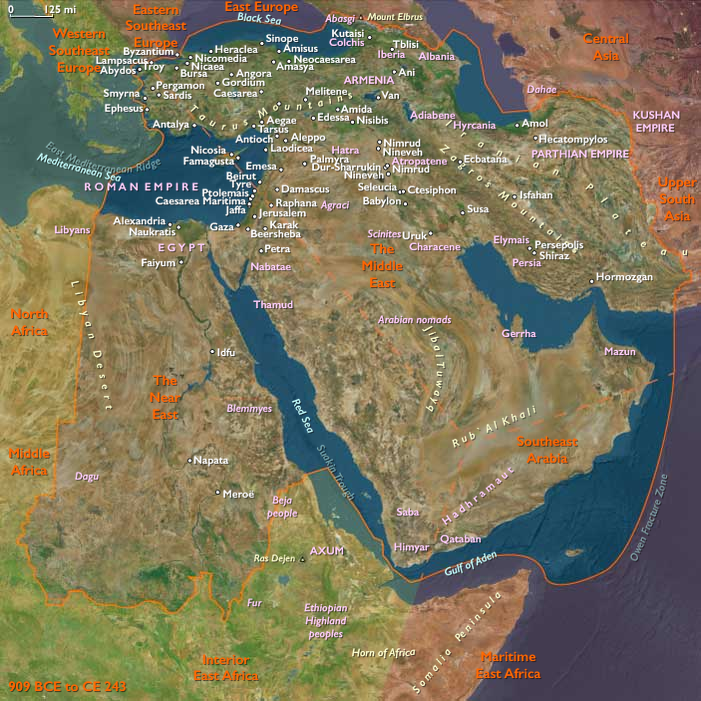
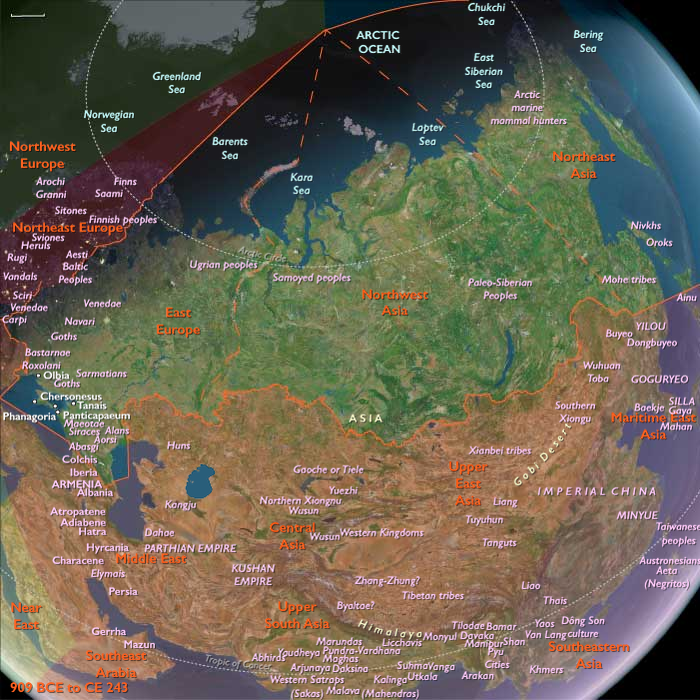
By 250 BCE, the Greeks have lost all territories east of Syria to the emerging Persian dynasty known as the Parthians. With these victories, the Parthians assert control over the Persian Gulf, significantly reshaping regional trade dynamics and geopolitical boundaries. They establish their authority firmly enough to extend their influence to Oman, thereby clearly demarcating the Greek world centered around the Mediterranean from the Persian-dominated East.
Trade Routes and Persian Gulf Dominance
The Parthian Empire’s control of the Persian Gulf route stands in sharp contrast to the Greek and, later, Roman reliance on the Red Sea route. To ensure the loyalty and stability of merchant traffic along these vital routes, Parthian rulers station military garrisons as far south as Oman. Persian colonization in the region establishes enduring infrastructures such as the falaj irrigation system, which will sustain agricultural productivity and support local civilizations in Oman for the next two millennia.
Armenian Dynastic Shifts
In 260 BCE, Arsames I consolidates his rule over Commagene, Sophene, and Armenia, following the suspiciously simultaneous deaths of his grandfather, Orontes III (king of Armenia), and his father, Sames (king of Commagene). Although historical records lack details of these deaths, their timing suggests possible external interference, likely involving the Seleucid Empire, which continuously aims to undermine independent Armenian dynasties.
In 254 BCE, Ziaelas of Bithynia, who had found sanctuary at the court of Arsames, returns home upon the death of Nicomedes I to claim the throne of Bithynia, further highlighting the period’s ongoing dynastic intrigues and shifts in regional allegiances.