Arnold of Brescia, an Augustinian canon and then prior of a monastery in Brescia, had become very critical of the temporal powers of Catholic Church that had involved it in a land struggle in Brescia against the count-bishop of Brescia.
He had called on the Church to renounce ownership of the property and return it to the city government, so as not to be tainted by possession, one aspect of a renunciation of worldliness that he preaches.
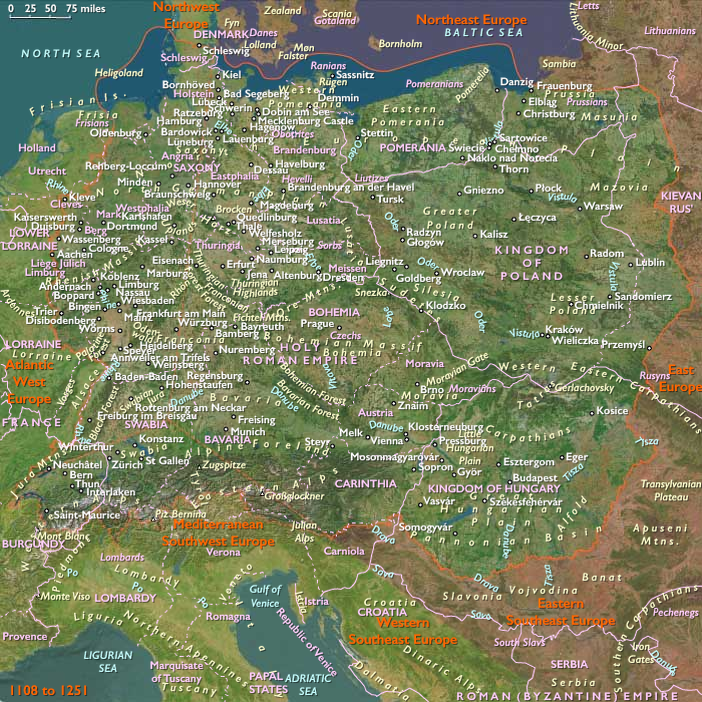
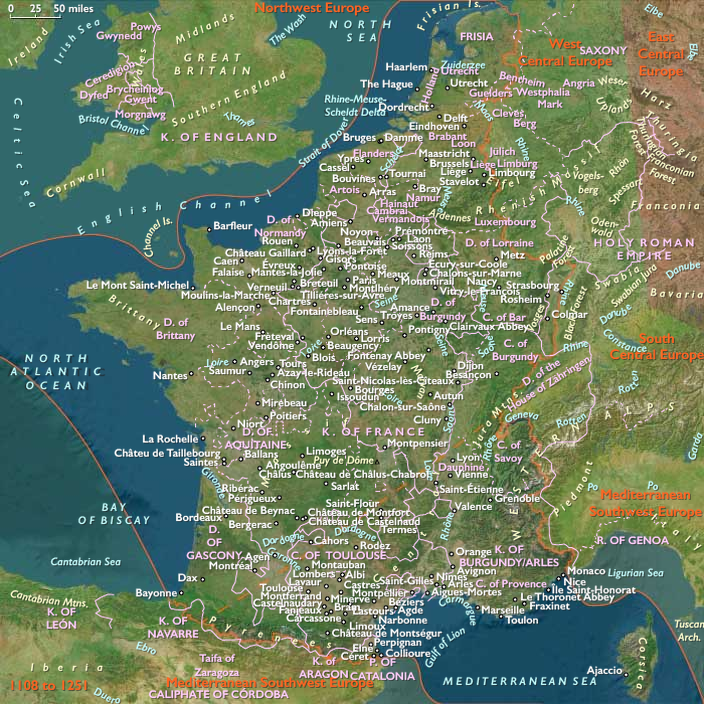
Condemned at the Second Lateran Council, in 1139, and forced from Italy, he had studied in Paris, according to the chronicler Otto of Freising, under the tutelage of the reformer and philosopher Peter Abelard and had taken to Abelard's philosophy of reform ways.
The issue had come before the Synod of Sens in 1141 and both Arnold and Abelard's positions had been overruled by Bernard of Clairvaux.
Arnold, standing alone against the church's decision after Abelard's capitulation, had returned to Paris, where he continued to teach and preach against Bernard.
He was then commanded to silence and exiled by Pope Innocent II as a consequence.
He took refuge first in Zurich then probably in Bavaria.
His writings were also condemned to be burned as a further measure, though the condemnation is the only evidence that he had actually written anything.
Arnold continues to preach his radical ideas concerning apostolic poverty.
Having returned to Italy after 1143, Arnold makes his peace in 1145 with the Pope, who orders him to submit himself to the mercy of the Church in Rome.
When he arrives, finding that Pierleoni's followers had taken control of the city from papal forces and founded a republic, Arnold sides with the people immediately.
Hardly had Eugene left the city to be consecrated in the monastery of Farfa (about forty kilometers north of Rome), when the citizens establish the old Roman constitution, the Commune of Rome.
Upon the deposition of Pierleoni, who had been unable to maintain order in the city.
The power vacuum left by Pierleoni's deposition causes even more anarchy.