Armand Jean du Plessis de Richelieu
1st Chief Minister of the French Monarch; French cardinal, diplomat, and politician
Years: 1585 - 1642
Armand Jean du Plessis de Richelieu, Cardinal-Duc de Richelieu (French pronunciation: [ʁiʃəljø]; 9 September 1585 – 4 December 1642) is a French clergyman, noble, and statesman.
Consecrated as a bishop in 1608, he later enters politics, becoming a Secretary of State in 1616.
Richelieu soon rises in both the Church and the state, becoming a cardinal in 1622, and King Louis XIII's chief minister in 1624.
He remains in office until his death in 1642; he is succeeded by Cardinal Mazarin, whose career he fostered.
The Cardinal de Richelieu is often known by the title of the King's "Chief Minister" or "First Minister."
As a result, he is considered to be the world's first Prime Minister, in the modern sense of the term.
He seeks to consolidate royal power and crush domestic factions.
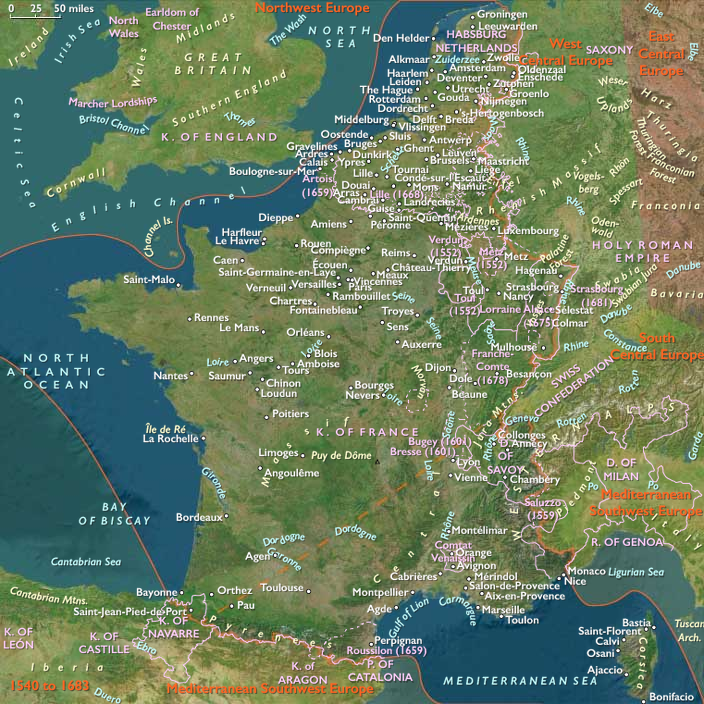
By restraining the power of the nobility, he transforms France into a strong, centralized state.
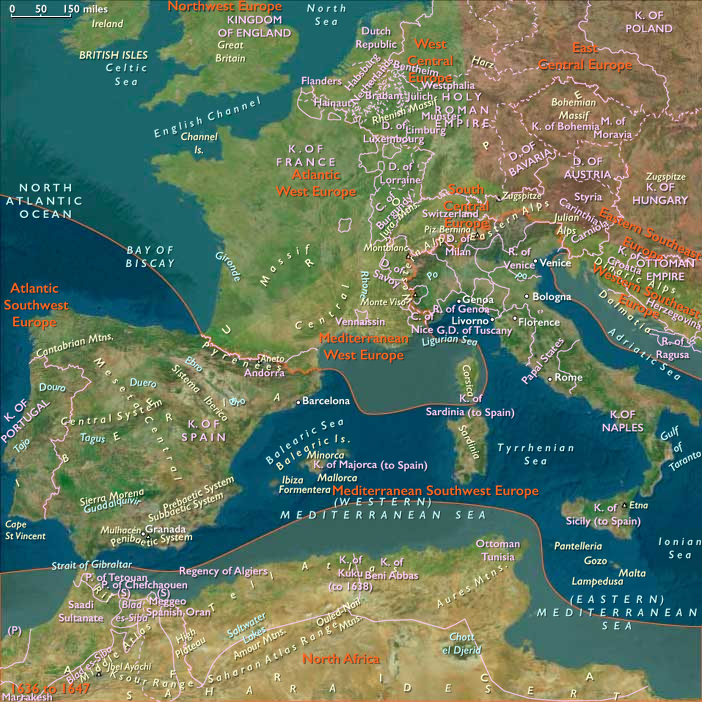
His chief foreign policy objective is to check the power of the Austro-Spanish Habsburg dynasty.
Although he is a cardinal, he does not hesitate to make alliances with Protestant rulers in attempting to achieve this goal.
His tenure is marked by the Thirty Years' War that engulfed Europe.
Richelieu is also famous for his patronage of the arts; most notably, he founds the Académie Française, the learned society responsible for matters pertaining to the French language.
Richelieu is also known by the sobriquet l'Éminence rouge ("the Red Eminence"), from the red shade of a cardinal's vestments and the style "eminence" as a cardinal.
As an advocate for Samuel de Champlain and of the retention of Quebec, he founds the Compagnie des Cent-Associés and sees the Treaty of Saint-Germain-en-Laye return Quebec City to French rule under Champlain, after the settlement had been captured by the Kirkes in 1629.
This in part allows the colony to eventually develop into the heartland of Francophone culture in North America.
He is also a leading character in The Three Musketeers by Alexandre Dumas, père and its subsequent film adaptations, portrayed as a main antagonist, and a powerful ruler, even more powerful than the King himself, though events like the Day of the Dupes show that in fact he very much depends on the King's confidence to keep this power.