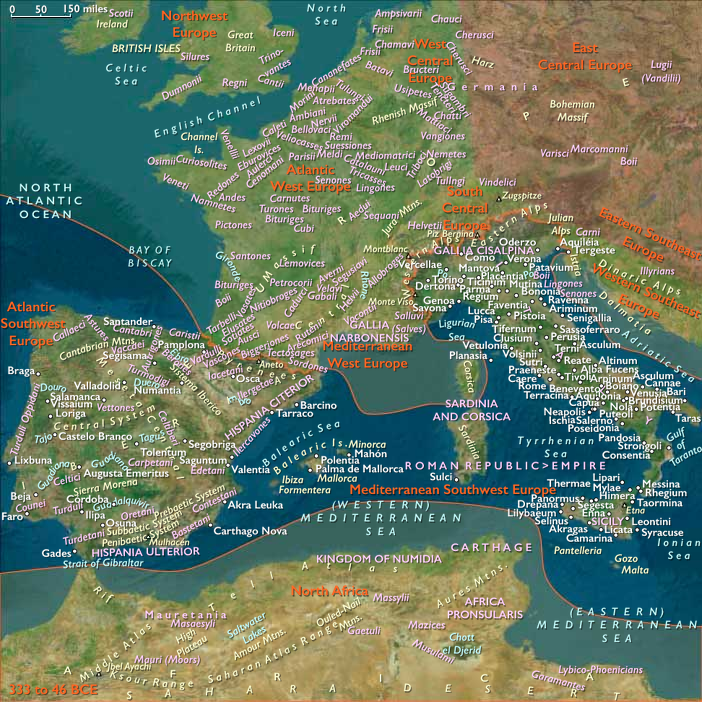
Rome constructs its first aqueduct, the Aqua Appia, in 312.
Only about 0.7 feet (0.2 meters) of its total ten-mile (sixteen-kilometer) length runs aboveground; most of the rest is simply a stone-lined ditch.
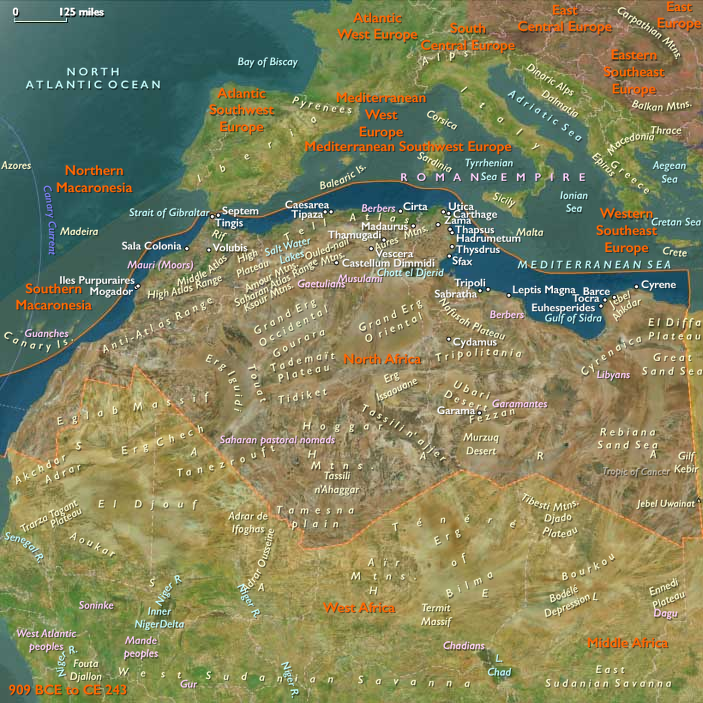
Construction begins on the Via Appia (Appian Way) in 312 across the malarial and unhealthful Pontine Marshes in south central Italy, representing the first attempt at artificially draining the region, barred by sand dunes from natural drainage into the Tyrrhenian Sea and bordered on the west by the Albani Hills and the Lepini Mountains.
Built at the instigation of Appius Claudius Caecus, who pays for part of the work himself, the Via Appia—constructed of stones, rubble, and concrete—is laid on an alternative route from Rome to …