Filters:
Antoni Madaliński
Polish Lieutenant General
Years: 1739 - 1805
Antoni Madaliński (1739–1805) – Polish Lieutenant General, commander of the 1st Greater Polish National Cavalry Brigade during Kościuszko Uprising.
Related Events
Filter results
Showing 10 events out of 26 total
The Polish military is widely dissatisfied with the capitulation to Russia, which most commanders consider premature; Tadeusz Kościuszko, Prince Józef Poniatowski and many others had criticized the king's decision and many, including Kościuszko, had resigned their commission shortly afterward.
After the Commonwealth defeat in the war of the Targowica Confederation and the rescinding of the Constitution, the Army had been reduced to about thirty-six thousand.
In 1794 Russians demand a further downsizing of the army to fifteen thousand.
The dissent in the Polish Army is one of the sparks that will lead to the coming conflict.
View Event
After the Commonwealth defeat in the war of the Targowica Confederation and the rescinding of the Constitution, the Army had been reduced to about thirty-six thousand.
In 1794 Russians demand a further downsizing of the army to fifteen thousand.
The dissent in the Polish Army is one of the sparks that will lead to the coming conflict.
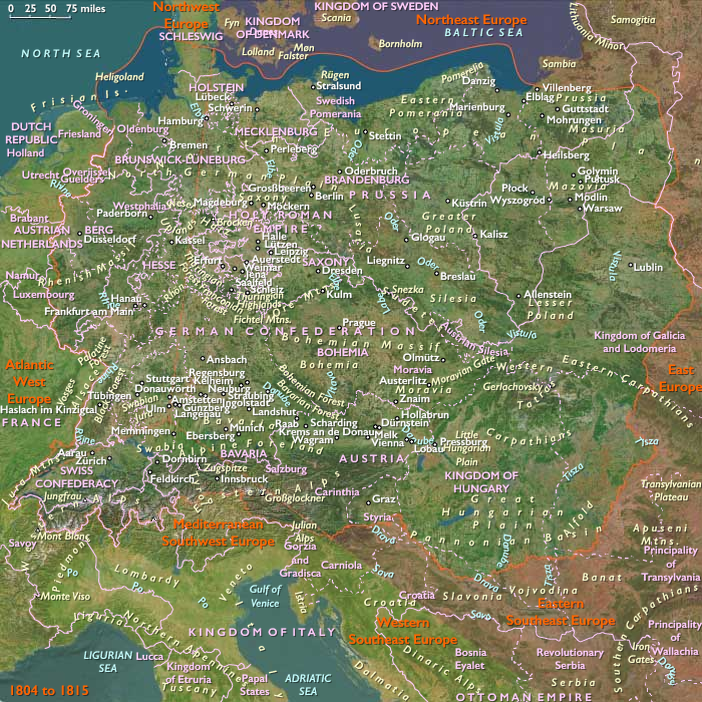
General Antoni Madaliński, a commander of the National Cavalry in the Polish–Lithuanian Commonwealth, had participated in the Bar Confederation, was elected deputy in 1786 and soon after deputy in the Great Sejm.
He also participated in Polish–Russian War of 1792.
Disobeying an order from the ruling Russian Empire and Kingdom of Prussia imposing demobilization, Madaliński advances his troops from Ostrołęka to Kraków on March 12, 1794, even attacking Prussian army posts along a Polish border.
This sparks an outbreak of riots against Russian forces throughout the country.
The Russian garrison of Kraków is ordered to leave the city and attack the Polish forces, leaving the city completely undefended.
View Event
He also participated in Polish–Russian War of 1792.
Disobeying an order from the ruling Russian Empire and Kingdom of Prussia imposing demobilization, Madaliński advances his troops from Ostrołęka to Kraków on March 12, 1794, even attacking Prussian army posts along a Polish border.
This sparks an outbreak of riots against Russian forces throughout the country.
The Russian garrison of Kraków is ordered to leave the city and attack the Polish forces, leaving the city completely undefended.
Kraków's Sejm representative reads the Act of Insurrection in the Old Town square in Kraków around 10 o'clock on March 24, 1794.
The document gives Tadeusz Kościuszko command over the National Armed Force (Polish: Siła Zbrojna Narodowa) and he vows to convene a Supreme National Council.
Kościuszko's speech, rafted by Hugo Kollontay, an advocate of physiocracy (the belief that the wealth of nations is derived solely from the value of "land agriculture"), is considered the starting point of Kościuszko's Uprising against the forces of Imperial Russia occupying Poland.
It begins with,
"The wretched state in which Poland finds itself is known to the universe; the indignities of two neighboring powers, and the crimes of traitors to their country have sunk this nation into an abyss of misery."
Soon afterwards Kościuszko steps forward and recites his oath:
"I, Tadeusz Kościuszko, hereby swear by the God to the entire Polish Nation, that I shall not use the powers vested in me for anyone's oppression, but for defense of the integrity of the borders, recuperation of Nation's sovereignty and strengthening the universal freedom. So help me God and the innocent passion of His Son!"
View Event
The document gives Tadeusz Kościuszko command over the National Armed Force (Polish: Siła Zbrojna Narodowa) and he vows to convene a Supreme National Council.
Kościuszko's speech, rafted by Hugo Kollontay, an advocate of physiocracy (the belief that the wealth of nations is derived solely from the value of "land agriculture"), is considered the starting point of Kościuszko's Uprising against the forces of Imperial Russia occupying Poland.
It begins with,
"The wretched state in which Poland finds itself is known to the universe; the indignities of two neighboring powers, and the crimes of traitors to their country have sunk this nation into an abyss of misery."
Soon afterwards Kościuszko steps forward and recites his oath:
"I, Tadeusz Kościuszko, hereby swear by the God to the entire Polish Nation, that I shall not use the powers vested in me for anyone's oppression, but for defense of the integrity of the borders, recuperation of Nation's sovereignty and strengthening the universal freedom. So help me God and the innocent passion of His Son!"
Polish supporters of the Kościuszko Uprising defeat forces of the Russian Empire in the Battle of Racławice on April 4, 1794.
General Denisov, with twenty-five hundred troops, had planned to attack the Poles from south, while Tormasov's force of three thousand troops blocks Kosciuszko.
Kosciuszko, encountering Tormasov's force first, occupies a nearby hill, General Antoni Madalinski on his right and General Józef Zajączek on his left.
Tormasov, not waiting any longer, attacks the hill by 3:00 PM, setting up cannon.
Kosciuszko inspires his peasant brigade with shouts of "My boys, take that artillery! For God, and the Fatherland! Go forward with faith!"
The first group of serfs captures three twelve-pound cannons and the second wave captures eight more cannons.
Moving to his left flank, Kosciuszko leads a bayonet charge when the Russians flee, followed closely by the scythemen.
In addition, Lesser Poland fields approximately two thousand peasants armed with war scythes and pikes, known as kosynierzy, as well as eleven cannon.
The outcome of the battle is a tactical Polish victory, with Kościuszko defeating the numerically inferior enemy.
However, his forces are too small to undertake a successful pursuit, and the Corps of General Denisov evades destruction and will continue to operate in Lesser Poland.
View Event
General Denisov, with twenty-five hundred troops, had planned to attack the Poles from south, while Tormasov's force of three thousand troops blocks Kosciuszko.
Kosciuszko, encountering Tormasov's force first, occupies a nearby hill, General Antoni Madalinski on his right and General Józef Zajączek on his left.
Tormasov, not waiting any longer, attacks the hill by 3:00 PM, setting up cannon.
Kosciuszko inspires his peasant brigade with shouts of "My boys, take that artillery! For God, and the Fatherland! Go forward with faith!"
The first group of serfs captures three twelve-pound cannons and the second wave captures eight more cannons.
Moving to his left flank, Kosciuszko leads a bayonet charge when the Russians flee, followed closely by the scythemen.
In addition, Lesser Poland fields approximately two thousand peasants armed with war scythes and pikes, known as kosynierzy, as well as eleven cannon.
The outcome of the battle is a tactical Polish victory, with Kościuszko defeating the numerically inferior enemy.
However, his forces are too small to undertake a successful pursuit, and the Corps of General Denisov evades destruction and will continue to operate in Lesser Poland.
The presence of Prussian and Imperial Russian garrisons on Polish soil has been almost continuous following the Second Partition of Poland of 1793.
The foreign occupation forces have ontributed both to the economic collapse of the already-weakened state and to the growing radicalization of the population of Warsaw.
Foreign influence at the Polish court, often embodied by Russian ambassador Nikolai Repnin, has been strong for many years; during the partitions of Poland it has started to influence the Polish government and szlachta (nobility), and the entire people.
After losing the Polish–Russian War of 1792, the Permanent Council had been pressured by Russia to enact an army reform, in which the Polish Army was reduced by half, and the demobilized soldiers conscripted into the Russian and Prussian armies.
This move had been secretly opposed by many officers and the arms and supplies of disbanded units had been stored in warehouses in Warsaw.
Upon receiving news of Kościuszko's proclamation in Kraków (March 24) and his subsequent victory at Racławice (April 4), tension in Warsaw has grown rapidly.
Polish king Stanisław August Poniatowski is opposed to Kościuszko's uprising, and with the Permanent Council had issued a declaration condemning it on 2 April.
The King has dispatched Piotr Ożarowski, who as Grand Hetman of the Crown is the second-highest military commander after the king, and the Marshal of the Permanent Council, Józef Ankwicz, to Iosif Igelström, Russian ambassador and commander of all Russian occupation forces in Poland, with a proposal to evacuate both the Russian troops and Polish troops loyal to the King to a military encampment at Nowy Dwór Mazowiecki.
View Event
The foreign occupation forces have ontributed both to the economic collapse of the already-weakened state and to the growing radicalization of the population of Warsaw.
Foreign influence at the Polish court, often embodied by Russian ambassador Nikolai Repnin, has been strong for many years; during the partitions of Poland it has started to influence the Polish government and szlachta (nobility), and the entire people.
After losing the Polish–Russian War of 1792, the Permanent Council had been pressured by Russia to enact an army reform, in which the Polish Army was reduced by half, and the demobilized soldiers conscripted into the Russian and Prussian armies.
This move had been secretly opposed by many officers and the arms and supplies of disbanded units had been stored in warehouses in Warsaw.
Upon receiving news of Kościuszko's proclamation in Kraków (March 24) and his subsequent victory at Racławice (April 4), tension in Warsaw has grown rapidly.
Polish king Stanisław August Poniatowski is opposed to Kościuszko's uprising, and with the Permanent Council had issued a declaration condemning it on 2 April.
The King has dispatched Piotr Ożarowski, who as Grand Hetman of the Crown is the second-highest military commander after the king, and the Marshal of the Permanent Council, Józef Ankwicz, to Iosif Igelström, Russian ambassador and commander of all Russian occupation forces in Poland, with a proposal to evacuate both the Russian troops and Polish troops loyal to the King to a military encampment at Nowy Dwór Mazowiecki.
Igelström, who has rejected the plan and sees no need for the Russians to evacuate Warsaw, sends a corps under General Aleksandr Khrushchev to intercept Kościuszko and prevent him from approaching Warsaw.
He also orders increased surveillance of suspected supporters of the uprising, and imposed censorship all mail passing through Warsaw.
Igelström issues orders for the arrest of those he suspects of having any connection with the insurrection.
These include some of the more prominent political leaders, among them Generals Antoni Madaliński, Kazimierz Nestor Sapieha and Ignacy Działyński, King's Chamberlain Jan Walenty Węgierski, Marshal of the Sejm Stanisław Małachowski, Ignacy and Stanisław Potocki and Hugo Kołłątaj.
At the same time Russian forces start preparations to disarm the weak Polish garrison of Warsaw under General Stanisław Mokronowski by seizing the Warsaw Arsenal at Miodowa Street.
These orders only make the situation worse as they are leaked to the Poles.
View Event
He also orders increased surveillance of suspected supporters of the uprising, and imposed censorship all mail passing through Warsaw.
Igelström issues orders for the arrest of those he suspects of having any connection with the insurrection.
These include some of the more prominent political leaders, among them Generals Antoni Madaliński, Kazimierz Nestor Sapieha and Ignacy Działyński, King's Chamberlain Jan Walenty Węgierski, Marshal of the Sejm Stanisław Małachowski, Ignacy and Stanisław Potocki and Hugo Kołłątaj.
At the same time Russian forces start preparations to disarm the weak Polish garrison of Warsaw under General Stanisław Mokronowski by seizing the Warsaw Arsenal at Miodowa Street.
These orders only make the situation worse as they are leaked to the Poles.
The insurgents, led by Jan Kiliński, rise up against the Russian garrison of Warsaw in the face of the indecisiveness of Stanisław II Augustus.
They are aided by the incompetence of Russian ambassador and commander Iosif Igelström, and the chosen day being the Thursday of Holy Week when many soldiers of the Russian garrison go to the churches for the Eucharist not carrying their arms.
Finally, from the onset of the insurrection, the Polish forces are aided by the civilian population and have surprise on their side as they attack many separate groups of soldiers at the same time and the resistance to Russian forces quickly spreads over the city.
View Event
They are aided by the incompetence of Russian ambassador and commander Iosif Igelström, and the chosen day being the Thursday of Holy Week when many soldiers of the Russian garrison go to the churches for the Eucharist not carrying their arms.
Finally, from the onset of the insurrection, the Polish forces are aided by the civilian population and have surprise on their side as they attack many separate groups of soldiers at the same time and the resistance to Russian forces quickly spreads over the city.
The Russians, who suffer between two thousand and four thousand casualties out of an initial five thousand strong garrison, are forced to leave the city after two days of heavy fighting.
View Event
A similar uprising to the one in Warsaw is started in Lithuania by Jakub Jasiński in Vilnius (Wilno) on April 23; other cities and towns will soon follow.
View Event
The massacre of unarmed Russian soldiers attending the Easter service is regarded as a "crime against humanity" by Russians and will be an argument for a vengeance later, during the siege of Warsaw.
View Event
Loading...