Antoine Laumet de La Mothe, sieur de Cadillac
French explorer and adventurer
Years: 1658 - 1730
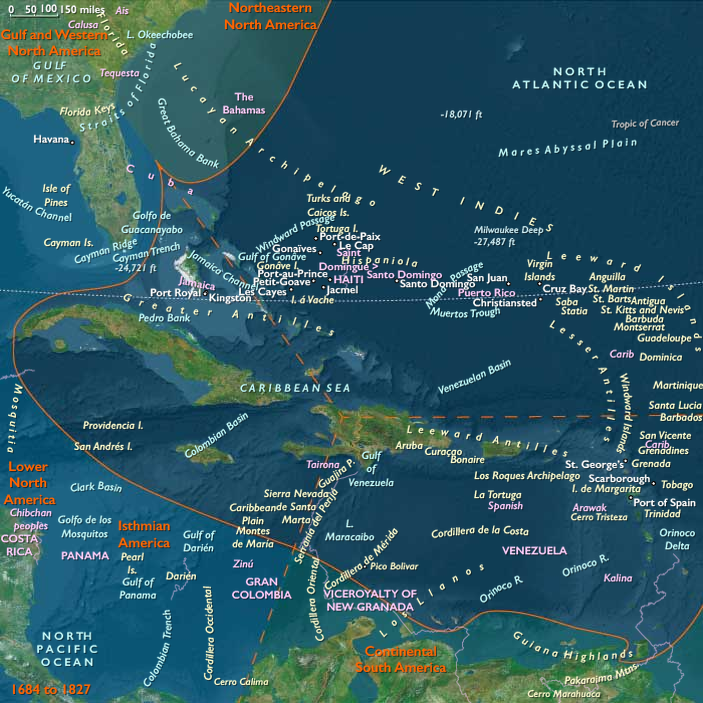
Antoine Laumet de La Mothe, sieur de Cadillac (pronounced [kadijak] in French, /ˈkædɨlæk/ in English) (1658–1730) is a French explorer and adventurer in New France, now an area of North America stretching from Eastern Canada in the north to Louisiana in the south.
Rising from a modest beginning in Acadia in 1683 as an explorer, trapper, and a trader of alcohol and furs, he achievei various positions of political importance in the colony.
He is the commander of Fort de Buade, modern day St. Ignace, Michigan, in 1694.
In 1701, he founds Fort Pontchartrain du Détroit, the beginnings of modern Detroit, which he commands until 1710.
Between 1710 and 1716 he is the governor of Louisiana, although he does not arrive in that territory until 1713.
His knowledge of the coasts of New England and of the Great Lakes area is appreciated by Frontenac, governor of New France, and Pontchartrain, Secretary of State for the Navy.
This earns him various favors, including the Order of Saint Louis from King Louis XIV.
The Jesuits in Quebec, however, criticize his perceived perversion of the "Amerindians", North America's indigenous peoples, with his alcohol and fur trading.
La Mothe is imprisoned for a few months in Quebec in 1704, and again in the Bastille on his return to France in 1717.
His visionary spirit continued in the city he helped found, Detroit, which became the world center of automobile production in the 20th century.
William H. Murphy and Henry M. Leland, founders of the Cadillac auto company, paid homage to him by adopting his name for their company and his armorial bearings as its emblem in 1902.
Various places bear his name in North America, in particular Cadillac Mountain, Maine, and the town of Cadillac, Michigan.