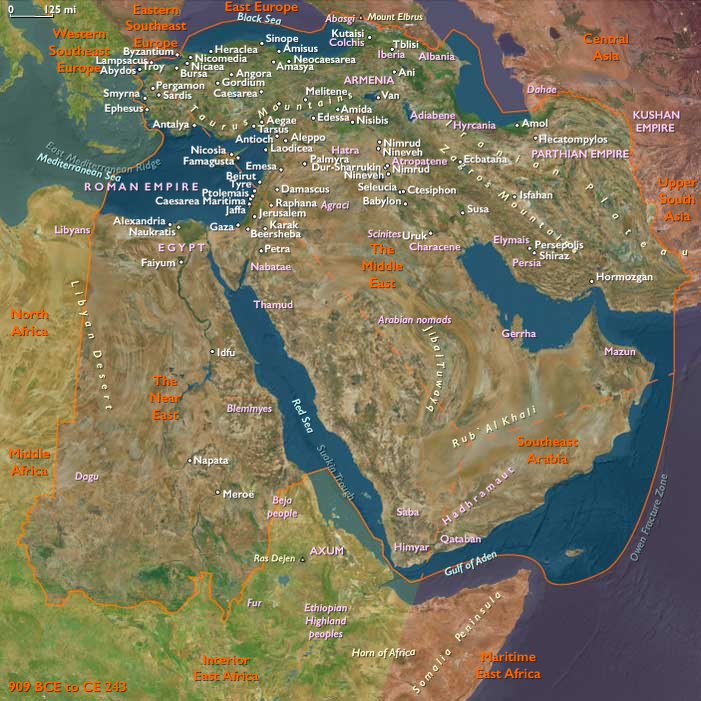
The Seleucid kingdom, a major center of Hellenistic culture, maintains the preeminence of Greek customs and manners over the indigenous cultures of the Middle East.
A Greek-speaking Macedonian aristocratic class will dominate the Seleucid state throughout its history, although this dominance is most strongly felt in the urban areas.
Antiochus II, who succeeds his father in 261 BCE, has begun a new war for Syria.
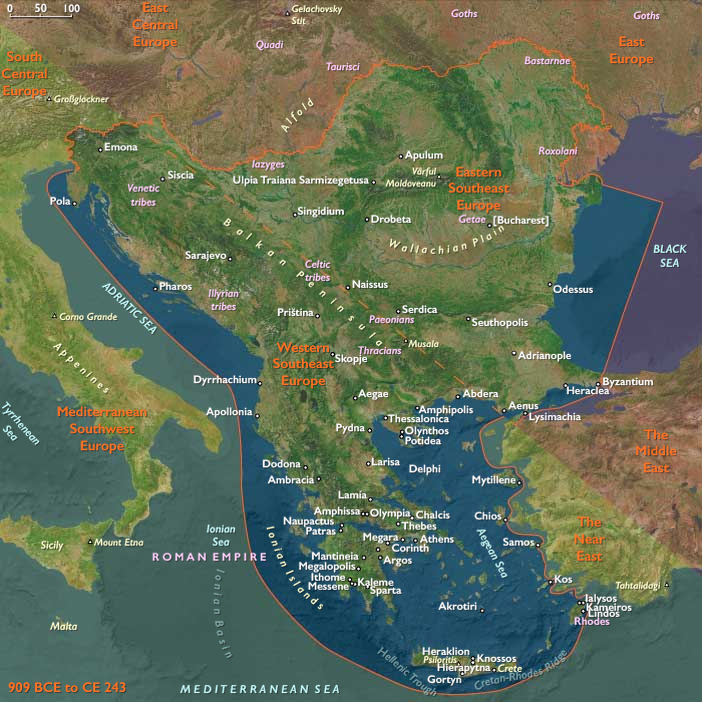
He reaches an agreement with the current Antigonid king in Macedon, Antigonus II Gonatas, who is also interested in pushing Ptolemy II out of the Aegean.
With Macedon's support, Antiochus II launches an attack on Ptolemaic outposts in Asia.
Most of the information about the Second Syrian War has been lost.
It is clear that Antigonus' fleet defeated Ptolemy's at the Battle of Cos, diminishing Ptolemaic naval power.
Ptolemy appears to have lost ground in Cilicia, Pamphylia, and Ionia, while Antiochus regains Miletus and Ephesus.
Macedon's involvement in the war ceases when Antigonus becomes preoccupied by the rebellion of Corinth and Chalcis in 253 BCE, possibly instigated by Ptolemy, as well as an increase in enemy activity along Macedon's northern frontier.
The war is concluded around 253 BCE with the marriage of Antiochus to Ptolemy's daughter, Berenice Syra.
Antiochus repudiates his previous wife, Laodice, and turns over substantial domains to her.